
Desafío titánico: La educación de nuestro país
 Desde que comenzó la actual administración, el presidente de la República comentó que se llevaría a cabo un censo educativo el cual se encargaría de brindarnos información relevante en el tema: alumnos, maestros, infraestructura, montos financieros, entre otras cosas. Como bien dicen, "lo que no se puede medir, no se puede evaluar; lo que no se puede evaluar, no se puede mejorar". Leer más.
Un México de aspiraciones grandes, pero de políticas públicas cortas (I)
 En el blog pasado, había comentado que proseguiría con los resultados que mostró la Consultora Mckinsey (cosa que realizaré posteriormente); no obstante, considero importante el comentar la encuesta realizada por el Instituto Nacional de Estadística y Geografía (INEGI) y el Instituto Mexicano del Seguro Social (IMSS) denominada Encuesta Nacional de Empleo y Seguridad Social (ENESS) 2013. Leer más.
Los dos rostros de México (I)
En esta entrada, deseo comentar un estudio que considero sumamente importante que fue realizado por la empresa consultora McKinsey: A tale of two Mexicos: Growth and prosperity in a two-speed economy. Dicho estudio analiza "las dos historias" que tiene México en su día a día, es por ello que decidí nombrar a esta entrada "Los dos rostros de México", que si bien no es la mejor traducción respecto al título del estudio, básicamente éste abarca eso, los dos aspectos que presenta la economía mexicana. Leer más.
¡Ya basta!
En la entrada anterior, comentábamos acerca de las importantes áreas de oportunidad que no han sido abordados por las diferentes administraciones del Gobierno del Distrito Federal (GDF), al menos, los últimos 20 años. En este sentido, la falta de planeación urbana se hace cada vez más visible y sobretodo, palpable. Los tiempos de recorrido son preocupantes, y muestra de ello, es el índice que señalamos que generó IBM (Commuter Pain Index) donde pone a la ciudad de México como la ciudad "que más se sufre" a nivel mundial. Leer más.
Urban planning and design: laws, regulations, and the informal city
Out of the 24 million residents in the Metropolitan Area of the Valley of Mexico (MCMA), 9.8 million live in poverty (according to CONEVAL data). This means that planning, project design and development strategies must be targeted in terms of justice and protection of human rights to help reduce poverty and marginalization of this population. Read more.
La Ciudad de México, una capital sin una visión de mediano y largo plazo
 La Ciudad de México es por excelencia, el centro político-económico del país. Es en éste donde se dan la toma de decisiones más importantes, donde se encuentran los poderes de la unión y donde se ubica el centro financiero de México. Leer más.
Incidencia para una niñez protegida
 En al año 2001 se constituyó la Red por los Derechos de la Infancia en México (REDIM). Es una sinergia de 73 organizaciones que buscan que se adopte la Convención de los Derechos de los Niños en los marcos legales de México y en el diseño de políticas públicas dirigidas a los niños. Leer más o discutir.
Doce meses después ¿Cómo vamos?
 Finaliza un año más, y con éste se observan diversos altibajos en la actual administración. Es por ello, que se debe evaluar estos primeros 12 meses del nuevo gobierno con cierto cuidado, es decir, no irnos a los extremos al momento de emitir juicio alguno. Leer más.
El 2013 nos enseñó que la visión de una ciudad es la inclusión de sus ciudadanos
 A lo largo del 2013 comentamos sobre diversas estrategias de inclusión y de superación de la pobreza en la Ciudad de México. Si bien las soluciones son variadas e innovadoras, un factor central en la solución de estos problemas es el involucramiento de la participación de la población que vive las situaciones de conflicto; puesto que desde un enfoque de participación para el desarrollo, ellos son los expertos que priorizan e identifican las necesidades y áreas de oportunidad de su desarrollo. Leer más o discutir.
Sociedad civil: un factor elemental para la prevención del VIH/SIDA
 De acuerdo a Juan José Calva, en el artículo "25 años de SIDA en México," uno de los ejemplos mundiales en los países en desarrollo es Brasil, que ha logrado brindar acceso universal a tratamientos de terapia antirretroviral en su población afectada por el VIH/SIDA. El éxito en esta cobertura ha dependido de tres factores: el compromiso oficial a través de la legislación para asegurar que todos los ciudadanos que lo requieran reciban la terapia, la capacidad del sector público para manufacturar medicamentos, y una enérgica acción de la sociedad civil. Leer más o discutir.
Pages
Urban planning and design: laws, regulations, and the informal city
Medellin has undergone a profound transformation. While two decades ago it was a city known for violence, lack of social services and inequality, now it has become a model for all Latin American cities on how to tackle these problems. Urbanism, although not the only factor, has played a crucial role in this process. In Medellin, urban reforms became closely associated with the search for solutions for social problems. They also had a strong pedagogical ambition. Read more.
2014: Esperanza e incertidumbre en Cali y Bogotá
 Hay muchas cosas positivas que esperar para el año 2014 en Colombia. Se prevé que el crecimiento económico siga siendo vigoroso, al tiempo que las conversaciones de paz pueden acabar con un conflicto armado que ha durado ya varias décadas. Estas circunstancias presentan un escenario sin precedente para aliviar los problemas de pobreza y desigualdad que sufre el país. Bogotá y Cali, las dos ciudades que seguimos en este blog, tienen iniciativas en marcha que pueden ofrecer soluciones concretas a estos dos problemas. Sin embargo, la incertidumbre es también elevada, tanto a nivel nacional como local. Por un lado, los resultados de las conversaciones son inciertos. Por otro, las elecciones presidenciales que se celebrarán en su primera vuelta en mayo también resultarán en una ralentización de la administración central. Aunque se espera que Juan Manuel Santos ganes la reelección, cualquier cosa puede suceder en la política colombiana, y un cambio en la presidencia puede decelerar aún más el ritmo de las reformas. Leer más o discutir.
Proyectos que merecen apoyo: El Corredor Verde de Cali
 Todos los años por estas fechas se nos pide que identifiquemos un proyecto que valga la pena apoyar. En esta ocasión la elección para mi ha sido obvia: el Corredor Verde de Cali, probablemente el mas ambicioso proyecto de renovación urbana en Colombia. Busca convertir unas vías ferroviarias casi en completo desuso, en un parque lineal por el que discurran medios de transporte público con bajas o nulas misiones de gases de efecto invernadero. El corredor tiene una longitud de 15 kilómetros, atravesando la ciudad de norte a sur, a los que hay que añadir un ramal de 7 kilómetros de longitud de este a oeste. El ancho medio es de unos 100 metros. Leer más o discutir.
Luchando contra el desempleo juvenil mediante programas de formación
 El desempleo juvenil es un problema especialmente grave en Cali. Las tasas de acercan al 33 por ciento, la más alta de las principales ciudades del país (la media nacional en este sector demográfico es del 17 por ciento). Si bien es cierto que la tasa general de desempleo en la capital del Cauca es también superior a la nacional (13 por ciento frente al 9 por ciento), los jóvenes caleños sufren este problema de forma desproporcionada. Aunque las causas del desempleo son complejas, cabe destacar un periodo de recesión económica que duró 10 años, de 1995 a 2005, que coincidió con la llegada de fuertes flujos migratorios. Aunque a partir de 2006 la economía ha crecido, no lo ha hecho en tasas suficientes para absorber la bolsa de desempleo y los nuevos flujos migratorios. La falta de cualificación para los nuevos trabajos que van surgiendo es otra barrera para que los jóvenes obtengan empleo. Leer más o discutir.
Bulevar del Rio: Devolviendo al peatón un lugar en la ciudad
 Desde mediados del siglo XX Cali ha experimentado un crecimiento muy significativo. La población que en 1951 era de 284.000 personas, pasó a 1.400.000 en 1991, y a 2.3200.000 en el 2013. El antiguo dentro histórico se ha visto rodeado por una sucesión de hasta 22 comunas en una extensión de 120.000 km2. La creciente necesidad de traslados dentro de la ciudad, y la ausencia de un sistema de transporte masivo, resultaron en un crecimiento explosivo en el número de vehículos circulando por la ciudad, y que en el último censo publicado, con datos del 2011, superaban ya el medio millón. Para acomodar todo este tráfico rodado, los sucesivos gobiernos municipales buscaron ampliar las calzadas y crearon vías rápidas, desplazando al peatón a un segundo lugar. Como consecuencia de todas estas dinámicas, Cali se convirtió en una ciudad sumamente congestionada, difícil y peligrosa para los peatones y ciclistas, y con un considerable déficit de espacios públicos. Leer más o discutir.
Minga: An ancient tradition finds a new life in Cali
 The huge migration from rural to urban areas that took place in Latin America during the last few decades was made even more significant in Colombia by the forced migrations caused by successive armed conflicts. In Cali, the population went from 280,000 in 1950 to 2,300,000 in 2013. As in the rest of the region, most of this massive increase in population was due to migration from rural areas. While the traditional links that glue together rural communities tend to weaken when immigrants reach the urban setting, they do not completely disappear. They are, in part, replaced by new solidarity networks, formed primarily by members of extended families who had arrived earlier and are able to provide support to the newcomers. Primarily, these networks provide assistance with housing and employment, the two most urgent needs they face. Read more or join the discussion.
Minga: Una tradición rural cobra nueva vida en Cali
Los fuertes movimientos migratorios del campo a la ciudad que han tenido lugar en toda Latinoamérica se han visto acentuados en Colombia por la emigración forzosa que han generado los conflictos armados. En Cali, la población pasó de unos 280.000 habitantes en 1950 a unos 2.300.000 en 2013, según datos del DANE. La mayor parte de los considerables flujos migratorios que reflejan estos datos tienen un origen rural. Los sentimientos y tradiciones comunitarias que unían a estos emigrantes en sus lugares de procedencia se difuminan considerablemente a su llegada a las grandes ciudades, pero no desaparecen del todo: se ven sustituidos por lazos de solidaridad por parte de personas, generalmente de su entorno familiar, que habiendo llegado con anterioridad tienen un mayor arraigo. Estas relaciones de solidaridad se extienden especialmente en el ámbito de la búsqueda de vivienda y de trabajo. Leer más o discutir.
'Por Una Ciudad Mejor' awards: Fostering formulation and implementation of local proposals in Cali
 A key issue at the time of designing and implementing programs aimed at improving conditions in slums is to consider how to involve potential beneficiaries in the process. The awards Por Una Ciudad Mejor, created in 1998 by an alliance of foundations and NGOs, have taken a decisive step in the right direction at the time of fostering such involvement. Community organizations are asked to present innovative solutions to specific problems in their neighborhoods. Taking into consideration their ability to transform in a positive and innovative way their communities, three prizes are awarded, and ten proposals are given honorable mentions. In the current edition the first prize winner gets 13 million COP (about US$ 6,500), second prize amounts to 7 million COP (about US$ 3,500), and the third prize amounts to 5 million COP (about US$2,500). The award money is to be used by the organizations to fund the implementation of their proposals. Read more or join the discussion.
Premios Por Una Ciudad Mejor: Fomentando propuestas innovativas en los barrios
Buscar la forma de involucrar a los beneficiarios en el diseño y la implementación de los programas destinados a mejorar las condiciones en los barrios carentes es un aspecto crucial de dichos programas. Una iniciativa impulsada por una alianza de fundaciones y entidades privadas sin ánimo de lucro ha dado un paso más en este sentido, convocando desde 1998 los premios Por una Ciudad Mejor. A través de este premio se solicita a las organizaciones comunitarias que propongan iniciativas innovadoras encaminadas a mejorar la calidad de vida en estas áreas y que puedan servir de modelo para otras zonas en las mismas o incluso en otras ciudades. Entre todas las propuestas recibidas se seleccionan las 10 mejores, de acuerdo con su carácter innovador y su capacidad de influir positivamente en la ciudad, y se otorgan tres premios. En la convocatoria actual el primero estará dotado con 13 millones de pesos (unos 6.500 dólares), el segundo con 7 millones de pesos (unos 3.500 dólares) y el tercero con 5 millones de pesos (unos 2.500 dólares). La cuantía de los premios sirve para poner en marcha las iniciativas. Leer más o discutir.
Innovación urbana en Cali y Bogotá
Colombia ha experimentado una transformación extraordinaria desde la entrada del nuevo siglo. Los conflictos armados que se iniciaron a mediados del siglo pasado, y que se vieron agravados con la irrupción del narcotráfico y de grupos criminales organizados, generaron una ola de desplazados de las zonas rurales que buscaron refugio en las ciudades, y que se sumó a la migración natural que se observó el en resto del hemisferio. Las ciudades no pudieron absorber un crecimiento tan rápido, y sufrieron un deterioro acelerado en sus condiciones de vida, que se pudo percibir especialmente en ciudades medianas, como Cali, que disfrutaban de una alta calidad de vida antes de que se iniciaran los conflictos. Bogotá, como capital y mayor ciudad del país, atrajo el número mas elevado de desplazados, que se agolpaban desordenadamente en los barrios del sur. Ambas ciudades se convirtieron también en objetivo de los ataques de los grupos armados, y vivían en permanente jaque y aislamiento. Leer más.
Pages
Adversity and urban planning: Designing safer, more resilient cities
Bogotá's location is in many ways privileged, with mild temperatures and 12 hours of daylight year-round. This location, however, also entails risks: it is a seismic area, and torrential rains can result in serious flooding. The "Niña" weather pattern creates especially dangerous conditions, like the 2010-2011 period when much of the city was left under water - especially, although not only - in the poorer neighborhoods. Read more.
Urban planning and design: laws, regulations, and the informal city
Medellin has undergone a profound transformation. While two decades ago it was a city known for violence, lack of social services and inequality, now it has become a model for all Latin American cities on how to tackle these problems. Urbanism, although not the only factor, has played a crucial role in this process. In Medellin, urban reforms became closely associated with the search for solutions for social problems. They also had a strong pedagogical ambition. Read more.
Minimo vital de agua en Bogotá
 El agua de Bogotá es potable y deliciosa, algo excepcional en las grandes ciudades de América latina. Esto se debe a su proximidad a abundantes fuentes de agua, especialmente los páramos de Chingaza y Sumapaz, y a una buena gestión del recurso. La mayor parte del agua consumida actualmente proviene de la represa de Chingaza, ubicada a unos 50 kilómetros de Bogotá. Sin embargo, la misma proximidad de la mega urbe supone un riesgo para los frágiles ecosistemas de los páramos: Sumapaz comienza en el mismo término municipal de la capital. Aunque la capacidad de suministro actual se estima suficiente a medio plazo, a largo plazo será necesario construir nuevas represas y canalizaciones, proyectos técnicamente complejos y que probablemente generarán fuertes controversias por su impacto ambiental. Leer más o discutir.
2014: Esperanza e incertidumbre en Cali y Bogotá
Hay muchas cosas positivas que esperar para el año 2014 en Colombia. Se prevé que el crecimiento económico siga siendo vigoroso, al tiempo que las conversaciones de paz pueden acabar con un conflicto armado que ha durado ya varias décadas. Estas circunstancias presentan un escenario sin precedente para aliviar los problemas de pobreza y desigualdad que sufre el país. Bogotá y Cali, las dos ciudades que seguimos en este blog, tienen iniciativas en marcha que pueden ofrecer soluciones concretas a estos dos problemas. Sin embargo, la incertidumbre es también elevada, tanto a nivel nacional como local. Por un lado, los resultados de las conversaciones son inciertos. Por otro, las elecciones presidenciales que se celebrarán en su primera vuelta en mayo también resultarán en una ralentización de la administración central. Aunque se espera que Juan Manuel Santos ganes la reelección, cualquier cosa puede suceder en la política colombiana, y un cambio en la presidencia puede decelerar aún más el ritmo de las reformas. Leer más o discutir.
Impulsando las pruebas del VIH en Bogotá mediante una alianza público-privada
Colombia no ha escapado del castigo del HIV. Según datos del Sistema de Vigilancia Epidemiológica (SIVIGILA), al que deben ser reportados todos los casos identificados, desde el año 1983 hasta el 2011, último del que se disponen datos completos, se conocen 86.990 casos de HIV/Sida, de los cuales 10.676 han fallecido. En Bogotá se han detectado hasta septiembre del 2013 23.330 casos, un 40 por ciento del total a nivel nacional. Sin embargo, es importante destacar que esto se debe a su elevada población, como lo ilustra que en el 2011 se reportaron 8,7 casos por 100.000 habitantes, mientras 8 departamentos superaban 20 casos por 100.000 habitantes, y los dos en cabeza, Barranquilla y Quindío superaban 30. Leer más o discutir.
Titulación de predios fiscales: un caso de éxito en Bogotá
 Uno de los principales frenos al desarrollo de los asentamientos irregulares es la falta de títulos de propiedad por parte de sus ocupantes. En Colombia, donde los conflictos armados que se prolongan desde hace décadas han sumado un número significativo de desplazados por la violencia a los flujos migratorios observados en toda Latinoamérica, este problema tiene una especial gravedad. Para atajar este problema en el año 2005 se aprobó una ley que permitía la transferencia gratuita de predios fiscales, o de titularidad pública, que hubieran sido ocupados antes de 2001. El alcance de esta ley deja fuera del proyecto de titulación a los asentamientos edificados sobre predios de propiedad privada. Leer más o discutir.
Prevención y tratamiento de los problemas de salud mental de los habitantes de la calle
 La situación de los habitantes de la calle se considera como uno de los problemas más complicados de resolver en las grandes ciudades latinoamericanas. Según un censo elaborado en 2011 por la Secretaría de Integración Social (SIS), en Bogotá se identificaron 8.385 habitantes de calle, un 86.9 por ciento de los cuales son hombres, y el 8.4 por ciento son menores de 18 años. El 17.9 por ciento son jóvenes entre 19 y 25 años, y el 38.9 por ciento son adultos entre 26 y 40 , quedando un 32 por ciento, de adultos mayores. Otro dato interesante de este sondeo es que el 58 por ciento se dedica a la recolección de objetos de reciclaje, el 34 por ciento a mendigar, el 28 por ciento a servicios no cualificados y el 10.7 por ciento a delinquir. Aunque es posible que estas cifras no recojan el número total de habitantes de la calle, quizá en una proporción considerable, sí que son reveladores en su estructura demográfica y en sus ocupaciones. Leer más o discutir.
Mejorar la calidad ambiental de Bogotá mejorando el sistema de transporte
 Bogotá ha ganado el premio a liderazgo urbano en su categoría de transporte. Los premios, de los cuales este año se celebra su primera edición, son otorgados por el grupo C40 y por Siemens, a través de su fundación Crystal. El premio de liderazgo en transporte busca identificar proyectos o iniciativas que mejoren la situación medioambiental, medidos en términos de fomento de cambio en los modos de transporte y de la reducción de la emisión de gases causantes del efecto invernadero. Leer más o discutir.
La división de la ciudad en estratos: redistribuir sin segregar
 La concesión de subsidios a las poblaciones más desfavorecidas, sobre todo en el ámbito de los servicios públicos, es un mecanismo ampliamente utilizado en América latina para combatir la fuerte desigualdad social. En Colombia se ha utilizado un mecanismo singular: la división de las ciudades en estratos. Esta idea, que se empezó a considerar en los años 80, se comenzó a aplicar en las grandes ciudades a partir de la aprobación en 1994 de la ley de Servicios Públicos. Aunque el marco legal es estatal, las ciudades tienen un amplio margen a la hora de escoger los criterios concretos para determinar la estratificación dentro de sus perímetros urbanos. Bogotá se dividió en 6 estratos, el máximo permitido por la ley. El estrato 6 refleja un mayor poder adquisitivo, y el 1 el menor poder adquisitivo de la ciudad. Los residentes de los estratos 5 y 6 pagan una sobretasa en los servicios públicos, que se utiliza para subsidiar, de forma decreciente, los costes de los servicios para los residentes en estratos 1 a 3. En el estrato 4 los residentes pagan el precio real de los servicios. También se aplica una sobretasa si se supera un volumen máximo establecido. Leer más o discutir.
Cooperación andina en la recuperación de centros históricos
 Bogotá tiene un centro histórico espectacular. Las estrechas callejuelas de la época colonial están jalonadas de edificios de gran belleza y en muchos casos sorprendentemente bien conservados, al menos estructuralmente. El ascenso empinado de las vías hacia los Cerros Orientales, que se elevan abruptamente 600 metros sobre el nivel del centro de la ciudad, crean una perspectiva única en una ciudad que a veces se olvida de su ubicación geográfica en plena cordillera andina. Sin embargo, a lo largo de las últimas décadas se ha producido un deterioro progresivo de la zona. Los principales edificios considerados como bienes de interés cultural, tanto de la época colonial como republicana, están generalmente en muy buen estado de conservación, pero el centro histórico sufre de problemas como la inseguridad, falta de desarrollo económico, una fuerte desigualdad social, falta de espacios verdes, o el deterioro de las vivienda de personas con bajos ingresos. Leer más o discutir.
Pages
(Un)Happy — Cidades Brasileiras
 A música "Happy" e seu clipe, do cantor Pharrell William, provocaram um movimento mundial nas ruas de diversas cidades de todos os continentes. O clipe que mostra Pharrell, amigos e pessoas comuns dançando e felizes nas ruas de L.A., inspirou diversas versões de diferentes cidades. No Brasil não foi diferente, e algumas prefeituras aproveitaram para criar suas próprias versões, como aconteceu em Porto Alegre e Curitiba. Leia mais.
É mais do que 20 centavos
 Ano passado, o mundo viu uma transformação no Brasil com os jovens indo às ruas pedindo por novas medidas para as questões de mobilidade no país. Após uma violenta resposta policial nos primeiros dias de manifestações, a causa ganhou mais força em todo o país. A frase "Não é pelos 20 centavos" ficou famosa e foi usada para representar angústia e desejo dos jovens por novas soluções — mais sustentáveis e sociais (em mobilidade, na política, na econômica, etc). As reivindicações eram muito mais profundas do que o aumento de 20 centavos da passagem. As manifestações, porém, aconteceram há mais de 6 meses e o que mudou no Brasil — principalmente no que se refere a mobilidade? Leia mais.
Considerações sobre a cultura verde e de acessibilidade de Curitiba
 O fato que Curitiba seja reconhecida como uma cidade verde, acessível e organizada não é um resultado improvisado, mais é resultado de uma cultura sólida de planejamento urbano e da liderança de suas administrações. Apresentamos alguns dos motivos que ajudam a explicar aquela boa reputação de Curitiba especialmente sobre por que é verde, acessível e "humana"; também apresentamos alguns dos desafios que enfrenta na matéria. Leia mais o discutir.
Amplo conhecimento das comunidades de baixa renda em Curitiba
 A discussão desta semana sobre processos de mapeamento destaca o trabalho de Curitiba e sua metodologia de mapeio das comunidades beneficiadas pelos programas de melhoria de bairros. Aquele processo está liderado principalmente pelo governo local; as comunidades participam também mais com um papel de verificação de informação e apresentação de sugestões. Para algumas pessoas esta é uma abordagem de "cima para baixo"; para outras, existe um valor importante no amplo conhecimento das comunidades carentes por parte da Prefeitura e do papel fundamental dos assistentes sociais nas comunidades. Qual é sua opinião? Leia mais o discutir.
Curitiba: A city planned for all its residents
 URB.IM is pleased to introduce Curitiba as one of the new cities covered by the platform. Curitiba, located in Brazil's southern region, is the capital of the state of Paraná. The city has 1.7 million residents, making it the eighth largest in the country. The city is also the epicenter of the Curitiba Metropolitan Region, which is a conglomerate of 26 municipalities of approximately 3.2 million residents. Read more or join the discussion.
Curitiba: Uma cidade planejada para todos seus moradores
URB.IM inicia suas reportagens sobre Curitiba, uma das novas cidades incluídas nesta plataforma. Curitiba é a capital do estado de Paraná no sul do Brasil. A cidade tem 1,7 milhões de moradores, a oitava cidade do país. A cidade é o epicentro da Região Metropolitana de Curitiba, um conjunto de 26 municípios de aproximadamente 3,2 milhões de residentes. Leia mais o discutir.
(Un)Happy — Cidades Brasileiras
A música "Happy" e seu clipe, do cantor Pharrell William, provocaram um movimento mundial nas ruas de diversas cidades de todos os continentes. O clipe que mostra Pharrell, amigos e pessoas comuns dançando e felizes nas ruas de L.A., inspirou diversas versões de diferentes cidades. No Brasil não foi diferente, e algumas prefeituras aproveitaram para criar suas próprias versões, como aconteceu em Porto Alegre e Curitiba. Leia mais.
Segurança Colaborativa
 O Brasil está vivendo um delicado momento com o aumento da violência e com uma sensação generalizada de falta de segurança. Manchetes se repetem em todo o país - roubos, assassinatos, violência no trânsito. Se por um lado, temos um Governo ineficiente sem a força necessária para combater essa insegurança; por outro, vemos uma sociedade impaciente e começando a fazer "justiça com as próprias mãos". Leia mais.
Retooling 'Cities for Life': New approaches to urban infrastructure and service provision
An equity-driven approach that targets transportation would advance pro-poor sustainable transportation integrated with transit-oriented development and affordable housing. Worldwide, transport policy and planning inadequately target the needs of the poor, while the majority of public resources are dedicated to transport investments like highways that cater to the desires of the car-owning minority. Coupled with the shortage of affordable, quality transport is the pervasive trend to locate affordable housing on inexpensive land in the urban outskirts — far from reliable transit, economic opportunity, and critical services, all while driving urban sprawl. As a result, poverty is concentrated and isolated in spatial pockets disconnected from the broader metropolitan economy, where residents suffer not only low income and low opportunity, but also high transport costs. Read more.
É mais do que 20 centavos
Ano passado, o mundo viu uma transformação no Brasil com os jovens indo às ruas pedindo por novas medidas para as questões de mobilidade no país. Após uma violenta resposta policial nos primeiros dias de manifestações, a causa ganhou mais força em todo o país. A frase "Não é pelos 20 centavos" ficou famosa e foi usada para representar angústia e desejo dos jovens por novas soluções — mais sustentáveis e sociais (em mobilidade, na política, na econômica, etc). As reivindicações eram muito mais profundas do que o aumento de 20 centavos da passagem. As manifestações, porém, aconteceram há mais de 6 meses e o que mudou no Brasil — principalmente no que se refere a mobilidade? Leia mais.
Redes locais no combate à violência contra as crianças
 Assegurar que as crianças e adolescentes tenham seus direitos assegurados e protegidos de qualquer forma de violência deveria ser uma prioridade de todos os países. Neste sentido, Brasil vem fazendo vários esforços que envolvem a parceria entre o governo e a sociedade civil, nos níveis nacionais e municipais. Leia mais o discutir.
São Paulo: Coletivos agindo!
 Sem dúvida há muito que esperar para São Paulo em 2014. A abertura da copa, as mudanças na mobilidade, a aprovação do plano diretor, o dilema do mercado imobiliário — será uma bolha? — todas as questões acima poderiam ser tópicos para discutir no ano que vem. Entretanto, o fato extraordinário em 2013 que pode mudar o modo como vivemos a cidade é o seguinte: As pessoas estão provocando mudança. Muito foi dito sobre as manifestações de junho e seu impacto no que diz respeito a conscientização política, cidadania, participação e o surgimento de uma nova geração de ativistas. Nota-se cada vez mais o surgimento de grupos independentes transformando o espaço da cidade com suas próprias mãos e meios. Leia mais o discutir.
Caminhar é viver São Paulo - Parte II
 No meu último post, apresentei quatro elementos que estão relacionados ao prazer de andar na cidade de Porto Alegre. Neste post aprofundarei o elemento "Descoberta", que está relacionado a experiência de "desbravar" e conhecer melhor a região onde mora ou os bairros que visita. Leia mais.
Event: VERGE São Paulo
12–13 November, 2013  São Paulo, Brazil
Bringing together innovators, entrepreneurs, and leading public officials to explore the opportunities for radical efficiencies created through technology advancements in energy, buildings and transportation. Topics to be addressed include: New Energy Systems, Smarter Logistics, Resilient Cities, Sustainable Mobility, Next-Gen Buildings, and Food-Energy-Water Nexus. Learn more.
Ocupando os espaços públicos
 Um dos principais problemas do brasileiro nas cidades é a sua falta de responsabilidade sobre os espaços públicos. Na nossa cultura, a rua, seu entorno e seus equipamentos urbanos pertencem a esfera pública e, por isso, é quem deve cuidar da manutenção, limpeza e segurança. Empresas e organizações podem optar por "adotar" um espaço, mas por lei isso significa transferir toda a responsabilidade da Prefeitura para a instituição. Leia mais.
Pages
(Un)Happy — Cidades Brasileiras
A música "Happy" e seu clipe, do cantor Pharrell William, provocaram um movimento mundial nas ruas de diversas cidades de todos os continentes. O clipe que mostra Pharrell, amigos e pessoas comuns dançando e felizes nas ruas de L.A., inspirou diversas versões de diferentes cidades. No Brasil não foi diferente, e algumas prefeituras aproveitaram para criar suas próprias versões, como aconteceu em Porto Alegre e Curitiba. Leia mais.
Segurança Colaborativa
O Brasil está vivendo um delicado momento com o aumento da violência e com uma sensação generalizada de falta de segurança. Manchetes se repetem em todo o país - roubos, assassinatos, violência no trânsito. Se por um lado, temos um Governo ineficiente sem a força necessária para combater essa insegurança; por outro, vemos uma sociedade impaciente e começando a fazer "justiça com as próprias mãos". Leia mais.
Retooling 'Cities for Life': New approaches to urban infrastructure and service provision
An equity-driven approach that targets transportation would advance pro-poor sustainable transportation integrated with transit-oriented development and affordable housing. Worldwide, transport policy and planning inadequately target the needs of the poor, while the majority of public resources are dedicated to transport investments like highways that cater to the desires of the car-owning minority. Coupled with the shortage of affordable, quality transport is the pervasive trend to locate affordable housing on inexpensive land in the urban outskirts — far from reliable transit, economic opportunity, and critical services, all while driving urban sprawl. As a result, poverty is concentrated and isolated in spatial pockets disconnected from the broader metropolitan economy, where residents suffer not only low income and low opportunity, but also high transport costs. Read more.
É mais do que 20 centavos
Ano passado, o mundo viu uma transformação no Brasil com os jovens indo às ruas pedindo por novas medidas para as questões de mobilidade no país. Após uma violenta resposta policial nos primeiros dias de manifestações, a causa ganhou mais força em todo o país. A frase "Não é pelos 20 centavos" ficou famosa e foi usada para representar angústia e desejo dos jovens por novas soluções — mais sustentáveis e sociais (em mobilidade, na política, na econômica, etc). As reivindicações eram muito mais profundas do que o aumento de 20 centavos da passagem. As manifestações, porém, aconteceram há mais de 6 meses e o que mudou no Brasil — principalmente no que se refere a mobilidade? Leia mais.
Rio 40º — e sem água
 Na competição por água no Rio de Janeiro as zonas Norte e Oeste — mais carentes que a famosa Zona Sul — estão claramente perdendo. A cidade enfrenta um dos verões mais quentes dos últimos tempos e alguns bairros tiveram seu fornecimento de água intermitente por semanas nesse Janeiro, devido em parte à falta de reservatórios em larga escala e à manutenção incipiente na rede de fornecimento. Leia mais o discutir.
Mais atenção para os "Nem-Nem": Jovens que nem estudam, nem trabalham
 Os "Nem-Nem" são jovens entre 15 e 24 anos que nem estudam, nem trabalham, nem procuram emprego. Segundo dados do último censo, Brasil tem mais de 5 milhões de "Nem- Nem" no seu território, com grande concentração nas áreas urbanas. Rio atualmente tem mais de 150 mil "Nem-Nem"; preocupa que aquela população cresceu em 30 mil entre 2000 e 2010. Quais são as causas deste fenômeno? E quais são as respostas da cidade para enfrentar aquela situação? Leia mais o discutir.
Avanços na titulação de terras no Rio de Janeiro
 Rio de Janeiro está avançando na expansão efetiva da titulação de terras e beneficiando a sua população mais vulnerável. Esta direção positiva é o resultado da implementação do programa habitacional Minha Casa Minha Vida e do programa de melhoramento de bairros Morar Carioca Leia mais o discutir.
Nova perspectiva sobre as favelas — potente, criativa e solidária
 É assim que Luiz Henrique do Nascimento define as favelas. Ele é o coordenador do Observatório de Favelas e da Escola Popular de Comunicação Crítica, iniciativas cariocas que querem mudar o paradigma dos jovens das favelas brasileiras: de pobres e violentos para potentes e criativos. Leia mais.
Quando a infraestrutura não é suficiente: Os desafios do transporte público no Rio
 Segundo Rio Como Vamos, a insatisfação dos cariocas com a mobilidade e o transporte público da cidade vem crescendo nos últimos anos. A mais recente pesquisa da Rio Como Vamos foi feita em 2013 previamente aos protestos de Junho. Para compreender aquela insatisfação coletiva é importante conhecer melhor as condições do sistema de transporte público da cidade para identificar suas fraquezas e potenciais soluções. Leia mais o discutir.
Backpack-equipped health care workers make a difference in Rio
 Last week, the New Cities Foundation's Executive Director, Mathieu Lefevre, wrote an article for Ashoka’s Next Billion on the results of the Foundation's E-health project in Rio de Janeiro. The project was the first major study looking at the impact of integrating e-health technology in low-resource, densely populated, urban settings. The New Cities Foundation is currently looking to dramatically extend the project with the city of Rio to cover most of the city's favelas. Read more.
Pages
Mapping the city for youth migrants
 Migration has often been identified as a central component of urbanisation, and with the rise of a 'mobility' paradigm, whereby movement is recognised as a rising necessity, the focus is on why people move and the nature of such movement. Novel innovations now enable our speed of movement, while services and infrastructure continues to build networks between spaces, people, and opportunities. However, in the case of Sub-Saharan Africa the question has been raised on what happens when urban agglomerations hosting migrants fail to secure livelihoods (see Bryceson, 2011)? Research in migration showcases the articulation of circular patterns of movement, rising rates of return, and greater insecurities in whether goals are achieved. Such raises an additional question - to what extent are those using, adopting, and experiencing, migration becoming stuck within such a mobility paradigm? Further, what do migrants do to get them out of this trap and achieve aspirations? Read more.
Food affordability in Accra, Ghana
 The food security situation in Accra is a major concern to the government, civil society organisations, and development partners. Food security covers availability, accessibility, ultilisation, production, and affordability of food as classified by the Food and Agriculture Organisation (FAO). This article looks specifically at food affordability in Accra, as the price of food poses problems to more than half of the city's population. Read more or join the discussion.
Street children in Accra: Giving voice to the voiceless
 Many of Accra's street children are migrants from other parts of Ghana who followed others in the name of greener pastures. Other street children were trafficked to the city centre by older people and were left to fend for themselves. These children find ways to survive by engaging in activities ranging from being porters to selling goods on the street. The boys often earn money by shining shoes, pushing trucks, gathering refuse and carrying it to the dump site. Many also trade sex for money. In reaction to these alarming hardships, a number of important organizations are working to give these street children a voice, using a number of different approaches. Read more or join the discussion.
Youth focus: Can grassroots movements bring in girls' voices?
 Data has emerged showcasing the latest trends of our demographic shift - the global population now articulates a 'youth bulge'. The UN-Population Demographic Profile (2010) show children, and 'youths', comprise 1.6bn, and 1.0bn, of the population in less-developed regions. The population is younger; and Sub-Saharan Africa is no exception. Attention is now turning to youths: what young people do, what opportunities they initiate for their families and nations, and what it means to be 'young' in the developing world. However, an important caveat requires recognition: the focus has been particularly male-focused. Our understanding of girls, within both public and private spaces, remains limited. Such is the debate in this blog post - if we are now looking at 'kids' in the city and development, what are the experiences of girls? What can we learn about the city through an engendered perspective? Fundamentally, who is responsible to grant equal rights? Two models of intervention are discussed be, each using alternative methods to provide rights for girls. However, each acts to reinforce the need to improve our understandings on 'being' a girl. Read more.
Whatever happened to Africa's rapid urbanisation?
It is widely believed that urbanisation is occurring faster in sub-Saharan Africa than anywhere else in the world, as migrants move from rural to urban settlements. This is a fallacy. While the populations of numerous urban areas are growing rapidly, the urbanisation levels of many countries are increasing slowly – if at all. Natural increase, rather than net in-migration, is the predominant growth factor in most urban populations. African governments, policymakers and international donors need to acknowledge fundamental changes in urbanisation trends, and respond to the irrefutable messages these impart about urban employment, incomes and economic development. Read more.
Who will plan Africa's cities?
Africa's cities are growing — and changing — rapidly. Without appropriate planning, they will become increasingly chaotic, inefficient and unsustainable. In many countries, planning legislation dates back to the colonial era. It is ill-equipped to deal with contemporary urban problems. A shortage of urban planning and management professionals trained to respond to urban complexity with progressive pro-poor approaches exacerbates urban dysfunction. Read more.
Fighting mental health stigmatization in Accra
 The issue of mental health stigmatization in Accra is of great concern to individuals, families, civil society groups, and many religious bodies. There is stigmatization about the condition, stigmatization concerning the persons with the condition, and stigma is also attached to the people who work in the area of mental illness. These concerns affect the resources and quality of life of the mentally challenged. In addition, its economic and social impact on the person, the family, and the workers are enormous. Read more or join the discussion.
The dangers of toxicity in Accra, Ghana
 The toxicity situation in Accra is very challenging to the health conditions of the city's population. This situation is aggravated by a high level of urbanization and a large population. These chemical substances are from e-waste, industrial and institutional waste-discharge, environmental, and household waste. In the landfills where electronic waste substances are disposed of, children, mostly boys between the ages of 11 and 18, take apart the electronic scrap, often with their bare hands, burn it, and sometime use stones to extract metal parts. These activities pose many health challenges to these young children and others in the city, like itchy eyes, lung and kidney infections. Read more or join the discussion.
Retooling 'Cities for Life': New approaches to urban infrastructure and service provision
Power supply, generation, and distribution are some of the many challenges facing developing nations. Lagos receives 25 percent of the power generated in Nigeria every day, but it's only enough to meet less than 10 percent of the energy demand. In response to the inadequate supply, the city government has created three running independent power project (IPP) plants that generate energy, and two more are scheduled for completion before the end of 2014. Read more.
"Let them own their own homes!": the Lagos housing challenge
 I've written a fair bit about the housing problem in Lagos. A city of anything between 15 and 18 million persons, with a 48.6% poverty rate (2012), and an acute shortage of low-cost housing. There's of course no shortage of luxury housing. Victoria Island and Ikoyi are home to hundreds of empty luxury apartments; priced out of reach of all but the insanely wealthy. IT entrepreneur Jason Njoku has got an interesting post on the economics of housing prices in Lagos. Two years ago I wrote extensively on the Eko Atlantic City project being spearheaded by the state government, adding 9 square kilometers of reclaimed luxury territory ("the Manhattan of West Africa") to Lagos' Victoria Island. Any news of progress in terms of access to (relatively) low-cost housing is therefore much welcome. Which leads me to the focus of today's post. Read more.
Urban farms in Lagos – a feasible proposal?
 I recently attended the launch of an exhibition at the Goethe Institute's Lagos office, on the "Post-Oil City", drawing on efforts from all around the world to create cities that have tamed the traditional hunger for fossil fuels. Some of them are brand new cities (like Masdar in Abu Dhabi), others are existing cities trying to make changes (Curitiba, Brazil, which in 1974 launched the world’s first BRT system). Read more.
Youth focus: Can grassroots movements bring in girls' voices?
Data has emerged showcasing the latest trends of our demographic shift - the global population now articulates a 'youth bulge'. The UN-Population Demographic Profile (2010) show children, and 'youths', comprise 1.6bn, and 1.0bn, of the population in less-developed regions. The population is younger; and Sub-Saharan Africa is no exception. Attention is now turning to youths: what young people do, what opportunities they initiate for their families and nations, and what it means to be 'young' in the developing world. However, an important caveat requires recognition: the focus has been particularly male-focused. Our understanding of girls, within both public and private spaces, remains limited. Such is the debate in this blog post - if we are now looking at 'kids' in the city and development, what are the experiences of girls? What can we learn about the city through an engendered perspective? Fundamentally, who is responsible to grant equal rights? Two models of intervention are discussed be, each using alternative methods to provide rights for girls. However, each acts to reinforce the need to improve our understandings on 'being' a girl. Read more.
Urban development and the wellbeing of the bottom millions
 Lagos is on the cusp of a radical change in the way the city is organised. Not only is the first light rail being built in the city, thirty years after the idea was first mooted; the government has also recently announced that construction will soon start on the 4th Mainland Bridge, long overdue by many standards. A few years ago I listened to a talk by the designers of that bridge, and was fascinated by how they envisioned it to not only work as a conventional bridge but also a direct stimulant/supporter of economic activity. The design is of a two-level bridge, the upper one for vehicular movement, the lower one for a combination of a tram line, rows of shops and goods vendors, and a pedestrian lane; that idea informed by the realization that modernizing Lagos does not have to happen at the expense of the trademark hustle-and-bustle that gives the city its peculiar character and feel; the things that make Lagos Lagos. Read more.
Lagos: Development with opportunities for inclusive growth
 Lagos is the most populous city state in Nigeria, home to over five percent of the nation's 166 million residents, and ever growing. To manage this large group of people and to create an environment that is not only safe and accommodating but also filled with opportunities for improved living and continuous growth, the state government and various civil society organisations have spent 2013 working on a number of ingenious projects to achieve these goals. Read more or join the discussion.
Educating new planners in Africa, but what is the future?
 Within development studies a shift has been identified. An increasing sense of consciousness has emerged on whose ideas are being used to theorise development practice, whether they are applicable, and offer effective solutions. The post-development school of thought is centred on deconstructing 'universal' ideas of development. Novel viewpoints have emerged which are transforming how the 'developing' world is understood and what role citizens of the Global South can play. With post-development thought, urban researchers, and planners, are advancing new thinking to plan inclusive cities in the Global South. In a succeeding event on urbanisation at the African Research Institute, the subject matter was how urban planning in Africa is adapting for the future. Read more.
Fighting an epidemic and mitigating its effects: HIV response in Lagos
 According to the 2010 sentinel survey of Nigeria, Lagos has an HIV prevalence rate of 5.1 percent. The survey shows that the majority of the state's HIV presence is in urban areas; the rural prevalence is only 1.3 percent. In light of the high and growing HIV prevalence in Lagos, a number of agencies, private firms and civil society organisations are working hard to spread the word about HIV prevention and to care for patients. Read more or join the discussion.
Putting pedestrians first
 In 2004, an estimated 5,000 lives were lost from road crashes on Nigerian motorways. This number more than tripled in 2006, with an estimated 16,000 people killed as a result of road crashes. Low awareness of road safety among road users (pedestrians and motorists), and poor road conditions are some critical factors responsible for these avoidable fatalities. The city of Lagos is crawling with millions of people, the majority of whom travel on foot. Recently, there has been more emphasis on keeping city pedestrians safe from harm's way by improving road safety rules and infrastructure. Read more or join the discussion.
Whatever happened to Africa's rapid urbanisation?
It is widely believed that urbanisation is occurring faster in sub-Saharan Africa than anywhere else in the world, as migrants move from rural to urban settlements. This is a fallacy. While the populations of numerous urban areas are growing rapidly, the urbanisation levels of many countries are increasing slowly – if at all. Natural increase, rather than net in-migration, is the predominant growth factor in most urban populations. African governments, policymakers and international donors need to acknowledge fundamental changes in urbanisation trends, and respond to the irrefutable messages these impart about urban employment, incomes and economic development. Read more.
Pages
Mapping the city for youth migrants
Migration has often been identified as a central component of urbanisation, and with the rise of a 'mobility' paradigm, whereby movement is recognised as a rising necessity, the focus is on why people move and the nature of such movement. Novel innovations now enable our speed of movement, while services and infrastructure continues to build networks between spaces, people, and opportunities. However, in the case of Sub-Saharan Africa the question has been raised on what happens when urban agglomerations hosting migrants fail to secure livelihoods (see Bryceson, 2011)? Research in migration showcases the articulation of circular patterns of movement, rising rates of return, and greater insecurities in whether goals are achieved. Such raises an additional question - to what extent are those using, adopting, and experiencing, migration becoming stuck within such a mobility paradigm? Further, what do migrants do to get them out of this trap and achieve aspirations? Read more.
Cairo Community Manager and Content Coordinator — URB.im
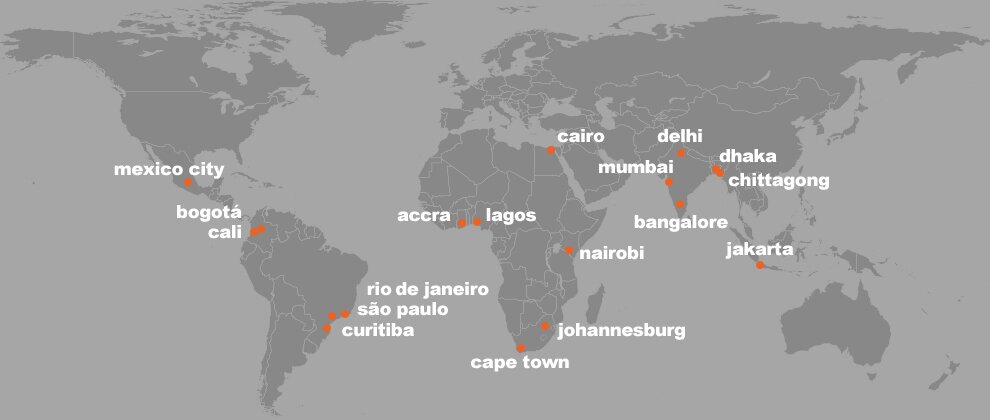
URB.IM, the global community working for just and inclusive cities, propagates innovation and connects all members of the ecosystem working on urban poverty alleviation.
A project of Dallant Networks, LLC and the Ford Foundation, this new online platform establishes an international community of practice and learning, sharing ideas and experiences in order to innovate, replicate, and scale working solutions to the problem of urban poverty.
It is currently focused on eighteen cities: Mumbai, Bangalore, Delhi, Jakarta, Dhaka, Chittagong, Cairo, Lagos, Nairobi, Mexico City, Rio de Janeiro, São Paulo, Bogotá, Cali, Curitiba, Accra, Cape Town, and Johannesburg.
We are looking for a Community Manager and Content Coordinator for the city of Cairo.
The Community Manager and Content Coordinator for the Cairo node of the urb.im network will:
- Produce and aggregate news, events, projects and other developments of interest to members of the community of practitioners and program leaders working in urban poverty alleviation in Cairo
- Recruit bloggers and other volunteer contributors for the urb.im/cairo platform and coordinate all content traffic
- Initiate and moderate online discussions happening on the urb.im/cairo platform
- Be an active participant in the overall urb.im network and interact on a regular basis with other Content Coordinators in the network
This position is ideal for urban-planning students and graduates, journalists and social activists working in urban poverty alleviation. In addition to receiving extensive visibility on an important social media platform, the ideal candidate will receive a monthly stipend.
Qualified candidates should their detailed information.
Youth focus: Can grassroots movements bring in girls' voices?
Data has emerged showcasing the latest trends of our demographic shift - the global population now articulates a 'youth bulge'. The UN-Population Demographic Profile (2010) show children, and 'youths', comprise 1.6bn, and 1.0bn, of the population in less-developed regions. The population is younger; and Sub-Saharan Africa is no exception. Attention is now turning to youths: what young people do, what opportunities they initiate for their families and nations, and what it means to be 'young' in the developing world. However, an important caveat requires recognition: the focus has been particularly male-focused. Our understanding of girls, within both public and private spaces, remains limited. Such is the debate in this blog post - if we are now looking at 'kids' in the city and development, what are the experiences of girls? What can we learn about the city through an engendered perspective? Fundamentally, who is responsible to grant equal rights? Two models of intervention are discussed be, each using alternative methods to provide rights for girls. However, each acts to reinforce the need to improve our understandings on 'being' a girl. Read more.
 أثارت جوانب مدينة القاهرة التاريخية، و المعمارية، والثقافية، و الاقتصادية، و السياسية عديد من المؤلفات والكتابات الأدبية المختلفة عن المدينة .و مع أخذ ذلك في الاعتبار، لدي ثلاث اقتراحات لكتب مميزة عن تاريخ القاهرة العريق, و لوجستيات و تعقيدات هذه المدينة.
Who will plan Africa's cities?
Africa's cities are growing — and changing — rapidly. Without appropriate planning, they will become increasingly chaotic, inefficient and unsustainable. In many countries, planning legislation dates back to the colonial era. It is ill-equipped to deal with contemporary urban problems. A shortage of urban planning and management professionals trained to respond to urban complexity with progressive pro-poor approaches exacerbates urban dysfunction. Read more.
رصد المبادرات العمرانية بالقاهرة

منصة المبادرات العمرانية بالقاهرة، موقع أطلقه مختبر عمران القاهرة للتصميم والدراسات "كِلَسّتَر" مؤخراً باللغتين العربية والإنجليزية، "تضم المنصة مبادرات متعددة في الهندسة المعماريّة والفنون والتنمية العمرانيّة والمبادرات الحقوقية وتلك متعددة التخصصات التي تتناول موضوعات تتعلّق بالمدينة والبيئة العمرانيّة والمساحات العامّة في القاهرة." عبر استخدام خريطة تفاعلية تتيح للمستخدمين إضافة مبادرات جديدة كنوع من الخرائط التعاونية.

"Knowledge is Power" national literacy campaign
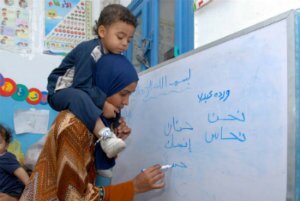 One of the biggest problems faced by those living in poverty in Egypt is illiteracy. Government figures estimate that there are 17 million Egyptians who cannot read and write, the majority of whom are females concentrated in Upper Egypt and the Greater Cairo Region (GCR). In late 2011, the Vodafone Egypt Foundation partnered with the Life Makers Association and UNESCO under a joint campaign titled "Knowledge is Power." The campaign aims to eliminate illiteracy in Egypt by 2017 by providing classes that teach basic reading, writing, and arithmetic skills in nine different governorates. Read more or join the discussion.
'العلم قوة' - الحملة الوطنية لمحو الامية
من أكبر المشاكل التي يواجهها الفقراء في مصر هي مشكلة الامية. تشير الإحصاءات الحكومية على أن هناك إجمالي ١٧ مليون مواطن و مواطنة في مصر، معظمهم إناث في صعيد مصر و منطقة القاهرة الكبرى، لايستطيعون قراءة و كتابة اللغة العربية. في أواخر عام ٢٠١١، قامت مؤسسة فودافون مصر (Vodafone Egypt Foundation) بالاشتراك مع جمعية صناع الحياة (Life Makers Association) و منظمة اليونسكو (UNESCO) لإنشاء حملة مشتركة تحت عنوان 'العلم قوة.' والهدف من هذه الحملة هو القضاء على الأمية في مصر بحلول عام ٢٠١٧ من خلال توفير الفصول التي تعلم أساسيات القراءة، و الكتابة، و المهارات الحسابية في تسع محافظات مختلفة.
Slums? No sir, these are self-built communities
 "The Right to Housing" is a documentary series and a part of the "Right to Housing, a Socially Just and Sustainable Built Environment" initiative. This project aims to link urban issues and challenges with the right to housing: it proposes that this right should be respected in the constitution and in laws and that adequate urban policies be put in place to reflect the needs of the people. Read more or join the discussion.
لا يا بيه دي مجهودات ذاتية
تشترك غالبية المجتمعات المهمشة أو العشوائية في صفات كثيرة مثل غياب غالبية الخدمات الأساسية، من مياه الشرب والكهرباء، والصرف الصحي. بالإضافة إلى انتشار القمامة ونقص الخدمات التعليمية ووقوع بعض المناطق تحت كابلات الضغط العالي والتعرض للأخطار العمرانية مثل انهيار المباني والإخلاء القسري.
Pages
Mapping the city for youth migrants
Migration has often been identified as a central component of urbanisation, and with the rise of a 'mobility' paradigm, whereby movement is recognised as a rising necessity, the focus is on why people move and the nature of such movement. Novel innovations now enable our speed of movement, while services and infrastructure continues to build networks between spaces, people, and opportunities. However, in the case of Sub-Saharan Africa the question has been raised on what happens when urban agglomerations hosting migrants fail to secure livelihoods (see Bryceson, 2011)? Research in migration showcases the articulation of circular patterns of movement, rising rates of return, and greater insecurities in whether goals are achieved. Such raises an additional question - to what extent are those using, adopting, and experiencing, migration becoming stuck within such a mobility paradigm? Further, what do migrants do to get them out of this trap and achieve aspirations? Read more.
Youth focus: Can grassroots movements bring in girls' voices?
Data has emerged showcasing the latest trends of our demographic shift - the global population now articulates a 'youth bulge'. The UN-Population Demographic Profile (2010) show children, and 'youths', comprise 1.6bn, and 1.0bn, of the population in less-developed regions. The population is younger; and Sub-Saharan Africa is no exception. Attention is now turning to youths: what young people do, what opportunities they initiate for their families and nations, and what it means to be 'young' in the developing world. However, an important caveat requires recognition: the focus has been particularly male-focused. Our understanding of girls, within both public and private spaces, remains limited. Such is the debate in this blog post - if we are now looking at 'kids' in the city and development, what are the experiences of girls? What can we learn about the city through an engendered perspective? Fundamentally, who is responsible to grant equal rights? Two models of intervention are discussed be, each using alternative methods to provide rights for girls. However, each acts to reinforce the need to improve our understandings on 'being' a girl. Read more.
Kenya at 50
 On the 12th of December, Kenya celebrated Jamhuri (Independence) Day. The event came at the end of a year that played host to a roller coaster of emotions for all those who have a part of themselves invested in this country. Nairobi's 2013 was a year that witnessed impressive progress in terms of infrastructure development, but in which the government made no significant progress on providing services to the city's numerous slum dwellers. It was a year in which Nairobians came together in great shows of unity, but also saw neighborhoods turn against each other; a year of victories and pride, but also one of great loss and shame. 2013 was the year in which it became clear to what extent corruption puts everyone's security at risk and the year that the term "Silicon savannah" began to gain serious traction in the business world. Read more or join the discussion.
Educating new planners in Africa, but what is the future?
Within development studies a shift has been identified. An increasing sense of consciousness has emerged on whose ideas are being used to theorise development practice, whether they are applicable, and offer effective solutions. The post-development school of thought is centred on deconstructing 'universal' ideas of development. Novel viewpoints have emerged which are transforming how the 'developing' world is understood and what role citizens of the Global South can play. With post-development thought, urban researchers, and planners, are advancing new thinking to plan inclusive cities in the Global South. In a succeeding event on urbanisation at the African Research Institute, the subject matter was how urban planning in Africa is adapting for the future. Read more.
On Somalis, corruption, and terrorism: addressing the rights of Nairobi's urban refugees on-screen
 The September 2013 Westgate crisis was the most recent in a slew of attacks that have rocked Kenya since it began military operations in Somalia two years ago. The blame for this and previous attacks has generally been pinned on the Islamist group Al Shabaab, who claim to be retaliating against what for them is an unjust invasion and occupation of their country. While Eastleigh, a neighborhood in the east of Nairobi that houses most of the city's Somali immigrants, has borne the brunt of most of these attacks, residents have also experienced a rise in hostility from local Kenyans and harassment at the hands of the police. Read more or join the discussion.
The role of technology in Africa's fast-growth economies
The internet has quickened the pace of globalization by speeding the flow of information, creating access to new markets and enabling cross-border collaboration. The African continent is witnessing this as fast-growth economies emerge. The McKinsey Global Institute, the think tank of the global business consultancy, has released a series of insightful analyses on Africa's growing economies and the role of technology. Read more.
Africa's urban planning
 With urbanisation becoming a rising topic on the research agenda it is interesting to see how new models for urban planning, and laws, are being constructed. Recently, an event by the African Research Institute raised such ideas. The speakers introduced how the contextual diversity across Africa required exploration, and consultants need to focus on adapting a checklist of rule making, rather than make the rules, in planning Africa's emerging cities. Current African cities were presented as 'un-planned', or in need of a re-visioned approach to become inclusive and equitable. Urban planning was the solution — a means of enabling tax reform, effective management, and equal rights to the city. However, urban planning law needed to be re-written to work for 'African cities'. Read more.
Uwezo Fund aims to nudge Kenyan youth towards entrepreneurship and self-employment
 In September this year the Kenyan government launched the Uwezo Fund, a 6 billion Ksh. cash reserve (approximately $70 million) aimed at channeling financial resources into the hands of youth and women. Money for the fund was obtained from capital set aside by the Jubilee Coalition during this year's election campaign, for use in the case of a run-off. The Jubilee Coalition, led by Uhuru Kenyatta and his deputy Samuel Ruto, pledged that any money that was not spent on the campaign would be channeled into a fund of this sort. Six months after winning the election, they stood by their commitment and announced that the application process for accessing interest-free loans was now open to registered youth and women's groups. Read more or join the discussion.
In Kenya, informal savings groups are a driving force for women entrepreneurs
 In Kenyan communities that have little of the collateral needed to access credit, a common approach is to set up savings and investment associations known as "Chamas." A Chama is an informal group, often composed of women, that follows a system by which everyone contributes money on a regular basis and in turn gets disbursed a fixed amount. The method evolved from the tradition of rural women grouping together and pooling their labor to work on each other's farms. Read more or join the discussion.
Whatever happened to Africa's rapid urbanisation?
It is widely believed that urbanisation is occurring faster in sub-Saharan Africa than anywhere else in the world, as migrants move from rural to urban settlements. This is a fallacy. While the populations of numerous urban areas are growing rapidly, the urbanisation levels of many countries are increasing slowly – if at all. Natural increase, rather than net in-migration, is the predominant growth factor in most urban populations. African governments, policymakers and international donors need to acknowledge fundamental changes in urbanisation trends, and respond to the irrefutable messages these impart about urban employment, incomes and economic development. Read more.
Pages
Mapping the city for youth migrants
Migration has often been identified as a central component of urbanisation, and with the rise of a 'mobility' paradigm, whereby movement is recognised as a rising necessity, the focus is on why people move and the nature of such movement. Novel innovations now enable our speed of movement, while services and infrastructure continues to build networks between spaces, people, and opportunities. However, in the case of Sub-Saharan Africa the question has been raised on what happens when urban agglomerations hosting migrants fail to secure livelihoods (see Bryceson, 2011)? Research in migration showcases the articulation of circular patterns of movement, rising rates of return, and greater insecurities in whether goals are achieved. Such raises an additional question - to what extent are those using, adopting, and experiencing, migration becoming stuck within such a mobility paradigm? Further, what do migrants do to get them out of this trap and achieve aspirations? Read more.
Adversity and urban planning: Designing safer, more resilient cities
The African city should be seen as a stimulating and exciting maelstrom of cultural conflict and transformation. We need to celebrate and dissect the fragments of urban life and empathise with the multiplicity and contradictions experienced in our cities, whilst at the same time understand the daily service needs of the urban inhabitants. Under current conditions of extreme and rapid growth experienced in the majority of South African cities, change manifests itself most evidently through space. The urban poor and the 'space' in which they occupy, define and conduct their activities and their relationships form fundamental, dynamic elements of the building of a city in the context of contemporary urban Africa. Public space (the street and the node) forms one of the most important venues for such transformation. Efforts by the urban poor to appropriate community space (although much contested) are an integral part to a process of self-empowerment and socio-economic networking. In the formation of contemporary urban developments in South Africa (particularly in low-income areas and informal settlements), it seems that less attention is given to the space in-between buildings and how these can function as 'service venues'; the very glue that unites the elements of the positive spatial structure; the shared space. One may question why this is so? Read more.
Retooling 'Cities for Life': New approaches to urban infrastructure and service provision
After the transition to democracy from the apartheid era in 1994, an ambitious post-apartheid housing initiative was implemented in South Africa to provide formal housing for those denied it under apartheid. However, the simplest and cheapest policy has been to locate this housing on the urban peripheries (typically over 20km away in the case of Johannesburg's or Pretoria's economic centres) — thus creating an alarming parody of apartheid-spatial planning in locating former black townships in marginal locations far from economic opportunities, amenities, and public transport. This has not only compelled people residing in these areas to use much of their income on transportation but, moreover, the dispersion perpetuates a marginal urban form which increases the burden placed on the city's financial models and its already depleted and over-extended infrastructure networks. Read more.
Retooling 'Cities for Life': New approaches to urban infrastructure and service provision
South Africa has entered into its 20th year of democracy and as the world looks on at a society that has been free of the shackles of Apartheid for two decades, the form of its urban fabric is changing as its cities try to shake off their segregated pasts. Over the last two decades, cities in South Africa have seen the tremendous influx of people in search of economic opportunities and better access to services. This in-migration to urban areas has seen the proliferation of informal settlements from nearly non-existent in the late '80s to over 2000 (and counting) in present day South Africa. Local municipalities and city planning departments have not planned for these settlements. If anything, the only strategy being applied today is a reactionary one, further handicapped by the very formal and rigid development methods imposed by city officials trained primarily in planning for and implementing very traditional city planning processes. Where does that leave the informal settlement dweller? Read more.
Youth focus: Can grassroots movements bring in girls' voices?
Data has emerged showcasing the latest trends of our demographic shift - the global population now articulates a 'youth bulge'. The UN-Population Demographic Profile (2010) show children, and 'youths', comprise 1.6bn, and 1.0bn, of the population in less-developed regions. The population is younger; and Sub-Saharan Africa is no exception. Attention is now turning to youths: what young people do, what opportunities they initiate for their families and nations, and what it means to be 'young' in the developing world. However, an important caveat requires recognition: the focus has been particularly male-focused. Our understanding of girls, within both public and private spaces, remains limited. Such is the debate in this blog post - if we are now looking at 'kids' in the city and development, what are the experiences of girls? What can we learn about the city through an engendered perspective? Fundamentally, who is responsible to grant equal rights? Two models of intervention are discussed be, each using alternative methods to provide rights for girls. However, each acts to reinforce the need to improve our understandings on 'being' a girl. Read more.
Exposing gated cities
 Upon exploring how just and inclusive cities can emerge a key component of analysis is social life — how people act in cities, the complex character of sociability, and the factors designing urban life. Multiple concepts have been raised to define what a city is — and has become, and further, what kind of life materialises within urban spaces. Over time cities have been conceptualised as 'misanthropic', expressing disorganisation, violence, and a dense concentration of people whom adopt different mentalities and motives. Such urban personas are expressed through space. Read more.
Lanes and livelihoods: New cycling and pedestrian (NMT) infrastructure in Johannesburg
 Travel in South Africa, and Southern Africa in general, is highly skewed by economic means. It is dominated by walking (often great distances on poor quality footpaths) and by public transport, primarily among the poor. In Johannesburg, the situation is exacerbated by the marginalisation created by historic spatial planning and the sprawling, low-density nature of the city. According to the City of Johannesburg's Department of Transport, urbanisation and urban poverty require not only urban transport solutions but also low-cost modes of travel such as cycling. This strategy, known as "Non-Motorised Transport" or NMT, over recent years has gradually become a priority area at National, Provincial and Local Government levels, resulting in the City of Johannesburg's Framework for NMT in 2009. Read more or join the discussion.
Making more with less: An incremental approach to upgrading informal settlements and increasing tenure security
 In South Africa, the government's response to the characteristically peri-urban poverty of informal settlement (between 1.7 million and 2.5 million households) has occurred within the paradigm of individual title (subsidised housing), the conventional route for informal settlement upgrading in the country. Despite well-intentioned policies, however, this ownership model is far removed from lived realities; where many households are condemned to either waiting patiently for state-subsidised housing or to land occupation, while others cannot access the state subsidy, such as foreign nationals and the poor-but-not-poor-enough-to-qualify. In the longer term, the model could even be said to lock poor people into marginal locations. Read more or join the discussion.
Who will plan Africa's cities?
Africa's cities are growing — and changing — rapidly. Without appropriate planning, they will become increasingly chaotic, inefficient and unsustainable. In many countries, planning legislation dates back to the colonial era. It is ill-equipped to deal with contemporary urban problems. A shortage of urban planning and management professionals trained to respond to urban complexity with progressive pro-poor approaches exacerbates urban dysfunction. Read more.
A community food garden in Orange Farm, Johannesburg: Toward sustainable, socio-economic 'r-urban' systems
 With the projected world population increase of over two billion people by 2050 to be felt mainly in urban areas in developing countries, the future looks urban. This will increase pressure on the larger metropolitan centres to supply not only services such as housing, but also food security. For this reason, urban food gardening has begun to receive increasing attention from policy makers and government officials around the world. Read more or join the discussion.
Pages
Adversity and urban planning: Designing safer, more resilient cities
The African city should be seen as a stimulating and exciting maelstrom of cultural conflict and transformation. We need to celebrate and dissect the fragments of urban life and empathise with the multiplicity and contradictions experienced in our cities, whilst at the same time understand the daily service needs of the urban inhabitants. Under current conditions of extreme and rapid growth experienced in the majority of South African cities, change manifests itself most evidently through space. The urban poor and the 'space' in which they occupy, define and conduct their activities and their relationships form fundamental, dynamic elements of the building of a city in the context of contemporary urban Africa. Public space (the street and the node) forms one of the most important venues for such transformation. Efforts by the urban poor to appropriate community space (although much contested) are an integral part to a process of self-empowerment and socio-economic networking. In the formation of contemporary urban developments in South Africa (particularly in low-income areas and informal settlements), it seems that less attention is given to the space in-between buildings and how these can function as 'service venues'; the very glue that unites the elements of the positive spatial structure; the shared space. One may question why this is so? Read more.
Retooling 'Cities for Life': New approaches to urban infrastructure and service provision
After the transition to democracy from the apartheid era in 1994, an ambitious post-apartheid housing initiative was implemented in South Africa to provide formal housing for those denied it under apartheid. However, the simplest and cheapest policy has been to locate this housing on the urban peripheries (typically over 20km away in the case of Johannesburg's or Pretoria's economic centres) — thus creating an alarming parody of apartheid-spatial planning in locating former black townships in marginal locations far from economic opportunities, amenities, and public transport. This has not only compelled people residing in these areas to use much of their income on transportation but, moreover, the dispersion perpetuates a marginal urban form which increases the burden placed on the city's financial models and its already depleted and over-extended infrastructure networks. Read more.
Retooling 'Cities for Life': New approaches to urban infrastructure and service provision
South Africa has entered into its 20th year of democracy and as the world looks on at a society that has been free of the shackles of Apartheid for two decades, the form of its urban fabric is changing as its cities try to shake off their segregated pasts. Over the last two decades, cities in South Africa have seen the tremendous influx of people in search of economic opportunities and better access to services. This in-migration to urban areas has seen the proliferation of informal settlements from nearly non-existent in the late '80s to over 2000 (and counting) in present day South Africa. Local municipalities and city planning departments have not planned for these settlements. If anything, the only strategy being applied today is a reactionary one, further handicapped by the very formal and rigid development methods imposed by city officials trained primarily in planning for and implementing very traditional city planning processes. Where does that leave the informal settlement dweller? Read more.
Urban planning and design: laws, regulations, and the informal city
My introduction contains a statement and a question. First, for city governments to truly embrace and innovate around the informal city concept they require a defined measure of discretion to design, plan and regulate. However, they often find themselves "at the bottom of the food chain" when it comes to regulatory authority. For example, South African cities (who work in what is perhaps the most "city friendly" constitutional framework on the continent) are still severely constrained by national and provincial laws and policies. What complicates this is the fact that the African city is often a hot bed of opposition, a place where urban-based opposition movements begin to chip away at the hegemony of the national ruling party/coalition with its rural constituency. Kampala, Addis Ababa, Nairobi, Cape Town and Harare are but a few examples of cities where this scenario plays or played itself out. Partly as a result of this phenomenon, there is then the central governments' anxiety with these "oversized" local authorities exercising unfettered planning authority and they are prompted to insist on tight "one size fits all" planning frameworks that stifle city innovation. Read more.
Between ecology and economy: The changing status of Cape fishing communities?
 Despite advances made in natural resource management science, the degradation and the destructive competition for natural resources in most areas of the world has continued more or less unabated. South African fish and seafood stocks, too, generally show no exception. Moreover, there are increasing numbers of applicants, corporations, and communities competing for fishing rights to this shrinking resource. Read more or join the discussion.
Youth focus: Can grassroots movements bring in girls' voices?
Data has emerged showcasing the latest trends of our demographic shift - the global population now articulates a 'youth bulge'. The UN-Population Demographic Profile (2010) show children, and 'youths', comprise 1.6bn, and 1.0bn, of the population in less-developed regions. The population is younger; and Sub-Saharan Africa is no exception. Attention is now turning to youths: what young people do, what opportunities they initiate for their families and nations, and what it means to be 'young' in the developing world. However, an important caveat requires recognition: the focus has been particularly male-focused. Our understanding of girls, within both public and private spaces, remains limited. Such is the debate in this blog post - if we are now looking at 'kids' in the city and development, what are the experiences of girls? What can we learn about the city through an engendered perspective? Fundamentally, who is responsible to grant equal rights? Two models of intervention are discussed be, each using alternative methods to provide rights for girls. However, each acts to reinforce the need to improve our understandings on 'being' a girl. Read more.
Nature-Related Graffiti in Cape Town
 Many of us think of urban graffiti as a nuisance, as an illegality, as a challenge to authority. Exactly, especially the last one. And it is also a form a communication, sometimes the only form available to people who aren't so well represented in the media. Alex Alonso wrote an interesting piece on urban graffiti and its typologies, and discussed how graffiti can provide insight into societal attitudes and perceptions. Graffiti includes political commentary, personal or 'existential' messages, gang-related territorial demarcation, simple 'tags', elegant 'piecing' where tags or names are elaborate, and larger works that, more obviously like art, that combine comment with an clear aesthetic. Read more.
Three books on African cities
 With the holiday season upon us, here are some book suggestions that will be particularly relevant for those involved in the city as urban scholars, professionals, or activists, or interested in issues of urbanism and sustainability in cities. The following books from the African Centre for Cities (ACC) are significant contributions to the study of urbanism in African cities. Read more or join the discussion.
Exposing gated cities
Upon exploring how just and inclusive cities can emerge a key component of analysis is social life — how people act in cities, the complex character of sociability, and the factors designing urban life. Multiple concepts have been raised to define what a city is — and has become, and further, what kind of life materialises within urban spaces. Over time cities have been conceptualised as 'misanthropic', expressing disorganisation, violence, and a dense concentration of people whom adopt different mentalities and motives. Such urban personas are expressed through space. Read more.
Who will plan Africa's cities?
Africa's cities are growing — and changing — rapidly. Without appropriate planning, they will become increasingly chaotic, inefficient and unsustainable. In many countries, planning legislation dates back to the colonial era. It is ill-equipped to deal with contemporary urban problems. A shortage of urban planning and management professionals trained to respond to urban complexity with progressive pro-poor approaches exacerbates urban dysfunction. Read more.
Pages
Innovations in incremental housing finance take hold despite an adverse policy environment
 "Housing for All" in India focusing on the poor will remain a key electoral mandate for successive government irrespective of party affiliations. The only expectation with the upcoming national elections in India later this year 2014 is for a change in policy perspective to truly facilitate housing for the poor. There are workable and scalable housing solutions abound and the policy makers need only look at field practices to design policy that is flexible and accommodates these innovations rather than stifling them. Read more.
Retooling 'Cities for Life': New approaches to urban infrastructure and service provision
To me, the more difficult part of this question may not be answering what a more equity-driven approach to city infrastructure would look like — but figuring out how we would get there from here. In Chennai, we have interacted with government servants from a number of agencies that regularly deal with the urban poor, such as officials from the Slum Clearance Board or the city department that builds and maintains public toilets. Especially in India, government officials are often portrayed as corrupt and lazy, barriers to better governance. However, what we have found is that many officials are actually sincere and hardworking, but that they themselves face barriers that prevent them from taking actions that benefit the poor and create a more equitable city Read more.
Urban planning and design: laws, regulations, and the informal city
Like many emerging cities around the world, Mumbai faces complex challenges related to rapid urbanization. The land-starved peninsula city has grown chaotically over the last couple of decades. Economic liberalization in the early 1990s opened up new opportunities across the country, particularly in cities, attracting millions of rural migrants seeking a better life. With few plans in place to handle the mass influx, Mumbai has developed into a city of massive disparities: official figures say upwards of 50 percent of the city lives in notified slums, yet slum dwellers occupy just 8.75 percent of habitable land. The population density is among the highest in the world at 20,000 people per square kilometer — a statistic that has nearly doubled since the 1991 census. In Dharavi, long known as Asia's largest slum, that density spikes: a half-million people are packed into one square kilometer. Read more.
Mumbai's mangroves are key to urban resiliency
 Mumbai has 149 kilometers of coastline — an enormous asset but also one of the city's greatest vulnerabilities. After the 2004 tsunami that caused widespread devastation across Southeast Asia, coastal cities began to reevaluate their resiliency in the face of another major storm. Areas that weathered the tsunami best were those with thriving mangroves, a natural buffer between the land and sea. Mangroves protect the "assault of the sea on land," according to the Soonabai Pirojsha Godrej Marine Ecology Centre, which supported the protection of Mumbai's mangroves. The Centre describes these vibrantly diverse ecosystems as "more dynamic than the sea itself." Read more or join the discussion.
Stopping violence against children starts in schools
 In February 2010, 12-year-old Rouvanjit Rawla, a student at a prestigious school in Kolkata, committed suicide after being humiliated and caned by his principal. The Rawla incident set off a firestorm of controversy over widespread accounts of corporal punishment in India's schools - from the most elite institutions to those run by the government. The Ministry of Women and Child Development subsequently banned physical punishment of students, stating of the consequences, "The first violation of the ban will invite up to one year in jail, or a fine of Rs. 50,000 or both. For subsequent violations, imprisonment could be extended to three years with an additional fine of 25,000 rupees," says an article on the issue. Despite the measures, reports of students continuing to receive harsh physical and verbal abuses from their superiors continue to plague India's school system. Read more or join the discussion.
What 2013 taught India about including women in urban planning
 This time last year, a horrific event took place in India. A young girl and her male friend took a late-night bus ride in Delhi after a movie; it ended up being the girl's last. In the bus, she was gang raped and so brutally assaulted that even an emergency medical flight to Singapore couldn't save her. The incident sparked national and international outrage; protestors poured into the streets of India's major cities to force more stringent laws to protect women against violence. Read more or join the discussion.
Exciting projects and new books from Mumbai for the holidays
 In early November, the Duchess of York and Prince Charles visited Mumbai. The royal couple had many stops on their itinerary, but one of those was a very special project we featured for this issue last year, Mumbai Mobile Creches. For decades the organization has been quietly working in the most invisible parts of the city — the construction sites where families from poor villages around the country make their home temporarily to engage in this work for months or years on end. Mumbai Mobile Creches provides a school and daycare for the children of these families, and has expanded into working to help them receive proper medical care and check-ups. Read more or join the discussion.
Sanitation as a human right
 At a recent sanitation roundtable discussion at the Observer Research Foundation (ORF), a public policy think tank in Mumbai, Chairman Sudheendra Kulkarni said that Mahatma Gandhi believed sanitation was more important than political independence. In 2010, the UN declared access to sanitation a human right. Despite the increased emphasis, says Dhaval Desai, a senior researcher at ORF, the two are rarely linked. "If one agrees that there is a connect between lack of access to clean and hygienic sanitation and global statistics on poverty, malnutrition, infant mortality, maternal health, diseases, education, and gender, then it is impossible to deny sanitation as an intrinsic human rights issue." Desai, who specializes in water and sanitation issues, discussed with us the importance of this human rights issue and some promising ways forward. Read more or join the discussion.
Is Walkability Only About Mobility?
 Walkability and green spaces are not the same thing, but it feels as if they ought to be related somehow. This is because walkability in its most basic form is more than some version of "is possible to walk there", but also "is possible and pleasant to walk there." Or is it? One published definition of walkability, for example, is: "The extent to which the built environment is friendly to the presence of people living, shopping, visiting, enjoying or spending time in an area." (from Walkability Scoping Paper, 2005). All the action is in the word "friendly", and there's a lot of unpacking to do. Read more.
Mumbai's children risk life and limb on their walk to school
 Mumbai's streets are a scary battleground. Rickshaws nudge ahead of beastly city buses; cows wander aimlessly through jams of oversized cars; and pedestrians push across busy intersections in droves, hoping the power in numbers will help them reach the other side safely. Everyone is vulnerable in this situation, but no one more than the thousands of school children who walk to school, often in the streets, in the absence of school buses and navigable sidewalks. Read more or join the discussion.
Pages
Adversity and urban planning: Designing safer, more resilient cities
The overall picture of Delhi's socio-technical vulnerability is extremely complex. The city has a population of 16 million people with about 45 percent living in a combination of unregulated settlements, including unauthorized colonies, villages, slums, and the like. Yet, despite all its challenges, Delhi manages to sustain a remarkable micro-resiliency owing to its resident’s history of resourceful adaptation and state-led social programs. One of the examples, the 'Bhagidari Program,' is an attempt to resolve the various problems faced by the city’s residents through a partnership scheme: Resident Welfare Associations, NGOs, civil society organizations and groups of residents participate in a "process of dialog and the discovery of joint-solutions." Read more.
Retooling 'Cities for Life': New approaches to urban infrastructure and service provision
To me, the more difficult part of this question may not be answering what a more equity-driven approach to city infrastructure would look like — but figuring out how we would get there from here. In Chennai, we have interacted with government servants from a number of agencies that regularly deal with the urban poor, such as officials from the Slum Clearance Board or the city department that builds and maintains public toilets. Especially in India, government officials are often portrayed as corrupt and lazy, barriers to better governance. However, what we have found is that many officials are actually sincere and hardworking, but that they themselves face barriers that prevent them from taking actions that benefit the poor and create a more equitable city Read more.
The story of a river turned sewer
 In Indic mythology, there once was a time when cowherds had shunned the water in the bend of the holy River Yamuna near Vrindaban. The water had become lethal due to the poison spat out each day by a dreaded, multi-hooded snake called Kaliyā. One day Krisha, an incarnation of divine god Vishnu, danced on the hood of Kaliyā. The dance subdued the serpent and it left for the ocean on the command of Krishna. Today, another "Kaliyā" treads the water of the River Yamuna. The lack of political will and concern on part of the civilian population has made the water lethal and shriveled the river's ecosystem. Read more or join the discussion.
Four questions for the year 2014
 For those of us living in Delhi today, let's start our look at 2014 by admitting that we're lucky. We don't live in the city we lived in two years ago, where our political choices were so limited and our collective conscience was in a state of sleepy inertia. If you followed the debates and movements of the year 2013, you know there is still hope for our city. But all of this aside, we still have a problem: water scarcity through corruption, slum rehabilitation, and sexual assaults affect the citizens of Delhi across class, caste, and gender boundaries. Before Delhi progresses up the ladder of livability, the year 2014 will require answers to four big questions. Read more or join the discussion.
Solar rickshaws pave the way for prototypes at mega-events in India
 The 2010 Commonwealth Games in Delhi brought the world's attention to India. The major event was one of the first and largest of its kind to be held in the country. "A total of 6,081 athletes from 71 Commonwealth nations and dependencies competed in 21 sports and 272 events, making it the largest Commonwealth Games to date. It was also the largest international multi-sport event to be staged in Delhi and India, eclipsing the Asian Games in 1951 and 1982," according to statistics on the event. While the mega sporting event was rife with controversy, it also presented the opportunity for the city to test out new transport methods and for international organizations to introduce greener and cleaner ideas. Read more or join the discussion.
Retooling 'Cities for Life': New approaches to urban infrastructure and service provision
To me, the more difficult part of this question may not be answering what a more equity-driven approach to city infrastructure would look like — but figuring out how we would get there from here. In Chennai, we have interacted with government servants from a number of agencies that regularly deal with the urban poor, such as officials from the Slum Clearance Board or the city department that builds and maintains public toilets. Especially in India, government officials are often portrayed as corrupt and lazy, barriers to better governance. However, what we have found is that many officials are actually sincere and hardworking, but that they themselves face barriers that prevent them from taking actions that benefit the poor and create a more equitable city Read more.
AIDS orphans in India
 The AIDS crisis continues to loom large in India, with more than 2.5 million people infected with HIV. The country has taken steps toward addressing the issue, including launching a National AIDS Control Program. Still, the virus has taken the lives of millions of mothers and fathers, and UNICEF estimates that there could be as many as 4 million children affected in India, including those living with HIV — estimated to number nearly 100,000 — those orphaned by AIDS, and those whose parents are living with HIV. Read more or join the discussion.
Building confidence, not just skills
 India and China have been saddled side by side in the race for rising economic superpowers. While China has edged ahead on many fronts, India's large youth population provides a massive potential. "An estimated 1-1.2 million new workers will join the labor market in South Asia every month over the next few decades - an increase of 25-50% over the historical average," says a World Bank report. Job creation needs to match this upcoming labor force. A new government initiative in India, the National Skills Development Corporation (NSDC), has prioritized providing this generation with the necessary education and training so the country can reap the benefits of its demographic dividend. Read more or join the discussion.
Loans for more than just livelihoods
 The poor live in precarious circumstances on a daily basis. Unexpected illnesses or job losses that would put a strain on any family often leave the poor on the brink. With no access to the formal banking system, microloans have not only served to help in emergency situations, but have actually helped these families to build up savings and gain access to important, life-saving products. The loans, mainly to women, have expanded in purpose and scope since Grameen launched its rural banking system in the 1990s. Today, microfinance institutions such as Samasta in Bangalore have used the women's groups that form the basis of lending to focus loans on other important intervention areas, including insurance, home gas connections and water purifiers. Read more or join the discussion.
How RAY put housing rights into policy
 Housing tenure can have a transformative impact on the lives of the poor. The security of ownership rights opens pathways for slum dwellers themselves to upgrade their living environments without fear of relocation or demolition. Beyond improved structural environments, tenure security also leads to improved health conditions, education levels and income levels. In this sense, housing tenure's ripple effects make it one of the single most important aspects of improving the lives of slum dwellers. Read more or join the discussion.
The risk of bundling the 65 million that live in ‘slums’ in India
 Slums in the census are defined as "residential areas where dwellings are unfit for human habitation" because they are dilapidated, cramped, poorly ventilated, unclean, or "any combination of these factors which are detrimental to the safety and health". For the latest round, the census designated slums in three different ways - notified, recognized and identified (identified slums do not have legal status as a slum, but must consist of at least 60-70 tenements with at least 300 people). Read more.
2013 marks a new direction in India's mental healthcare
 This year marks an important turning point in mental healthcare in India. The landmark Mental Healthcare Bill 2013 has been introduced and is under review to be passed as law. The new bill decriminalizes suicide and protects the rights of the mentally ill from inhumane treatment. It also "aims to ensure that proper medical treatment is provided to mentally ill patients" and "seeks to regulate the public and private mental health sectors and establish a mental health system integrated into all levels of general health care," says an article in the Indian Express. Gaps in care have been filled by NGOs that not only work to provide treatment but to increase public awareness around issues of mental illness that have added to stigmatization of these patients. Read more or join the discussion.
Bridging the skill gap: India's urban workforce
Manmohan Singh, India's prime minister, speaking during India's 66th independence day, admitted that the government has not done enough on skill building for India's youth and announced the setting up of a national skill development agency (NSDA). Read more.
Solar rickshaws pave the way for prototypes at mega-events in India
The 2010 Commonwealth Games in Delhi brought the world's attention to India. The major event was one of the first and largest of its kind to be held in the country. "A total of 6,081 athletes from 71 Commonwealth nations and dependencies competed in 21 sports and 272 events, making it the largest Commonwealth Games to date. It was also the largest international multi-sport event to be staged in Delhi and India, eclipsing the Asian Games in 1951 and 1982," according to statistics on the event. While the mega sporting event was rife with controversy, it also presented the opportunity for the city to test out new transport methods and for international organizations to introduce greener and cleaner ideas. Read more or join the discussion.
Dreaming of positive paths for India's youth: Dream a Dream
 Juvenile crime all over the world often goes hand-in-hand with lack of opportunities. Blight-stricken areas from New York to Nairobi with low employment rates and education levels leave directionless youth with few options. Lacking support systems to show them alternative paths, teens often take to criminal activities. While crime amongst youth has not been such an issue in India's urban areas, recent studies show a marked escalation in illicit activities. In fact, the "State of the Urban Youth India 2012: Employment, Livelihoods, Skills" report that came out last year says that juvenile crime in urban areas of India rose by 40 percent between 2001 and 2010. The youth involved in criminal activity were largely from low-income working families; the study found that "lack of education is an important factor with over 55 percent juvenile criminals being illiterate or with limited primary education." Read more or join the discussion.
Pages
Adversity and urban planning: Designing safer, more resilient cities
The cost of Dhaka's traffic congestion is US$3 billion a year, and over 8 million hours daily. And traffic is only one of Dhaka's many issues: according to the 2013 Economist Intelligence Unit's Global Livability Survey, Dhaka is ranked the world's second least livable city in terms of crime levels, threat of conflict, quality of medical care, levels of censorship, temperature, schools, and transportation. Read more.
শহুরে দরিদ্রদের মধ্যে পানির জন্য প্রতিযোগিতা
 পৃথিবীর তিন চতুর্থাংশ জুড়ে বিস্তার করা পানি জীবনের মূল মাধ্যম। বছরে ২০০০ মিলি বৃষ্টিপাত এবং তিনটি প্রধান নদীর পাশে অবস্থিত হয়েও বিশাল নগর ঢাকা এখন পর্যন্ত নগরবাসীদের নিরাপদ পানির সরবরাহ দিতে পারে নাই। সমগ্র ঢাকায় প্রায় ১৬ কোটি মানুষের (যা প্রতি বছর ৫% হারে বাড়ছে) পানি সরবরাহ এবং নিকাশী সেবার দায়িত্ব একটি মাত্র সংস্থা "ঢাকা পানি সরবরাহ এবং পয়নিস্কাশন কর্তৃপক্ষ" (ডি.ডব্লিউ.এ.এস.এ) এর উপর নিয়োজিত, তাই তাদের জন্য সবসময় পানির গুণগত মান এবং পরিমান রক্ষা করা সম্ভব হয়ে ওঠে না। Read more or discuss.
শহুরে দরিদ্র মহিলাদের আর্থিক অন্তর্ভুক্তিঃ ব্রাক, টার্গেটিং আলট্রা পুওর (টি.ইউ.পি)
 বাংলাদেশের আর্থসামাজিক উন্নতির জন্য মহিলাদের অর্থনীতিতে অংশগ্রহণ প্রধান চাবিকাঠি। শহরাঞ্চলের মহিলারা বিশেষত যারা ঢাকায় বাস করেন, তারা প্রতিনিয়ত বিভিন্ন জটিল সমস্যার মুখোমুখি হন যেমন নারী সহিংসতা, অপুষ্টি এবং গর্ভকালীন শারীরিক জতিলতা; এসকল সমস্যার অন্যতম কারণ নারীদের অনেকসময়ই পরিবারের অর্থনৈতিক সিদ্ধান্ত নেয়া থেকে বঞ্চিত করা হয়। মহিলারা ঘরের সকল কাজ করে এবং ঘরের বাইরেও তাদের কাজের সুযোগ ও চাহিদা বেড়ে যাচ্ছে; কিন্তু এসকল কাজের বিনিময়ে তাদের উপযুক্ত মজুরি দেয়া হচ্ছে না। সুতরাং, বাংলাদেশ এবং অন্যান্য উন্নয়নশীল দেশের অর্থনৈতিক বৃদ্ধি নিশ্চিত করার জন্য অর্থনীতিতে মহিলাদের অংশগ্রহন অত্যন্ত প্রয়োজনীয় এবং তাদের অংশগ্রহণের জন্য যথাশীঘ্র প্রয়োজনীয় আইন তৈরি করা উচিত। Read more or discuss.
পরিবহন সেবাঃ ধনী-গরীব বৈষম্য
 বিশ্ব ব্যাংক এক জরিপে বলেছে যে, বাংলাদেশে দরিদ্র (মাথাপিছু আয়২ ডলার) মানুষের সংখ্যা ২৬ শতাংশ কমে গিয়েছে অর্থাৎ যা ২০০০ সালে ছিল ৬,৩০,০০০০০ সেটি ২০১০ সালে কমে ৪,৭০,০০০০০ হয়েছে। যদিও বাংলাদেশের অর্থনৈতিক উন্নতি প্রতি বছর ১% করে বাড়ছে তারপরও গরীব ও মধ্যবিত্তের মধ্যে অর্থনৈতিক বৈষম্য এখনো আছে। এই অর্থনৈতিক বৈষম্যতা মধ্যবিত্ত ও গরীবদের মধ্যে সরকার প্রদানকৃত যানবাহন ব্যবস্থার উপর প্রভাব বিস্তার করে। জনাব মান্নান এর মতে, ঢাকার যানবাহন পরিস্থিতি উচ্চ আয়ের পরিবারের জন্য বেশী প্রযোজ্য এবং সুবিধাজনক। ঢাকায় যেসব পরিবারের নিজস্ব মোটরযান আছে তাদের ৬৬% মানুষেরই আয় ৩০,০০০ টাকার বেশী। অন্যদিকে, নিম্ন আয়ের জনগোষ্ঠীর মোটরবিহীন গণপরিবহন ব্যবহার করার প্রবনতা বেশী। এ কারণে এ সমস্ত যানবাহনে অতিরিক্ত ভীড় থাকে; বিশেষ করে মহিলা এবং শিশুদের জন্য এসব যানবাহন ব্যবহার করা অস্বস্তিকর করে পড়ে। সি.এন.জি, নিজস্ব গাড়ী এবং বাস অতিরিক্ত ব্যবহারের কারণে শহুরে জনগোষ্ঠী গণপরিবহনের মান কমিয়ে দিয়েছে; উপরন্তু, রিকশা এবং বাইসাইকেলেরও মান কমে গিয়েছে। Read more or join the discussion.
Education for empowerment
 In Bangladesh, where unemployment is rising and women's participation in the labor force is low compared to other developing countries, it is clear that very basic literacy (the capacity to read and write only a few simple words) is not enough to empower Dhaka's residents. The government of Bangladesh recognizes this and is therefore implementing the Post Literacy and Continuing Education for Human Development (PLCEHD) project, which includes educational programs and skills development trainings. Read more or join the discussion.
Working conditions in the Bangladeshi apparel industry: Grief and hope
 Bangladeshi garment factories have become synonymous with deathbeds, as evidenced by the frequent accidents, fires, and building collapses in recent years. The recent building collapse in Savar caused the deaths of thousands of workers. As a consequence, foreign investors are withdrawing their investments from the garments sector, which accounts for 80 percent of the country's export earnings. It is surprising that despite the overwhelming importance of this sector, law enforcement in this sector is depressingly weak. Read more or join the discussion.
Water points quench thirst for safer water in informal settlements
 Banu, a mother of two, lives in a slum of Bagunbari, Dhaka. She is a single mother who works as a housemaid to earn her living. She says, "The pond water I was forced to get water from previously was very dirty with a bad smell. My daughters and I would suffer from diarrhea, jaundice, dysentery, and skin diseases. But after the installation of the deep tube well, we are able to get safe water much more quickly... [now] we don't have these water-borne diseases anymore!" Read more or join the discussion.
Child labor and social policy in Bangladesh
 Shubbo, an eleven-year-old boy from Dhaka, welds car parts for a living. Too young and skinny to carry parts, Shubbo carries out one of the most risky and demanding tasks while his boss sips tea. He works from morning until late at night, and earns less than a dollar a day. Read more or join the discussion.
Promoting food security among Dhaka's urban poor
 Despite benefitting from an impressive increasing in its domestic food grain production, Bangladesh has yet to achieve comprehensive food security. One out of every four households in Bangladesh suffers from food insecurity, so the poorest struggle to find enough safe and healthy food to sustain themselves. Increases in domestic food production, food imports, and the management of food all contribute to the availability of food at the national level. However, the availability of food does not eliminate all food insecurity: the purchasing power of the poor and the high price of food also limit access to food. Read more or join the discussion.
দরিদ্র ঢাকা নগরবাসীদের মধ্যে খাদ্য নিরাপত্তার অগ্রগতি
যদিও বাংলাদেশ গৃহস্থালি খাদ্য উৎপাদনে অসাধারণ লক্ষ্যমাত্রা অর্জন করছে, দেশটি দরিদ্র ও দুর্বল জনগষ্ঠির খাদ্য নিরাপত্তা নিশ্চিত করার যুগান্তকারী পদক্ষেপ নিতে সক্ষম হয়নি। বাংলাদেশে প্রতি চার গৃহের একটি খাদ্য অনিরাপত্তায় ভুগছে, বিশেষ করে শহুরেবাসীদের মধ্যে বস্তিবাসীদের খাদ্য নিরাপত্তা ও সুস্বাস্থ্য বজায় রাখা কঠিন হয়ে পড়ছে। বাংলাদেশি ১৭০ মিলিয়ন জনগণের কমপক্ষে শতকরা ৫ ভাগ বস্তিবাসীরা এই খাদ্য অনিরাপত্তার স্বীকার। জাতীয় পর্যায়ে বর্ধিত গৃহস্থালি খাদ্য উৎপাদন, খাদ্য আমদানিকরন, এবং খাদ্য ব্যবস্থাপনার যথেষ্ট পর্যাপ্তটা রয়েছে। যাইহোক, শুধুমাত্র খাদ্যের পর্যাপ্তটা সর্বদা খাদ্যের অনিরাপত্তার সমস্যার সমাধান দিতে পারেনা। এক্ষেত্রে স্থানীয় লোকদের ক্রয়ক্ষমতা ও খাদ্যের মূল্য অনেক বেশি তাৎপর্যপূর্ণ। খাদ্যের চড়ামূল্য ও নিম্ন ক্রয়ক্ষমতার কারণে প্রায়ই দরিদ্র লোকজন খাদ্যের অধিকার থেকে বঞ্ছিত হচ্ছে। ঢাকার বস্তীবাসীদের উপর করা একটি পরিসংখানে বলা হয়েছে, যদিও বস্তীবাসীরা খাদ্য অভ্যাসে সচেতন, স্বাস্থ্যকর খাবার ব্যয়বহুল হওয়ার কারণে তারা এসমস্ত খাবারগুলো ক্রয় করতে সক্ষম হচ্ছে না। স্বাস্থ্যকর খাবারগুলোর মূল্য সাধারণত বাজার খাদ্য মূল্যের উপর নির্ভর করে; যাইহোক, দরিদ্র মানুষদের ক্রয় করার ক্ষমতা বিবেচনা না করেই বাজারে খাবারগুলোর মূল্য হ্রাসবৃদ্ধি হতে থাকে। Read more or join the discussion.
Pages
শিশুদের বিরুদ্ধে যৌন সহিংসতার চক্রের মুখোমুখি
 শিশু অধিকার লঙ্ঘনের দুটি চরম প্রতিমূর্তি শিশুদের উপর যৌন নির্যাতন এবং ধর্ষণ। উভয়ই বাংলাদেশে প্রায়শই দেখা যায় এবং দুটিই গুরুতর সমস্যা হিসেবে চিহ্নিত হয়েছে। “আস্ক ডকুমেন্টেশন ইউনিট” এর একটি পরিসংখ্যানে দেখা যায় যে ২০১৩ সালের জানুয়ারী থেকে সেপ্টেম্বর মাসের মধ্যে বাংলাদেশে ৫৪ টি শিশু, ৭ থেকে ১২ বছরের মধ্যে ১০২ জন অপ্রাপ্তবয়স্ক এবং ৮৬ জন কিশোরকিশোরী ধর্ষিত হয়েছে। বলার অপেক্ষা থাকে না যে, এই পরিসংখ্যান যৌন নির্যাতনে শিকার হওয়া শিশুদের প্রকৃত সংখ্যা প্রকাশ করে না। Read more or discuss.
শহুরে দরিদ্র মহিলাদের আর্থিক অন্তর্ভুক্তিঃ ব্রাক, টার্গেটিং আলট্রা পুওর (টি.ইউ.পি)
 এইচআইভি/এইডসের সার্বিক প্রকোপ বাংলাদেশে এখনো নিম্ন, ১% এরও কম জনসংখ্যা এই রোগে আক্রান্ত হয়। তবে, ঝুঁকিপূর্ণ আচরণের উচ্চ প্রকোপ, যেমন,যৌনকর্মী এবং তাদের ক্লায়েন্টের মধ্যে অরক্ষিত যৌন-সঙ্গম এবং মাদক ব্যবহারকারীদের মধ্যে সুচ ভাগাভাগির সঙ্গে মিলিত হয়ে প্রতিবেশী দেশে (যেমন থাইল্যান্ড হিসাবে) এই ধরনের রোগের সূচকীয় বিস্তার, বাংলাদেশকে ভবিষ্যতে এইচআইভি মহামারীর উচ্চ ঝুঁকিতে রাখে।এই ঝুঁকি উপাদান ছাড়াও, বাংলাদেশের উচ্চ জনসংখ্যার ঘনত্ব, অত্যন্ত নিম্নমানের জীবনযাপন, কম উৎপাদনশীলতা, বেকারত্ব, এবং লিঙ্গ বৈষম্যের উপস্থিতি ও এইচআইভি সংক্রমণে উল্লেখযোগ্য ভূমিকা রাখে। Read more or discuss.
The hidden cost of Bangladesh's ship dismantling industry
 Bangladesh is one of the world's biggest ship dismantlers: about 52 percent of the world's big ships are demolished each year near the coastline of Chittagong. Every year, these ship breaking industries earn around US$1 billion. More than 30,000 laborers, including men, women, and children, work in the city's 70 shipyards companies. Though ship recycling is a profitable industry, ship breaking activities carry a real threat to the ambient environment and to workers, as the whole process entails a series of risky tasks and a number of hazardous substances. The demolition of ships is considered one of the most dangerous occupations in the world. Read more or join the discussion.
Blusukan, sebuah gaya berpemerintahan yang baru?
 Blusukan, adalah sebuah kata dalam bahasa Jawa, yang oleh The Jakarta Post diterjemahkan sebagai impromptu visit, menjadi sangat populer setelah dipakai oleh Jokowi, gubernur Jakarta. Jokowi menggunakan kata itu untuk menggambarkan kegiatannya melakukan inspeksi langsung, seringkali tanpa sepengetahuan siapapun kapan dan kemana dia pergi, bahkan tanpa diketahui oleh staf dan wartawan yang selalu mengikuti geraknya. Kita kemudian mengetahui bahwa tujuan blusukan sesungguhnya adalah untuk melakukan komunikasi langsung dengan warga masyarakat, disamping adanya berbagai tujuan resmi lainnya, seperti untuk mencek implementasi sebuah proyek, mencek pelayanan publik yang diberikan olaeh kecamatan dan kelurahan, atau sekedar untuk melihat situasi di lapangan dan untuk mendengar langsung apa yang dikeluhkan oleh warga miskin di tingkat akar rumput. Baca lebih lanjut.
Perbaikan Jalan Rusak Setelah Banjir Melanda
 Setelah banjir yang melanda pada pertengahan Januari hingga awal Februari mulai surut, maka mulai terlihat banyaknya kerusakan jalan di ibukota Jakarta. Jalanan rusak dan berlubang jelas sangat mengganggu aktivitas para pengendara, karena selain dapat membahayakan juga seringkali menyebabkan kemacetan. Berdasarkan data Dinas Pekerjaan Umum DKI Jakarta, ada 9.833 titik jalan rusak atau seluas 166.397 meter persegi. Melihat keadaan ini, Dinas PU DKI Jakarta terus bekerja secepat mungkin untuk memperbaiki kerusakan tersebut, Hingga hari Kamis, 6 Maret 2014 data dari Dinas PU menunjukkan sudah 70 persen jalan rusak yang diperbaiki, yaitu sebanyak 9.663 titik dengan luas 161.420 meter persegi. Sedangkan yang belum diperbaiki tinggal 170 titik dengan luas 4.977 meter persegi. Baca lebih lanjut.
Retooling 'Cities for Life': New approaches to urban infrastructure and service provision
Urban service networks have long been the domain of public utility companies, private enterprises, and city governments to plan and manage, but as cities grow rapidly, existing mechanisms become overstretched and cannot keep up with demand. Citizen participation in the management of these urban networks can go a long way to make urban systems more effective; when citizens work with them to supply information and give feedback on service quality levels and identifying service gaps. A few trends that can support this are: the increasingly widespread use of cell phones in many developing countries, and also the increasing sophistication of local community organizations to gather data to support citizen advocacy efforts. Both these mechanisms can increase citizen participation by giving the public access to information to enable citizen and community-based groups to be proactive stakeholders, not simply being clients or beneficiaries. By receiving and supplying information, the citizens can be informed and updated, and also provide information to service providers about their needs, in a way that would otherwise be difficult. Read more.
Urban planning and design: laws, regulations, and the informal city
As the capital of Indonesia and its center of government, politics, economics and culture, Jakarta serves many purposes. These functions have attracted migrants coming to Jakarta in search of a better life, but rapid urbanization coupled with poor city planning contributes to the city's issues like over-population, pollution, traffic jams, flooding, and informal settlements. Read more.
Kota nelayan Muara Angke terancam hilang
 Jakarta Utara merupakan salah satu dari lima kota di Jakarta yang keseluruhan bagiannya merupakan daerah pesisir. Secara historis Jakarta berkembang melalui wilayah ini sebab keberadaan pelabuhan utama bagi Kerajaan Tarumanegara, sebutan Jakarta dahulu kala, memungkinkan Jakarta melakukan aktivitas ekonomi dengan berbagai daerah dan berkembang seperti saat ini. Secara administratif, Jakarta memiliki enam kecamatan dengan beragam potensi perikanan laut. Salah satu daerahnya adalah Muara Angke di Kecamatan Penjaringan yang dikenal sebagai desa nelayan dan rumah bagi hutan asli mangrove. Beragam masalah kini hadir di daerah tersebut dikarenakan berkurangnya jumlah nelayan dan hasil produksi mereka karena sulitnya modal dan kekhawatiran kehilangan ladang karena proses reklamasi di Pantai Utara yang rencananya akan dijadikan permukiman. Untuk itu pemerintah saat ini telah melaksanakan sebuah program Pemberdayaan Ekonomi Masyarakat Pesisir (PEMP) dan rencana menjadikan kampung nelayan menjadi daerah wisata. Selain itu berbagai Lsm penggiat lingkungan melakukan advokasi penyelamatan hutan mangrove di Jakarta. Baca lebih lanjut atau bergabung dalam diskusi.
Banjir di Jakarta dan negara gagal di Indonesia
Di awal tahun Kuda, berdasarkan penanggalan Cina, Indonesia mendapat hantaman banjir yang dahsyat. Kombinasi berbagai faktor, terutama hujan yang tiada henti, perubahan iklim dan kerusakan lingkungan akibat ulah manusia; telah melumpuhkan tidak hanya Jakarta, ibukota negara, namun banyak tempat laindi Jawa dan pulau-pulau lainnya. Jakarta seperti biasa selalu menjadi pusat perhatian media karena banjir mencerminkan kinerja pemerintah kota dalam menangani masalah ini. Publik melihat disamping upaya habis-habisan dari Jokowi sebagai gubernur baru dalam mencegah dampak banjir namun upaya ini tampak tak berarti karena volume air yang mencapai puncaknya akibat hujan turun setiap hari di bulan Januari. Baca lebih lanjut.
Banjir Jakarta butuh rekayasa fisik dan non fisik
Genap sudah bencana banjir melanda ibukota Indonesia, Jakarta, selama satu bulan di tahun 2014. Jakarta memang menjadi langganan banjir, bahkan sejak dulu Belanda menjajah Batavia. Banjir Jakarta pertama kali tercatat tahun 1621. Pemerintah Belanda pada waktu itu pun berupaya menangani banjir dengan melaksanakan berbagai mega proyek seperti pembangunan tiga bendungan besar Jakarta tahun 1918, yakni Bendungan Hilir, Bendungan Jago dan Bendungan Udik. Selain itu, pada tahun 1922 Belanda juga membangun Banjir Kanal Barat (BKB) yang membuka pintu air Manggarai-Rawa Angke. Baca lebih lanjut.
Pusat Pelayanan Terpadu bagi anak korban kekerasan
 Komisi Nasional Perlindungan Anak melaporkan sedikitnya ada 2.637 kasus kekerasan terhadap anak sepanjang tahun 2012 dan 62 persen diantaranya merupakan kekerasan seksual terhadap anak dimana mayoritas korban berasal dari kalangan ekonomi menengah ke bawah. Tren kasus kekerasan terhadap anak meningkat tiap tahunnya. Tingginya angka kekerasan ini menunjukkan betapa buruknya perlindungan anak dan minimnya kebijakan yang berpihak terhadap anak. Secara nasional, negara merespon dengan mengeluarkan undang-undang perlindungan anak yang menyatakan dengan jelas bahwa negara menjamin dan melindungi anak dan hak-haknya agar dapat hidup, tumbuh, berkembang secara optimal serta mendapat perlindungan dari kekerasan dan diskriminasi. Munculnya Undang-undang ini diikuti oleh keluarnya peraturan standar minimum pelayanan terpadu bagi perempuan dan anak korban kekerasan. Baca lebih lanjut atau bergabung dalam diskusi.
Jakarta diterjang banjir
Seiring datangnya tahun yang baru, tahun 2014 ini, musim hujan pun datang di jakarta dan sekitarnya. Hal tersebut dinyatakan dengan status Jakarta siaga banjir, terhitung sejak tanggal 13 Januari hingga 12 Februari 2014. Turunnya hujan dengan intensitas yang tinggi dan selama berhari-hari didaerah Jabodetabek menyebabkan beberapa daerah di ibukota dan sekitarnya pun tergenang air banjir dengan ketinggian air yang beragam. Sungai-sungai yang meluap juga menenggelamkan pemukiman warga di sekitarnya. Baca lebih lanjut.
Impian Jakarta menjadi kota hijau
 Bagi kebanyakan orang Jakarta identik dengan kota macet, kota polusi, kota mall atau kota banjir. Sedikit atau bahkan hampir tidak ada yang menyebut Jakarta sebagai kota Hijau. Sebutan ini bukan tanpa alasan mengingat kondisi Jakarta saat ini yang kian macet, polusi udara yang parah, pembangunan yang banyak menyalahi penggunaan lahan dan tingkat urbanisasi yang tinggi dan munculnya kampung kumuh. Kondisi ini membuat masyarakat merindukan kehadiran ruang terbuka hijau atau taman-taman di pusat kota yang berfungsi sebagai tempat rekreasi, olahraga, serta interaksi sosial. Hal-hal inilah yang menjadi harapan masyarakat di tahun 2014 yang ingin melihat lebih sedikit pembangunan mall dan lebih banyak taman kota. Secara kebijakan, pemerintah telah merespon dengan mengeluarkan undang-undang Penataan Ruang yang secara tegas mengamanatkan bahwa 30% dari wilyah kota berwujud Ruang Terbuka Hijau (RTH). Undang-undang ini kemudian diterjemahkan kedalam sebuah program bernama Program Pengembangan Kota HIjau (P2KH). Baca lebih lanjut atau bergabung dalam diskusi.