
World Food Day
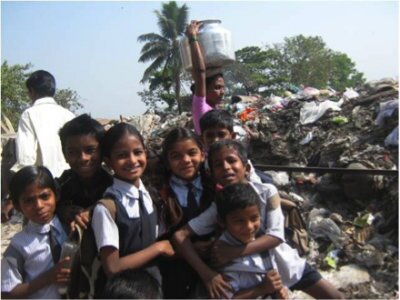 In recognition of World Food Day on October 16, this conversation showcases solutions that address urban food issues in the Global South — including hunger and malnutrition, but also obesity and unhealthy lifestyles. The solutions are even more varied than the challenges, extending to national campaigns, school lunches, plugging food gaps, urban agriculture, food donations, and public-private partnerships.
Read on to see reports from our community managers in São Paulo, Nairobi, Johannesburg, Mumbai, Jakarta, and Lagos, then add your thoughts in the comments below.

|

|

|

|

|

|
 |
Alimentação saudável e "consciente" em São Paulo
Catalina Gomez, Coordenadora da Rede em São Paulo
O Estado Nutricional dos residentes de São Paulo foi desenvolvido em 2010 pela Prefeitura para conhecer o estado nutricional da população e orientar as politicas públicas na matéria. Segundo o relatório, a prevalência de adultos com sobrepeso foi de 34 por cento e de obesidade 13 por cento. Este último dado representa mais de 800 mil pessoas obesas na cidade. Os mais afetados são homes casado maiores de 50 anos. O relatório não achou nenhuma relação direita entre nível socioeconômico e o sobrepeso; com referência à obesidade achou que ela é sofrida um pouco mais pelos cidadãos de menores ingressos, mais a diferencia não foi considerável.
 O relatório também destaca que em torno de 56 por cento da população apresenta insatisfação com o peso atual, sendo que a metade dos pesquisados responderam "não fazer nada para emagrecer", por em quanto 24 por cento respondeu fazer exercícios e outro 24 por cento cuida da alimentação.
Aquelas informações do Estado Nutricional somadas às pesquisas recentes que tem achado um aumento do sobrepeso entre crianças e adolescentes em São Paulo, evidenciam a urgência de desenvolver intervenções que promovam uma alimentação adequada e hábitos saudáveis, incluído o aumento dos exercícios físicos.
Atualmente a Secretaria Municipal de saúde lidera vários esforços na melhora da nutrição além da casa, envolvendo as escolas e lugares de trabalho. Para atender as crianças e jovens, a Secretaria tem uma parceria com a Secretaria de Educação para garantir alimentação adequada nas escolas públicas. Como algumas escolas terceirizam os serviços, as secretarias desenvolveram guias para os fornecedores de serviços consigam garantir menus adequados e balanceados. Para aquelas escolas que tem cozinhas, elas tem apoio regular de nutricionistas que ajudam na construção dos menus e supervisam a qualidade dos alimentos y sua variedade. Em quanto aos exercícios físicos, as escolas agora oferecem mais de uma aula de educação física e promovem atividades físicas depois do horário escolar para garantir envolver as crianças e suas famílias na pratica de esportes e de atividade física periódica.
 Para melhorar o estado nutricional das pessoas que trabalham e não conseguem se alimentar em casa, a Secretaria de Saúde achou que embora existam opções de alimentação saudável, muitas vezes os mesmos clientes fazem decisões pouco saudáveis. O melhor exemplo é o consumo excessivo do sal, que tem se relacionado com enfermidades cardiovasculares. Para responder a esta situação a Secretaria desenvolveu uma serie de materiais didáticos e lançou uma campanha de "consume consente do sal", que tem contribuído na mudança para o consumo de menores porções do sal.
Outro mecanismo para melhorar a nutrição na cidade, são os concursos de culinária saudável que organiza a Secretaria de Saúde. Alguns dos concursos atraem públicos bem diferenciados; um dos concursos que merece destaque foi aquele de culinária hospitalar que conseguiu uma participação massiva e culminou numa publicação de receitas inovadoras. A publicação tem sido adotada por vários centros públicos de saúde e tem incentivado a outros a criar suas próprias receitas saudáveis.
Foto: Secretaria Municipal de Saúde

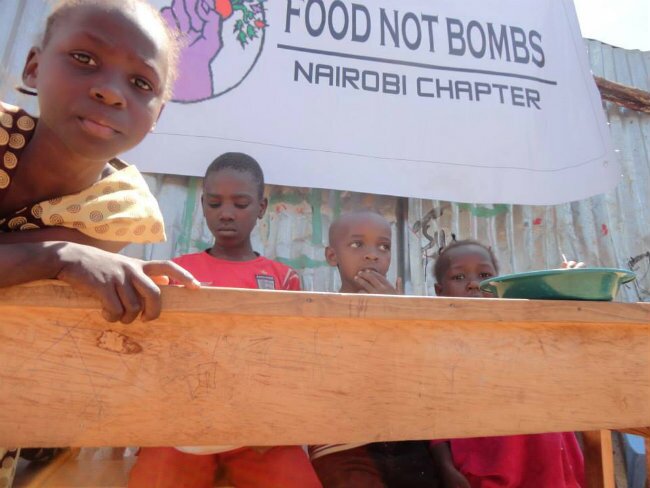 Many in the "industrial" North are experienced in finding ways to access the excess food. They reach agreements with retailers or locate where it is disposed of and scavenge it from there. While some do this for their own personal consumption, others have made a form of activism out of it and use excess food to create "feeding centers" in which the less fortunate can come and get a free plateful of whatever is on the menu.
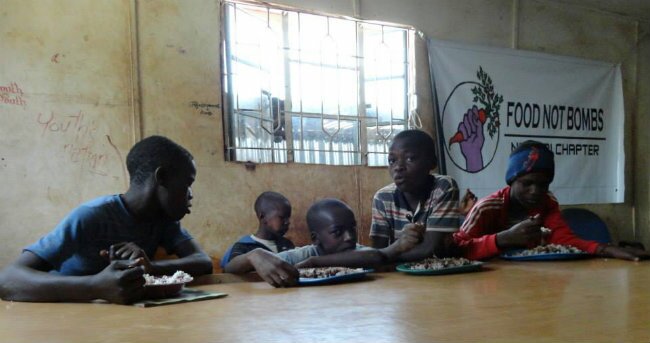 Following the forum, Butler and Rori approached various Nairobi grocery stores and food producers to explore the option of arranging weekly collections. Although the two initially managed to secure some food and conduct a few successful "feeds," these were mainly one-offs, and it wasn't until this year that Rori managed to up his game and make FNB Kenya activities a regular occurrence.
 Urban agricultural models can also allow numerous other advantages. Urban agriculture is already a source of income and employment for many households globally, including micro-enterprises (compost, packaging, processing, sales, etc.) and informal sector activities (street hawkers, organic waste collection, recycling, etc.). Agricultural initiatives can also be associated with rehabilitating the environment (and, in so doing, addressing the 'political ecology' of cities, where the poor are often unsafely located on low-lying flood plain areas); and it also has a role to play in fighting malnutrition resulting from poverty. When approached as an interconnected system, these different dimensions of urban agriculture (economic, ecological, social, etc.) — in a European context — have been termed 'r-urban' systems. 'R-urban' refers to a broad strategy of urban resilience involving the creation of locally closed ecological and production-consumption cycles, which link diverse urban activities (economy, habitat, mobility, urban agriculture, culture).
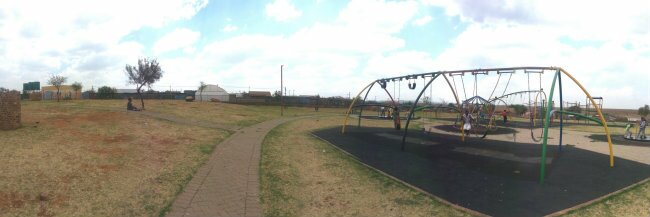 Although in South Africa over a quarter of the population experiences hunger and over a quarter more lives at the risk of being hungry, urban agriculture as a specific policy intervention is promoted only in a fragmented way. As a case in point, recently the City of Cape Town Council controversially released 300 hectares of farmland to developers, at the same time as construction of a pilot agricultural project site was completed in Johannesburg by Johannesburg City Parks and Zoo in partnership with the Neighbourhood Development Partnership Grant, a national fund which aims to stimulate investment in underserved neighbourhoods. The latter, the 'Lakeside Community Food Gardens', attempts to develop a flexible urban agriculture model with a view to feeding local markets; and follows the City's new co-operative 'hub-and-spoke mode' of food production, which combines several small providers into a single supply chain.
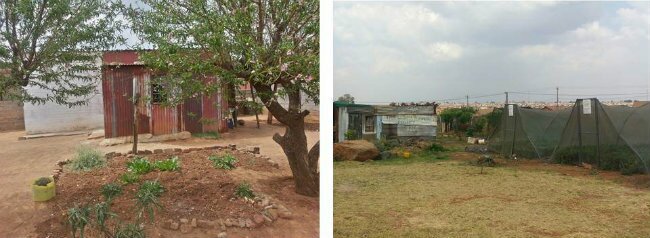
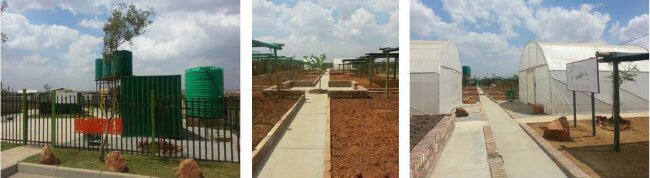
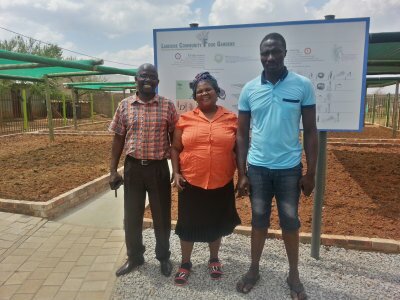 The Food Gardens is built in Orange Farm, Johannesburg, in one of South Africa's largest informal settlements. Building upon an agricultural base that already exists, and part of a broader wetland rehabilitation project, the Food Gardens upgrades an existing community farming site and begins to encourage 'r-urban' networks. Designed by Newtown Landscape Architects, the Food Gardens consists of 31 raised vegetable plots (also allowing for fair distribution of produce amongst community members), with supporting irrigation and composting infrastructure. Aided by information signage, the facility also allows for skills dispersal.
 While the future may be urban, the urban may be forced to become more rural, transforming our notions of both.
 A forthcoming study by Rachel D'Silva, a researcher at the Observer Research Foundation in Mumbai, looks at food access and nutrition for children both in an unstructured and a structured slum. The results are startling, but the issue is solvable. D'Silva presents key target areas for intervention by government and civil society.
 I was surprised to find children having distended abdomens — about 32 percent among unstructured slum samples — an occurrence that I had never expected to find in the city. A number of clinical findings surprised me, including the high rate of morbid conditions such as poor appetite, pain in limbs, and skin infections seen among children of the study population. Families and children also reported having to face food shortages on certain days that I found hard to believe.
 One immediate step to improve food access is to ensure quality midday meals for all school-going children. Another focus area is to strengthen food charity networks, both religious and others in the city. Pulses (legumes) can be given through PDS, since grain alone does not ensure adequate nutrition.
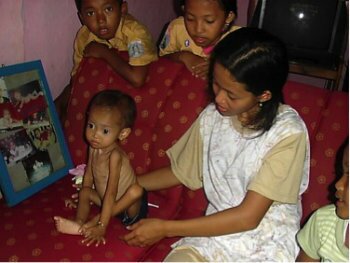 Hasil SEANUTS menunjukan bahwa jumlah anak Indonesia yang mengalami pertumbuhan terhambat atau pendek (stunting) mencapai 34 persen dan malnutrisi dialami oleh 22,3 persen anak. Jumlah ini ternyata lebih buruk dari yang dialami Vietnam. Sedangkan, meski tidak banyak, namun kasus kelebihan gizi juga dialami oleh anak Indonesia sebesar 4 persen. Efek dari beban ganda gizi ini beragam misalkan adanya gangguan perkembangan otak, kecerdasan, mudah terkena penyakit, gangguan pertumbuhan fisik dan metabolism dan dalam jangka panjang akan menyebabkan masalah-masalah seperti diabetes, kegemukan, penyakit jantung dan jenis penyakit lainnnya ketika mereka dewasa.
 Food Bank Nigeria (FBN) is a non-governmental organization that focuses on mending the food gaps in Nigeria. Their mission is to effectively address identified food gaps in Nigeria through sourcing and distribution of food, appropriate innovative programs, education, and advocacy. The organization serves as a central pantry for other organizations working to fill the gaps created by inadequate food supply, lack of affordability and during emergency situations, through soup kitchens, shelters, group homes, senior centers, and emergency food pantries. FBN's programs are wide reaching, catering to different social groups and age grades in need of food supply, including children, senior citizens, single parent families, the homeless, the unemployed, disaster victims, and many other special needs groups.
Comments
Jo'burg R-urban farming
Tariq I was very interested to read how Johannesburg authorities are taking an interest in facilitating urban gardening schemes.
I was wondering, how is access to the raised plots determined? Who gets to farm there and how long do they have the rights to farm them?
Also I was interested to know if there are any specific techniques that are being used to maximise production and whether the food is all meant for personal consumption or whether authorities are also helping growers sell their produce on the market.
Katy Fentress
URB.IM - Nairobi Community Manager
@whatktdoes
Thanks
Thanks Katy. See my comments at Wura below.
Sal de Ervas
Catalina thank you for posting the "Sal de Ervas" image! I intend to follow the recipe and make some for myself immediately...
Katy Fentress
URB.IM - Nairobi Community Manager
@whatktdoes
Sal de Ervas
Katy! I’m glad you have adopted this recipe! It’s great to expand local knowledge from Sao Paulo to Nairobi!
More individuals with initiative
The idea of Food Bank Nigeria and Food Not Bombs really interest me. Western world is already familiar with the idea. When I visited the US, I was amazed how one simple church was able to implement this idea by collecting foods from bakery shops and mini markets and everyday they give it to homeless people, orphan house and even students dorm.
I also saw the importance of network here as shown in Nairobi case. Katy, have you identified similar effort done by individual with noble vision? I know you mentioned that FNB will increasingly important in the future, is it just because the factor from Northern counterpart or there is rising awareness shown either by the government or public regarding food issue? I mean in Indonesia, it is more communal issue if you have hunger neighbor. Few people think to make collaboration with shops or supermarkets as usually their almost-expired foods are taken by their employees.
widya anggraini
World Food Day
It is a great thing to celebrate the World Food Day and to see the impact many organizations are making all over the world. Food banking, as a non-governmental initiative, is a novel idea in Nigeria focusing on food rescue, food preservation, warehousing and distribution as a way of helping solve the problem of food insecurity. You will be shocked at the quantity of food that is wasted weekly in the midst of extreme hunger and poverty.
However, it takes more than just food to eliminate hunger in any community. A popular proverb says that "it is better to teach a man to fish than to give him fish". This is where the social enterprise angle to food banking adds to the long term sustainability of this laudable initiative. While the hungry are being fed, innovative ideas about how to empower them through education and entrepreneurship should be thoroughly considered. Nobody can do all these alone!! It will take a network of like-minded individuals and organizations to work together to build an enduring support network. Let us all join hands to free our people from hunger and give them the hope of a better tomorrow. Nobody should go to be hungry even if they have no job.
Hey everyone! Let's join hands
Hey everyone! Let's join hands to eradicate war and poverty in our countries. Pamoja. Amani
Getting food to the right people
The idea of urban gardening in Joburg is very interesting.I was wondering who the food supply from the urban gardens carter to and how they are distributed? Is it just for those in the immediate community and would the process follow as if they were grown in rural areas and supplied to urban centers?
While speaking with FBN project coordinator, I got the sense that getting the food supply to those without access to food and ensuring the project has an effect in plugging supply and access gaps is an important factor for the organisation, so they take extra care in the agencies they partner with. It would be interesting to know how the urban garden supplies are distributed.
Yes. Every donor wants to see and feel the impact
Yes. Every donor wants to see and feel the impact of his/her donation. More so, they want to be sure that the intended beneficiaries actually get the help they (the donors are giving). Foodbank Nigeria acts principally as the main distribution hub ensuring that there is proper accountability in the entire chain from collection, storage and distribution. So it is a rigorous process of screening the agencies, FBOs and CBOs we work with to protect the name, products and integrity of donors and our own brand too.
Community cooperatives and urban vs. peri-urban contexts
There is small-scale farming in Orange Farm, Jhb, already. Much of this is simply for survival, although some is sold & some is for social & philanthropic purposes. With the pilot Food Garden project, the City built upon this to help establish it as a viable economic model. The City also invested in farming infrastructure (digging a borehole, treating the water, an irrigation system).
The Food Garden project in Orange Farm has only just been completed (you will see in the pictures that there are no crops yet). The project will be run by a community cooperative, which still needs to be finalised, but which will probably be based on the existing community farming structures.
The idea was that the some produce would be distributed amongst the urban farmers themselves (as far as I could gauge in interviews this is based on commitment, as not everyone is committed to the daily labour that farming entails), while the rest would be sold to the local market (traders in the main goods market in Orange Farm currently get produce elsewhere, & not from within Orange Farm). A stall has also been built on site for trading.
If there is surplus, relationships can be established with other markets also; although this is meant to act as a pilot project and not a one-off, so other projects could possibly still develop and expand the model. There is also still much scope & need for 'urban' food gardening pilots and initiatives, as opposed to 'peri-urban' contexts such as Orange Farm.
City contrasts
World Food Day is the day to reflect about our relation with food and how its production can be more sustainable. It is also the day to remember that although there has been significant improvement, the world, is still far to eradicate hunger. Greater attention should be given to solutions that improve access to quality food and also that reduce the waist of food. I was very happy to read various URB.IM initiatives precisely addressing these issues, like the case of Johannesburg and Nairobi.
In this week’s articles as well as in our previous discussion on “Food, nutrition and the urban poor” from May 2013 (http://urb.im/c130520), we have debated the contrast that many cities are presenting: part of their population has little access to food and suffers from malnutrition, while another part, although has access to food, is suffering from overweight and obesity. With this situation in mind, the challenges faced by cities are enormous as they are no longer only in need of “more food” for its dwellers. Cities must be proactively thinking today and in the years to come how to improve awareness and knowledge on nutrition and healthy lifestyles to all its dwellers. It’s a public health issue that should be given enough attention and priority by governments and civil society.
Places of extremes
The modern world is a place of extremes. Globally a billion are overweight while a billion go hungry.
These articles mention great initiatives, in schools, & in channeling excess food toward those who need it. Hopefully something sustainable can come from them.
Hunger and school performance
Katy, I wanted to expand on one of the ideas you touched on in your article from Nairobi — the idea that lack of concentration due to hunger was a very real effect of the under nourishment Dori's kids were experiencing. Not only does under nourishment lead to poor health conditions for children, but they also tend to do poorer in school. As you said, it's hard to concentrate when the vital energy from food is missing. That means that under nourishment has a reverberating impact on society as a whole, since these children may end up eventually dropping out completely.
Nutrition links to education and performance
Its interesting to see how nutrition and food access can impact various aspects of life and can be easily linked to education of children. In Nairobi it was found that lack of food affected concentration and performance, while in Lagos, FBN found that providing lunch packs at schools helped increase student attendance to schools and frequency levels. They might be coming to school for the lunch but they end up leaving with food for the mind and body.
Diet and concentration
Carlin you are absolutely right. I remember observing the same thing a few years ago when I was working in a primary school. There was one child in particular who would always act up and could not concentrate for more than ten minutes in a row. At one point I asked him what he had for breakfast and he told me that he had to play video games so did not like to eat before school but that sometimes he had a Coke and a Mars bar... (I never established if the days in which he had a huge sugar hit before coming to class were the days in which he was really really bad although I suspected as much)
Katy Fentress
URB.IM - Nairobi Community Manager
@whatktdoes
Obesity and malnutrition in children
I agree with Cata in the sense that this week's articles show how in many large cities striking number of children still go hungry, at the same time that obesity is becoming a problem for other children. Probably this can be explained by the fact that low nutrition- high calorie foods are also the cheapest and more readily available. In Bogotá, for example, sugary sodas are cheaper than high quality milk. Thus the obese children tend not to be the most affluent, but those barely escaping the poverty level.
I was just in Cali doing research for the Green Corridor project, and they are contemplating the creation of kiosks where children in the poorest areas can get free fruits or fruit juice. They are also contemplating the creation of urban gardens as a way to connect the communities with the green spaces, and to supplement the supply of much needed high nutrition vegetables. Without urgent and significant strategies, the obesity problem is likely to grow very fast.
Extreme measures needed
These issues bring to mind the high-volume soda ban in New York City. What's perhaps most interesting to me is that while the mayor received quite a bit of initial backlash when the ban was proposed, looking back a hundred years from now, what I think we'll find is that bold, radical measures like bans on low nutrition-high calories foods and drinks are exactly what were needed. Extreme measures always seem like over-reach at first, until someone's life is personally transformed by the poor eating (or drinking) choices of a loved one. The truth is that many of us, consciously or sub-consciously (or due to the logical allures of cheap food) need more regulation when it comes to food choices. Perhaps it's sad to say but the deck is stacked against many of us, so much so that giving us a free choice has proven to be an invitation to a medical minefield.
The time has come for us to ban things that appear "normal" food choices and to work with governments to communicate the urgency of alternative options, especially for the poor.
Many are moving from the food basket
In most parts of Africa, the people who need to stay and farm at the arid areas are moving to urban centres due to over concentration of resources. There is a need to decentralize and make good use of lands through proper farming methods.
Add new comment