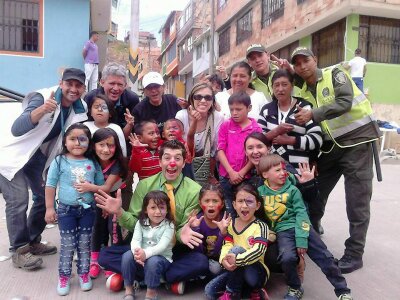
Partisipasi Anak dalam Membangun Kota Layak Anak
 Surabaya, 18 January 2016 — Anak kerap dipinggirkan dalam proses pengambilan keputusan. Sebagai kelompok minoritas anak mendapat diskriminasi dan terabaikan hak-hak dasar mereka sebagai warga. Kota Layak Anak merupakan inisiatif UNICEF yang telah diadopsi oleh Surabaya untuk memastikan aspirasi anak tersampaikan dan tercermin dalam pembangunan kota. Baca lebih lanjut.
Children’s perspective in city planning
Surabaya, 18 January 2016 — Children are often marginalized in the development process. As minorities, children are discriminated against, neglected, and receive little attention in city planning. Child Friendly City is a UNICEF initiative that has been adopted by the Surabaya city government since 2010 to ensure that children’s aspirations are conveyed and reflected in urban development. See more.
 Partisipasi Anak dalam Membangun Kota Layak Anak
Widya Anggraini, Surabaya Community Manager
Surabaya, January 18 2016
Konsep pembangunan di Indonesia yang lebih menekankan pada insentif ekonomi untuk mencapai kesejahteraan kerap menegasikan keberadaan kelompok-kelompok minoritas termasuk anak. Mereka kerap dianggap sebagai kelompok yang suaranya tidak patut didengarkan dan tereksklusi didalam proses perencanaan pembangunan. Akibatnya adalah pembangunan yang tidak mencerminkan kebutuhan anak dan tidak terpenuhinya hak-hak anak. Inisiatif Kota Layak Anak (KLA) merupakan pintu masuk bagi kota-kota di Indonesia termasuk Surabaya untuk mulai melihat anak sebagai salah satu populasi kunci perkotaan dan memenuhi hak dasar mereka. Surabaya sendiri telah mencanangkan KLA sejak tahun 2010 dan telah menerima beberapa kali penghargaan. Komitmen mereka dibuktikan melalui dukungan regulasi dan membuka selebar-lebarnya ruang partisipasi anak dalam proses pengambilan keputusan.

Pemkot Surabaya mendefiniskan KLA sebagai kota yang menjamin, melindungi, dan memenuhi hak-hak anak dalam pembangunan untuk meraih masa depan melalui partisipasi pemerintah, masyarakat dan swasta. Pemenuhan hak anak tersebut diantaranya adalah hak memperoleh identitas diri berupa akta kelahiran, hak untuk berpartisipasi dalam pembangunan, hak berpendapat dan berekspresi, hak lingkungan keluarga dan pengasuhan alternative, hak kesehatan dasar dan kesejahteraan, hak pendidikan dan kegiatan seni budaya dan hak dasar lainnya. Komitmen pemerintah kota diterjemahkan dalam bentuk dukungan regulasi yaitu dengan menerbitkan Perda Penyelenggaraan Kota Layak Anak. Perda ini mengatur peran swasta dan masyarakat untuk mewujudkan KLA. Selain itu Pemkot juga membentuk Gugus Tugas Kota Layak Anak yang terdiri atas perwakilan lembaga eksekutif, legislatif, yudikatif serta masyarakat sipil dan swasta. Saat ini pada tingkat nasional telah diluncurkan Asosiasi Perusahaan Sahabat Anak Indonesia (APSAI) oleh Kementerian Pemberdayaan Perempuan dan Perlindungan Anak sebagai wadah bagi perusahaan yang berkomitmen untuk tidak mempekerjakan buruh anak dan mengalokasikan CSR untuk mendukung terwujudnya KLA. Surabaya juga mendorong pihak swasta tergabung dalam APSAI. Untuk melindungi buruh anak, Pemkot telah membuat perda yang mengatur tentang sanksi bagi perusahaan yang mempekerjakan buruh anak.
Partisipasi anak merupakan salah satu kunci keberhasilan KLA. Untuk itu telah dibentuk Forum Anak Surabaya (FAS) sebagai wadah partisipasi anak yang menampung dan menyalurkan aspirasi anak serta menyuarakan hak dan kewajiban anak. Forum anak terdapat pada tingkat kota hingga kecamatan, desa dan RT/RW. Kegiatan FAS beragam mulai dari kegiatan rutin seperti dialog bersama anak Surabaya, bakti sosial, perayaan hari anak dan pemilihan duta anak. FAS juga membentuk Organisasi Pelajar Surabaya (ORPRES) dengan beragam kegiatan seperti advokasi pencegahan kasus trafiking melalui konselor sebaya, isu lingkungan hidup dengan menanam mangrove, pengadaan lomba bakat anak dan kongres Pelajar Nusantara serta terlibat dalam penyusunan Perda Perlindungan Anak oleh Dinas Pendidikan Surabaya. Pemkot melibatkan pelajar untuk mendengar secara langsung aspirasi mereka mengenai berbagai permasalahan anak di berbagai bidang sebagai masukan dalam penyusunan perda.
PKebijakan Pemkot yang responsif anak ditunjukkan melalui penyelenggaraan sekolah ramah anak, sekolah adiwiyata, pemberian Bantuan Opersional Sekolah dan menyediaan kuota 5% untuk warga miskin, bantuan seragam dan perlengkapan sekolah serta komitmen memerangi angka putus sekolah dengan menginstruksikan kepada semua camat dan lurah agar memantau dan mendata jumlah anak putus sekolah di wilayah mereka. Dukungan kebijakan menjadi faktor signifikan untuk keberhasilan pelaksanaan KLA. Praktik baik yang telah berjalan agar diinstutusionalkan sehingga ketika terjadi pergantian pimpinan daerah, yang telah berjalan baik tidak akan berubah.Close.
Foto: Yayasan PKPA
Permalink to this discussion: http://urb.im/c1601
Permalink to this post: http://urb.im/ca1601jki
Children’s perspective in city planning
Widya Anggraini, Surabaya Community Manager
The concept of development in Indonesia emphasizes economic incentives. The consequence is that development neglects the existence of minorities, including children. Their views are often excluded in development planning processes, and that makes children’s voices and needs absent from most city designs. Child Friendly City (CFC) was initiated by UNICEF and was adopted by Surabaya in 2010. CFC has become an entryway for cities in Indonesia to begin seeing children as one of the city key’s demographics. Due to its successful attempts and a commitment to implementing CFC, Surabaya has received several awards already. The city’s commitment to the strategy is proven through regulatory support, and in the end, by the priority placed on providing space for young people to participate in the decision-making processes that affect their lives.
The Surabaya City Government defines CFC as ensuring protection and fulfillment of children's rights in the public and private spheres. Children’s rights, of course, are assumed to include human rights and civil rights. Fulfillment of these rights has been the main aim of CFC. Surabaya has issued regulation that supports its implementation. This regulation has set into motion the role of the private sector and communities to implement CFC. Surabaya also established a Task Force on CFC that consists of representatives of the executive, legislative, and judicial parts of civil society. Currently, at the national level, a program has been launched called Indonesia Child Friendly Company (APSAI) by the Ministry of Women Empowerment and Child Protection, which is a forum for companies that are committed to not employing child labor and allocating CSR to support the implementation of CFC. Surabaya encourages big-scale companies to join APSAI and promote CFC. In order to protect child workers, the city government has also made regulations governing sanctions for companies that employ child labor.
Children’s participation is the key success for CFC. To ensure their participation, a forum has been established called Surabaya Children Forum (FAS). This forum collects children’s aspirations and communicates their messages to decision-makers in the government. The same forum, FAS, exists at all levels of the government, including the city, sub-district, village and neighborhood levels. FAS has different kinds of activities, ranging from regular activities such as dialoguing with the children of Surabaya, conducting social events, celebrating children's day, and electing child ambassadors. FAS also formed Surabaya Student Organization (ORPRES) with various activities involving schools around the city. Their activities include preventing trafficking through peer counselors, planting mangrove trees for the environment, and facilitating a youth congress as well as drafting local regulation on Child Protection by the Surabaya Educational Department. Surabaya invited youth, especially students within FAS, to listen directly and take into account their aspirations, input, and opinions in preparing the regulation.
Responsive regulation towards children is very important for any city’s future. And supporing the policies and programs that help evolve that regulation further is very crucial for a successful CFC. The best practices that have been implemented need to be institutionalized. Close.
Photo: Yayasan PKPA
Permalink to this discussion: http://urb.im/c1601
Permalink to this post: http://urb.im/ca1601jki

 Cali Como Vamos: midiendo el comportamiento del gobierno municipal
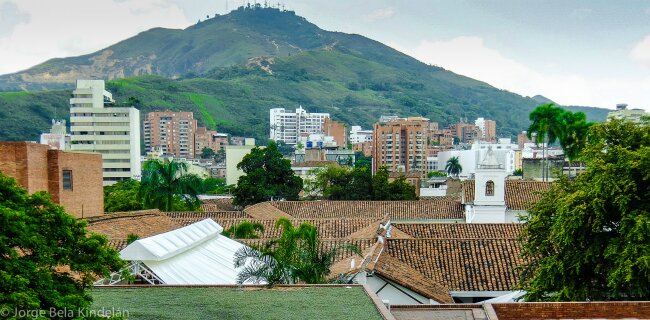 El objetivo de la iniciativa Cali Como Vamos es el realizar un seguimiento detallado a la evolución de lo que ellos denominan la "calidad de vida" en la ciudad. Uno de los aspectos más innovadores de este proyecto es que no solo utiliza una serie de indicadores para la elaboración de sus informes, sino que además realiza anualmente una amplia encuesta de opinión pública. Esto permite abrir el proceso de evaluación y de formulación de políticas públicas a la ciudadanía, y además añade un componente muy importante a la valoración del impacto de los programas y las políticas públicas, sobre todo en ámbitos en los que éste no se puede medir de forma efectiva mediante el uso de indicadores.
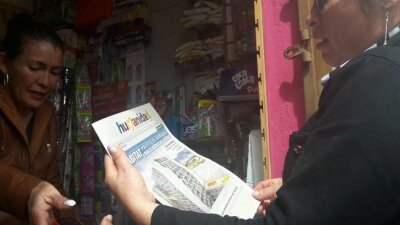
 En este proceso, la búsqueda de legitimidad internacional juega un papel muy importante. Es en este contexto en el que se enmarca la importancia que los Objetivos de Desarrollo del Milenio han jugado en la formulación de las políticas públicas durante el mandato de Gustavo Petro, que concluye con las elecciones que se celebrarán a finales de este año. El plan de gobierno de Petro se plasmó en un plan de desarrollo que recibió el nombre de Bogotá Humana. Aunque en este documento la se mencionan en alguna ocasión los Objetivos del Milenio, ha sido en documentos posteriores donde se ha puesto de manifiesto con mayor claridad el interés de la Alcaldía en enfatizar como el programa de la Bogotá Humana ha contribuido a mejorar dichos objetivos.
 El cumplimiento de los Objetivos de Desarrollo del Milenio no ha sido un objetivo exclusivo de Bogotá. Responde a un interés generalizado en el país, así como a iniciativas lanzadas desde el gobierno nacional desde mucho antes de la llegada al poder del actual alcalde, Gustavo Petro. Sin embargo, debido a la situación política particular de la capital de Colombia, los Objetivos de Desarrollo del Milenio han sido utilizados con un mayor vigor tanto como mecanismo de formulación de políticas públicas como de mecanismo de validación política de las mismas, en un entorno político hostil.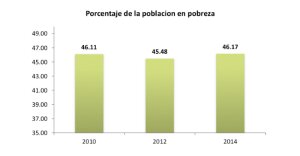

 Morte e vida da São Paulo abandonada
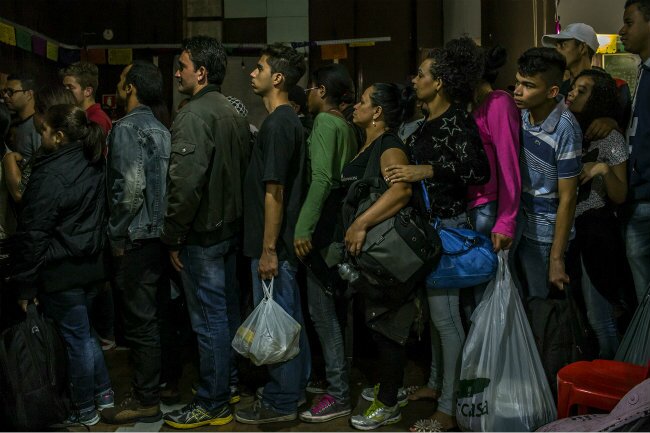 A ação marca os 19 anos do massacre de 21 sem-terra pela polícia militar em Eldorado dos Carajás, município no Estado do Pará, durante manifestação do MST (Movimento dos Trabalhadores Rurais Sem Terra). Desde então, todos os anos durante o Abril Vermelho movimentos sociais que lutam por condições dignas de moradia e trabalho, tanto na cidade quanto no campo, fazem novas ocupações de imóveis que não cumprem função social.
 Atualmente, o centro não é mais o lugar com o maior índice de domicílios vagos na cidade. No entanto, o valor do metro quadrado subiu 189% entre 2000 e 2010, frente a um aumento de 135% no município em geral, conforme dados da prefeitura. O maior custo da moradia provocou aumento do déficit habitacional, que na RMSP chegou a mais de 782 mil unidades em 2010, de acordo com levantamento da Fundação João Pinheiro.
 Model pengelolaan wilayah kumuh di Surabaya diawali dengan program KIP (Kampung Improvement Program) tahun 1969 hingga 2000 yang melakukan penataan kampung dan wilayah kumuh melalui perbaikan infrastruktur dasar seperti akses jalan, jalan setapak di perkampungan, penghijauan, tempat pembuangan sampah dan mengatur limbah serta membuat gorong-gorong. Hasil dari program ini adalah perbaikan rumah-rumah di kampung secara mandiri, kebersihan lingkungan dan asri karena banyaknya tanaman dimana-mana. Kekuatan dari program ini sendiri adalah adanya partisipasi masyarakat dari sejak proses perencanaan hingga implementasinya dan kerjasama dengan pemerintah daerah sebagai mitra sejajar. Tingkat kemandirian dan swadaya masyarakat juga besar sehingga program ini dapat berlanjut meski dana dari Bank Dunia telah lama habis.
 Between state and society: the work of the Socio-Economic Rights Institute of South Africa
 Explain briefly what SERI does and how it was established.
 What are some of the greatest challenges that SERI engages?
 Bring Back Our Girls: Advocating for vulnerable groups
 The newly formed advocacy group was created to give voice to the plight of the families of the abducted girls, and has spent the past year squarely focused on this mission. They have driven local and international campaigns to call the national government to action. However, despite attention brought to the issues by the group's advocacy efforts, response from national authorities has been questionable and has been criticized by citizens and by the press. This raises the question of how much less responsive the authorities would have been without the group's efforts, and also highlights the impact of the group in pushing for political will. In efforts to sustain the movement, there have been several meetings and marches in various cities throughout Nigeria, starting with Abuja and extending to Lagos and Ibadan. To commemorate one year since the abduction, the group reignited the movement and support for release of the girls through various advocacy activities such as marches, social media advocacy, and media events.
 Hazard Centre: Institution-building through community empowerment
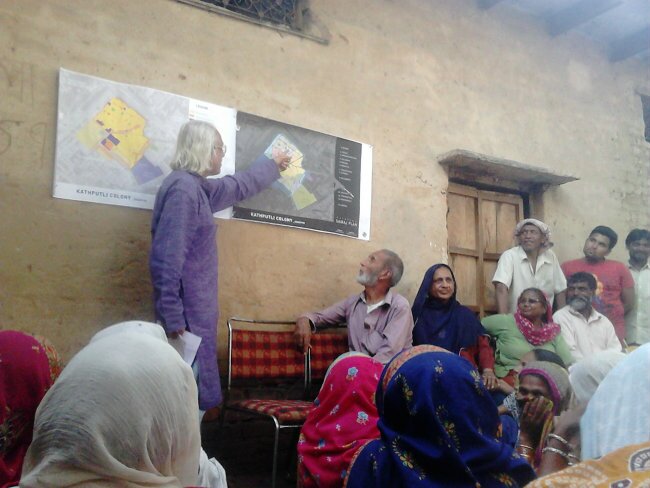 The process started in 2013 when the residents of Kathputli Colony — the first proposed in-situ slum redevelopment under the government's slum-free India plan called Rajiv Awas Yojana — approached the Hazards Centre with a public-private partnership contract between real estate company Raheja Developers and the Delhi Development Authority. The residents had received the contract through the Right To Information Act and wanted to understand it. The Hazard Centre team explained how the contract affected the rights of the local residents, described the roles of different government departments, and also helped them to articulate their demands.
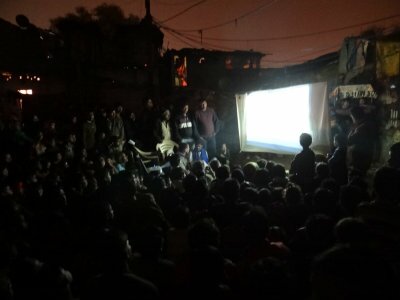 In February 2014, the residents received a notice from the DDA for an immediate shift to transit camps at Anand Parbat. The Hazard team advised the community on legal actions and recommended a lawyer to petition the Delhi High Court. When the authorities responded with aggression, the Hazard Centre gave out information regarding redress of grievances. The community wrote to the National Human Rights Commission, the Election Commission, the Minorities Commission, the Women's Commission, and others to bring pressure to bear on the police to stop the violence and harassment.