
SALUD-ARTE
 Mexico D.F., 3 augosto 2016 — La marginación y bajo desempeño escolar se combaten con un programa nutricional y artístico en escuelas públicas de la Ciudad de México. Leer más.
Art to improve health
Mexico City, 3 August 2016 —
Mexico City has launched a program to bring more cultural activities into some of the most troubled school system and has shown the powerful ripple effects of pulling the plug on technology.See more.
 SALUD-ARTE
María Fernanda Carvallo, Gestor Comunitario de Mexico D.F.
Mexico D.F., 3 agosto 2016
El Gobierno del Distrito Federal, en colaboración con la Secretaría de Educación Pública imparten un programa nutricional en cien escuelas públicas de nivel básico de la Ciudad en las 16 delegaciones; que han reportado altos niveles de marginación, exclusión social y bajo desempeño escolar. El programa se acompaña de actividades artísticas como complemento para la activación física en los niños. En su operación diaria, el programa Salud-Arte les da a los niños comida nutricional y balanceada, clases de teatro, danza, canto, instrumentos musicales, nutrición, activación física y educación ciudadana. Para llevar a cabo el programa, la Secretaria de Educación en coordinación con el Consorcio Internacional de Arte y Escuela capacito a 500 maestros para impartir las actividades artísticas en las escuelas inscritas. Lo que persigue este programa es "Formar de manera integral a niñas y niños en el Distrito Federal desde una perspectiva de Educación para la Vida, a fin de contribuir al desarrollo de sus potencialidades y permitirles tomar decisiones vinculadas a competencias de autocuidado de su salud, expresión artística y ciudadanía con énfasis en el aprender a convivir."
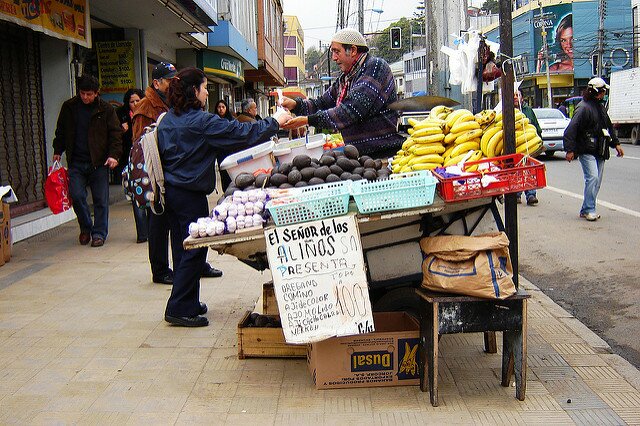
Actualmente más de 21 mil niñas y niños del Distrito Federal son parte del programa y reciben formación en alimentación, arte y deporte, de forma gratuita. Salud-Arte en las escuelas da comida diaria a los niños y posteriormente brinda dos talleres artísticos. Entre algunos logros visibles del programa, es que las familias han logrado involucrar hábitos más adecuados y nutritivos, no solo en los niños sino que también al interior de las familias. En este sentido, los gastos de las familias en alimentación se han reducido, por lo que las jefas de familia pueden tener mejor manejo de las finanzas del hogar. Las madres de los niños inscritos brindaron testimonio sobre un mejor manejo del tiempo libre de los niños, al alejarse de los gadgets e invertir tiempo en cultura y actividad física. Por su lado, Guadalupe Loaeza , afirma que la relación entre nutrición, actividad física y hábitos de cultura están totalmente ligados, por ejemplo: la obesidad infantil crece al ritmo de las horas de ver televisión, los jóvenes entre 8 y 18 años pasan más tiempo frente a la computadora, TV y videojuegos que cualquier otra actividad en su vida por lo que las actividades artísticas rompen con este vicio. Así mismo, el programa demuestra que los niños pueden expresar emociones y mejorar su estado emocional a través del teatro, la música y la danza.
La secretaria de cultura del DF afirmo que a través de la cultura se integra a la sociedad en un placer colectivo e individual. Así mismo, es un medio para construir ciudadanía y barrios; además de promover hábitos saludables, brinda identidad social y comunitaria. En este esfuerzo se inscribieron organizaciones de la sociedad civil, legisladores y especialistas en el tema. No obstante, la participación de los papás ha sido fundamental al asistir a las pláticas informativas para promover y apoyar las buenas prácticas que requieren los niños a esa edad en el día a día.
Foto: Claudio Montes
Permalink to this discussion: http://urb.im/c1608
Permalink to this post: http://urb.im/ca1608mxs
Art to improve health
María Fernanda Carvallo, Mexico City Community Manager
Mexico City, 3 August 2016
The Government of the Federal District , in collaboration with the Ministry of Education , have implemented a nutritional program taught in hundreds of elementary public schools in Mexico City’s 16 municipalities, These schools have reported high levels of marginalization, social exclusion and poor performance. The program is accompanied by artistic activities as a complement to physical activation in children. In its daily operations, the Health-Art program gives children nutritionally balanced meals, theater classes, dance, singing, musical instruments, nutrition, physical activation and citizenship education. To carry out the program, the Secretary of Education, in coordination with the International Consortium of Art and School, trained 500 teachers to impart artistic activities in the registered schools. What drives this program is the idea to holistically raise the city’s children Raise “from the perspective of Education for Life, in order to contribute to the development of their potential and enable them to make decisions related to skills of self-care of health, artistic expression and citizenship with an emphasis on learning to live together.”
Currently, more than 21,000 children in the Federal District are part of the program and receive training in food, art and sport – all free of charge. Health-Art in schools gives daily meals to children and subsequently provides two artistic workshops. Among some visible achievements of the program is that families have managed to involve more adequate and nutritious habits, not only in children but also within families. In this regard, household expenditures on food has been reduced so that female heads of households can have better management of household finances. Mothers of children enrolled gave testimony on better management of free time of children, which make them stay away from gadgets and invest time in culture and physical activity. In this sense, Guadalupe Loaeza says that the relationship between nutrition, physical activity and cultural habits are fully linked; for example, childhood obesity grows according to the pace of TV hours; young people between eight and 18 spend more time at the computer, TV and video games than any other activity in their life. Artistic activities break this habit. Likewise, the program shows that children can express emotions and improve their emotional state through theater, music, and dance.
The Secretary of Culture of Mexico City affirms that it is important to integrate cultural activities into society for collective and individual pleasure. It is also builds citizenship and neighborhoods; in addition to promoting healthy habits, it provides social and community identity. Because of this, civil society organizations, legislators and specialists have also been enrolled in the subject. However, the involvement of parents has been crucial to attend informative talks to promote and support good practices that require children at that age in daily routines.
Close.
Photo: Claudio Montes
Permalink to this discussion: http://urb.im/c1608
Permalink to this post: http://urb.im/ca1608mxs

 Disaster management through mobile phone helplines
 Managing urban areas has become one of the most important development challenges of this century. Worldwide statistics reveal the increasing number of disasters and its impact on lives and properties. The Lagos state government, over time, has set up various agencies to manage the different emergencies that may arise in the city as part of its commitment to securing citizen’s welfare. As a response to the increasing number of medical emergencies in the city, the state government established the Lagos State Emergency Medical Service (LASEMS) and the Lagos State Ambulance Services (LASAMBUS) in 2001. The two services run on a continuous basis with provision of free treatment within the first 24 hours of emergencies. The project works with a radio-communication network that links the public, the two services and the state ministry of health together. A phone hotline (112 or 767) has also been dedicated to these services in order to facilitate fast communication whenever there is a medical emergency. There are 25 operational points of the ambulance service scattered around the city in order to aid easy emergency response. Some of the ambulances also have additional mobile intensive care unit (MICU) with capacity to administer advanced life support for critical cases. The services have been noted to lead to “significant improvement in the response time and quality of care with attendant improvement in morbidity and mortality rates occasioned by medical emergencies” in the city.
 Inclusion of people with mental health disorders

 Salud, Arte y Procesos Participativos
 El taller de la Evaluación de la Salud [Health Assessment (HA)] invita a la comunidad a asistir a eventos quincenales donde la comida y el café se servirá como una manera de trabajar a cabo estas llamadas enfermedades urbanas. El taller da a la comunidad las herramientas para trabajar en sus problemas del barrio injusticia ambiental, tales como el río altamente contaminado en el lado Este del barrio.
 Saúde portátil
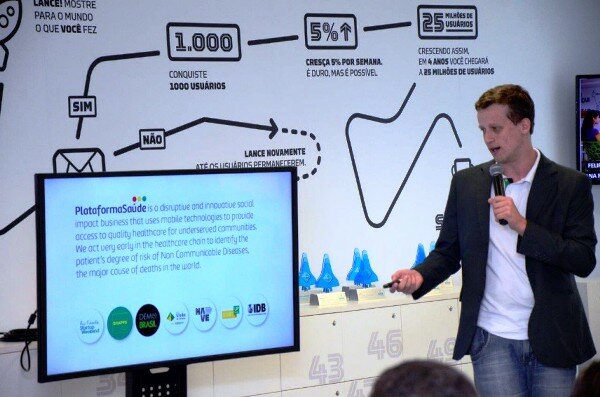 A proposta da Plataforma Saúde é atuar de forma preventiva, com foco na população carente em áreas de difícil acesso. Para isso, leva serviços de qualidade, integrados e sustentáveis, que identificam problemas antes dos sintomas aparecerem e antecipam as DCNTs, a zonas quase esquecidas. Seu principal produto, o Saúde Agora, consiste numa avaliação geral do paciente – incluindo testes de glicemia, colesterol e aferição de pressão arterial – e de seu estilo de vida, com atenção especial para os fatores de risco, como o tabagismo, o consumo nocivo de álcool e o sedentarismo.
 Can good data save lives?
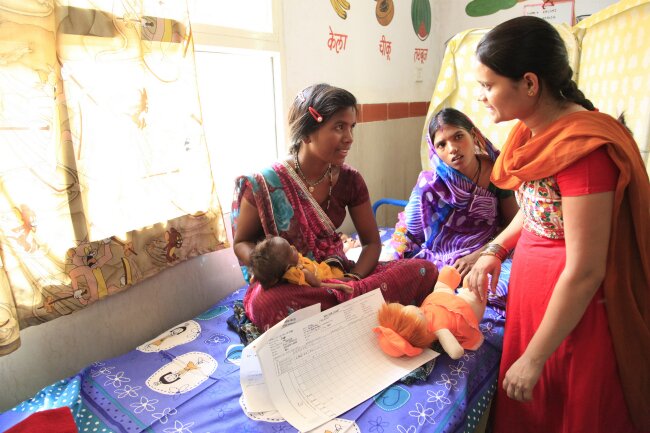 Mumbai-based Vera Solutions believes that data can transform the efforts of social-change organizations. The company uses mobile data and cloud-based systems to build customized databases. These databases can be automatically analyzed and give important programmatic information to staff in home offices and in the field to understand quickly the effectiveness of particular approaches and programs. Time, effort and funds can be spent more efficiently and effectively with easily accessible numbers from the field.
 Reducción de la mortalidad infantil en Cali
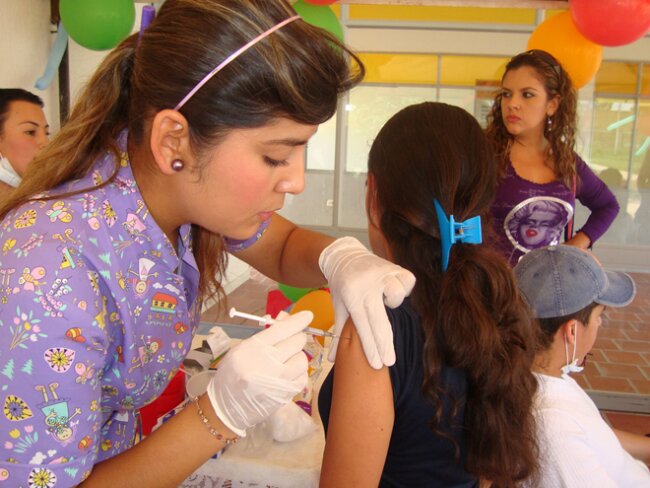 Los Objetivos de Desarrollo Sostenible buscan reducir la mortalidad infantil hasta menos de 25 por 1 000. En Cali en el año 90 la mortalidad infantil era de 200 niños por cada 1 000 nacidos. En la actualidad se ha reducido hasta 9,7 en el año 2014. Cali ya cumpliría, por tanto los ODS. Sin embargo, la inmensa mayoría de los fallecimientos que aún se producen podrían ser evitados. Según el informe Cali Cómo Vamos, hasta el 63 por ciento de las muertes que se produjeron en 2013 eran evitables. También este informe evidencia las fuertes desigualdades territoriales que existen dentro del municipio: las tasas de mortalidad en la Comuna 3 duplican a la media del conjunto urbano. La desigualdad se refleja en todos los aspectos relacionados con la salud infantil. Por ejemplo, el 75 por ciento de los embarazos de madres adolescentes tiene lugar en las comunas más desfavorecidas. La disponibilidad de espacios públicos para jugar es 200 veces superior en las barrios más acomodados.
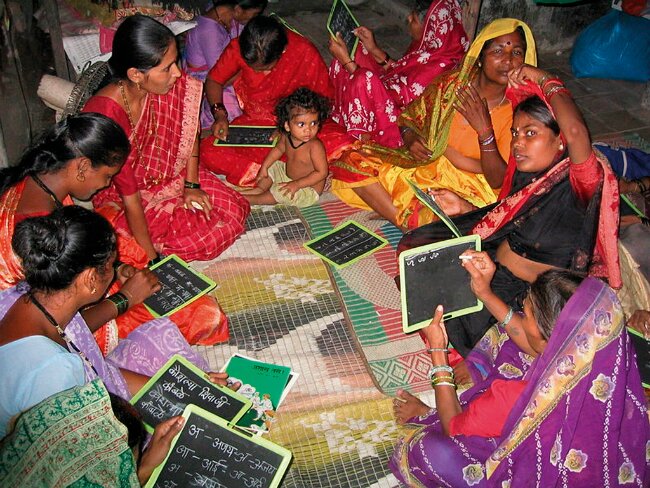 Bangalore-based mDhil, an online medical resource center, has developed videos and mobile campaigns to bring important health information, especially targeting women, to users in the city and beyond. In order to make the information accessible to a variety of patients across socio-economic barriers, mDhil's materials are available in multiple Indian languages. Videos cover a range of topics, from health and wellness to food to ideas for healthier lives. At the heart of the mission, though, is to target women in need of better information about their personal health matters.
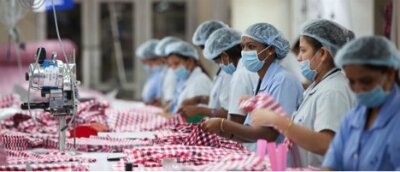 The first step for HERhealth is to approach ready-made garment companies and interact with a small number of factory nurses and female workers to train them on basic health using a peer education methodology. Once approved, the trainers from HERproject start training a handful of workers, called peer educators, who later disseminate their learning to other female workers. Common diseases addressed include anemia and reproductive tract infections, and common areas of education include maternal health, menstruation, personal hygiene, etc. For instance, many women who use pieces of cloth during their periods are taught the benefits of using sanitary napkins. In addition, the women are taught how and why they should boil drinking water and the different types of water-related diseases this simple precaution combats. This not only promotes better health for the women themselves but also for their families and communities, resulting in decreasing rates of diseases like cholera.
 Giảm rào cản Hộ khẩu cho con em công nhân nhập cư
 Không Hộ khẩu - không tư cách pháp nhân