 Administração Pública Deliberativa em Curitiba
Andréa Azambuja, Coordenadora da Rede em Curitiba
Curitiba, 11 febrero 2016
Nos últimos anos, o conceito de "participação popular" mudou no Brasil. Isso ficou evidente com as manifestações de junho de 2013, que levaram milhares a protestar nas ruas contra o aumento da tarifa do transporte público, e com a tendência crescente do brasileiro em acatar o ativismo político pela internet. De fato, a pressão pela população sobre as decisões dos governos aumentou.
Isto é sensível em Curitiba, onde grupos da sociedade civil como Mobiliza Curitiba e Cicloguaçu têm exigido participar das decisões que trilham os rumos da cidade. Alerta à transformação, a Prefeitura da capital tem procurado se adaptar ao movimento e provar que não só está aberta ao diálogo, mas que o valoriza e quer ampliá-lo.
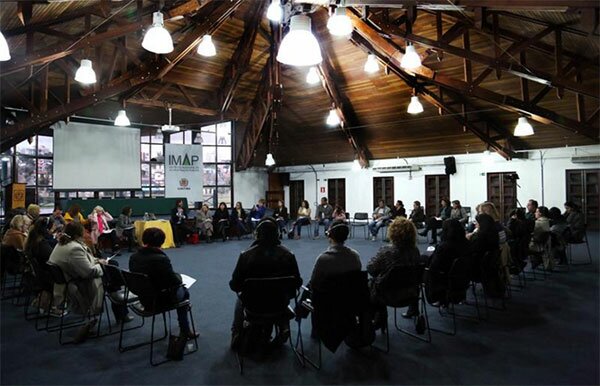
Administração Pública Deliberativa
Para isso, implantou, em 2013, o que chamou de Administração Pública Deliberativa: um modelo de gestão que propõe a ação compartilhada entre cidadãos e servidores públicos na solução de problemas coletivos. Nesta nova fase, foram repensados e reformulados desde os processos de formação dos funcionários do poder público – hoje mais focados nas noções de colaboração, confiança e protagonismo –, ao poder de decisão dos curitibanos.
Entre as ferramentas adotadas, foram criados ou reativados inúmeros conselhos municipais, consultas e audiências públicas, ocasiões nas quais a população discute a gestão dos recursos públicos com as autoridades, apontando prioridades de investimentos. O número de representantes civis aumentou, e instâncias que até então eram apenas consultivas viraram determinantes.
Só em 2015, foram mais de sete mil participantes presentes fisicamente em reuniões referentes a leis orçamentárias e mais de 15 mil sugestões de melhorias ao poder público. Também foram criados, com igual número de representantes civis e da administração pública, a Comissão Municipal dos Direitos Humanos e os Conselhos do Transporte Coletivo, da Juventude e da Condição Feminina, entre outros – entidades com poder deliberativo, normativo e de fiscalização.
Outras formas de participação popular potencializadas foram os atendimentos (via telefone) pelo número 156, que agora inclui um chat online, e pelas redes sociais*, com mais de 443 mil acessos para o acompanhamento de ações. Só no Facebook, a Prefeitura acumula mais de 766 mil likes, quase quatro vezes mais do que a página de São Paulo, com população dez vezes maior.
Todas as informações coletadas, presencialmente ou à distância, são reunidas e analisadas pelo Instituto Municipal de Administração Pública (IMAP), autarquia administrativa, e, posteriormente, pela comissão de formatação de texto de leis. Segundo a Prefeitura, muitas sugestões são acatadas e entram no orçamento do ano seguinte, mas ainda não existem índices de comprovação.
Um longo aprendizado, mas com trunfos inquestionáveis
Inspirado em programas em Barcelona, na Espanha, e em Rosário, na Argentina, cidades que investem em experiências de participação cidadã, o modelo de Administração Pública Deliberativa de Curitiba ainda está em construção, e é preciso qualificar, e muito, os processos. Apesar disso, este modelo é um reconhecimento oficial da insuficiência da democracia representativa para encontrar, de forma isolada, resoluções para os problemas complexos que atingem a população e questiona, de forma clara, o gerencialismo centrado na autoridade e na competição – trunfos que não podem ser ignorados.
[*Aproveite a oportunidade e conheça o Colab.re, uma rede social que não só permite aos cidadãos mapear necessidades e falhas em espaços públicos, mas sistematiza as informações, monitora os fluxos em tempo real e repassa os casos aos órgãos públicos competentes. A plataforma também foi adotada pela Prefeitura de Curitiba, como projeto piloto, no esforço de aumentar a participação popular nas decisões governamentais e tem recebido diversos prêmios pelo mundo.]
Close.
Foto: SMCS/IMPA
Permalink to this discussion: http://urb.im/c1602
Permalink to this post: http://urb.im/ca1602cup
Deliberative Public Administration in Curitiba
Andréa Azambuja, Curitiba Community Manager
Curitiba, 11 February 2016
In recent years, the concept of "popular participation" has changed in Brazil. This became evident after the protests of hundreds of thousands of people in June 2013, who took over the streets to stop the increase in public transport fare, as well as the growing trend in Brazil of online political activism. It seems that the people have increasingly been more vocal about the decisions the government has been taking.
This is apparent in Curitiba, where civil society groups such as Mobiliza Curitiba and Cicloguaçu, have been demanding to participate in decisions that are carving out the paths of the city’s future. Aware of this movement, the state capital's municipal government is trying to adapt and prove that not only is it open to dialogue, but values popular opinions and is willing to expand the connection.
Deliberative Public Administration
To this end, in 2013 the city’s administrative board implemented what they called Deliberative Public Administration: a management model that proposes shared action between citizens and civil servants in solving collective problems. In this new phase, the process of training government employees and the decision-making power of citizens were rethought and reworked, and they now focus on notions of collaboration, confidence, and leadership.
Among the tools created were numerous new or reactivated municipal councils and public consultations and hearings, occasions in which residents discuss the management of public resources with the authorities and have a say in directing investment priorities. The number of civilian representatives has increased, and instances that were previously only advisory became decisive posts.
In 2015 alone, more than 7,000 participants were physically present at meetings concerning the budget laws, and more than 15,000 suggestions for improvements were made to the government. Also created, with the same numbers of civilian representatives and public administration, were the Municipal Commission of Human Rights and the Councils of Public Transportation, Youth and Women, among others – entities with decision-making, regulatory, and supervisory power.
Other forms of popular participation that were through phone interactions, which now include an online chat room, and social networks *, with more than 443,000 hits for follow-up actions. On Facebook, Curitiba’s City Hall has more than 766,000 likes, almost four times more than São Paulo's page, although the latter’s population is 10 times larger.
All information collected, in person or at a distance, is gathered and analyzed by the Municipal Institute of Public Administration (IMAP), an administrative authority, and then by the commission that writes the laws. According to the City Hall, most suggestions are accepted and go into next year's budget, but there still are no proof indexes.
A long learning, but with unquestionable assets
Inspired by programs in Barcelona, Spain, and Rosario, Argentina, cities that invest in citizen participation experiences, the deliberative model of Public Administration of Curitiba is still a work in progress, and the proccesses need to be qualified. Nevertheless, this model is an official recognition of the failure of representative democracy to find, in isolation, resolutions to the complex problems that affect the population and questions, clearly, managerialism centered on authority and competition – assets that cannot be ignored.
*Colab.re, a social network that not only allows citizens to map needs and gaps in public spaces, but organizes information, monitors the flows in real time and forwards cases to the competent public bodies. The platform has also been adopted by Curitiba's City Hall as a pioneering project, in an effort to increase popular participation in government decisions, and has received several awards around the world. Close.
Poto: SMCS/IMPA
Permalink to this discussion: http://urb.im/c1602
Permalink to this post: http://urb.im/ca1602cup

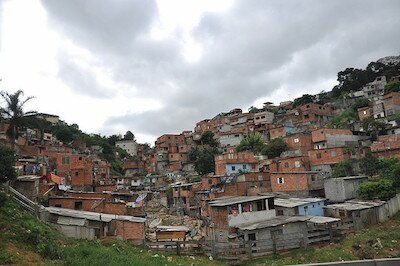 February 2016 — The failure of many urban development initiatives has been attributed to a top-down approach. More recently, activists have called for impacted groups to be seen as stakeholders and decision-makers in the process to improve their conditions. Inputs from communities and affected groups will help to create more appropriate solutions that meet the needs on-the-ground and, importantly, be more sustainable. Cities around the world have been experimenting with participatory process – in slum redevelopment, city planning and ensuring women’s safety, for example. This month on URB.im, our community managers will share what's worked, and, in some cases, what hasn't, all to bringing to a better understanding of not just what the 21st century city should look like, but what's the best way to get there.
 El urbanismo pedagógico: un nuevo método de planificación en Medellín
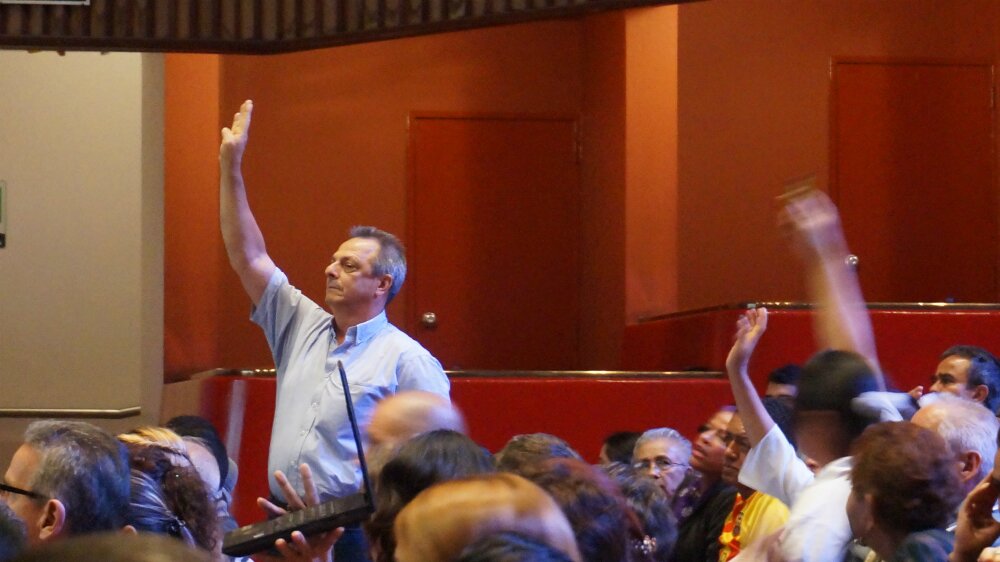 El urbanismo social, que empezó durante la administración Fajardo (2004-2007), permitió una gran (y publicitada) transformación urbana focalizada en temas sociales. El urbanismo pedagógico fortalece el urbanismo social y supera sus objetivos: la meta ya no es sólo implementar un proyecto social, sino hacerlo con la población afectada. Tiene que ser entendido entonces en el contexto de la gran transformación urbana en la cual los ciudadanos quieren participar. Medellín, y de manera general Colombia, se caracteriza por una falta de confianza en los políticos y en la administración, sobre todo en el periodo anterior a la administración Fajardo, debido a las altas tasas de corrupción, los niveles bajos de transparencia, y otras dimensiones de mala gobernanza. La participación en proyectos urbanos es entonces beneficiosa, ya que genera una relación de confianza entre los gobernantes y la población.
 Las nuevas tecnologías para fomentar la participación ciudadana
 "Illuminating them": A community-driven project for spreading education
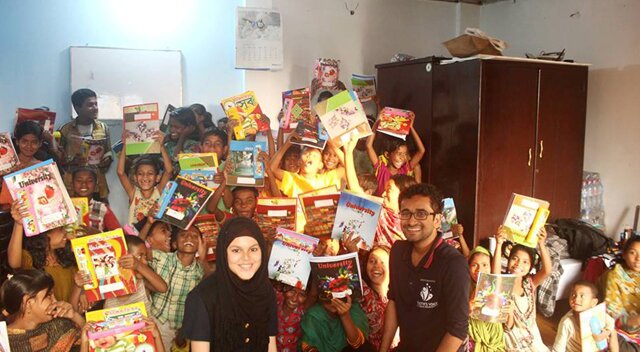 One of the projects being carried out in Chittagong using participatory methodology is "Illuminating them." The program is being initiated by youths from academic institutions in Chittagong gathered under an organization named “Youth’s Voice.” These youths want to turn the problem of overpopulation in Chittagong into an advantage by utilizing the human capital to build on more human capital for the country. These volunteers, who are from class nine to undergraduate students, teach slum children. These youths are enthusiastic volunteers who are willing to contribute their time and energy to spread the knowledge that they have obtained in their academic institutions. According to one of the volunteer teachers, they teach basic English, math, Bengali language and science education to the slum children who regularly attend these classes. They usually focus on giving these children a moral foundation so that they can take good and calculated decisions in the future for their as well as community’s betterment. The children and parents are first interviewed to know the level of child’s knowledge in different subjects taught through this project. The children are then grouped according to the knowledge they have in the subjects for efficiency in teaching and learning.
 Salud, Arte y Procesos Participativos
 El taller de la Evaluación de la Salud [Health Assessment (HA)] invita a la comunidad a asistir a eventos quincenales donde la comida y el café se servirá como una manera de trabajar a cabo estas llamadas enfermedades urbanas. El taller da a la comunidad las herramientas para trabajar en sus problemas del barrio injusticia ambiental, tales como el río altamente contaminado en el lado Este del barrio.
 URB.im: Qual a maneira mais eficiente de reivindicar políticas públicas?
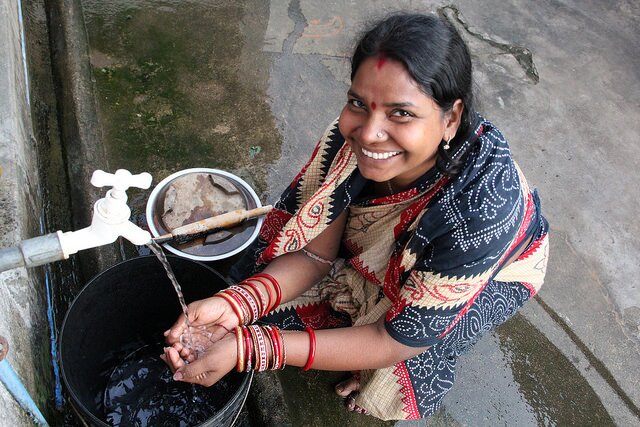 This project includes facilitators to conduct informal sessions with the people to talk about the act of defecating in the open and discuss its impact on people and the environment, coupled with the introduction of some diseases that originate from open defecation. This is followed by walks around the community to see who has defecated in the open and how many have done it that day, which really triggers the shame and embarrassment in the people. Therefore, not only do they have knowledge about open defecation and its negative impacts but they are also ashamed of their behaviour and encouraged to act on it and defecate in proper conditions.
 TP.HCM áp dụng CNTT nhằm hỗ trợ quá trình tham gia của người dân: Chú trọng thiết kế hay chất lượng?

 Fortaleciendo los canales participativos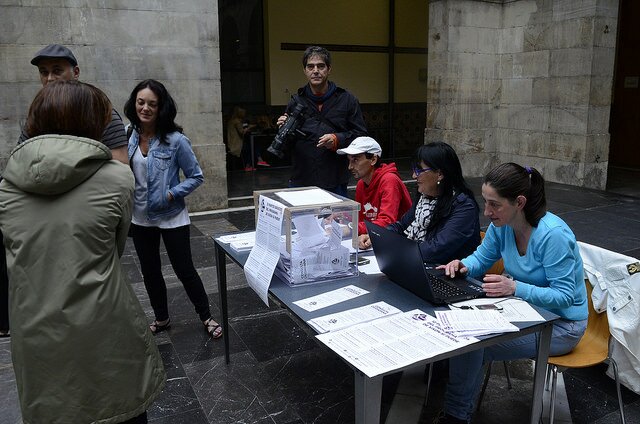

 E-Sapa Warga Mendorong partisipasi dalam proses pembangunan
 Lofty ideals, baby steps: Delhi’s experiments with participatory budgeting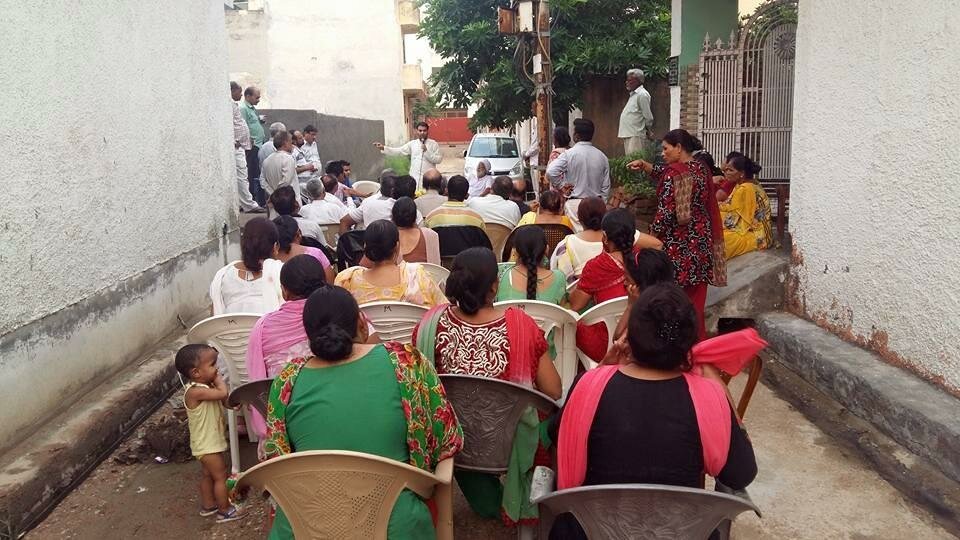

 Governance accountability through citizen’s engagement
 المنهج التشاركي لبرنامج الإتحاد من أجل المتوسط للتنمية العمرانية في منطقة إمبابة
 ومن هذا المنطلق، ظهرت مؤخرا عدة مشروعات تهدف إلى تنمية إمبابة عمرانيا وإعادة تخطيط المنطقة لتحسين جودة الحياة فيها. فعلى سبيل المثال، فإن “مشروع تطوير قطاع شمال الجيزة” الذي يضم في خطته تطوير إمبابة والوراق، يعد من أكبر مشروعات التطوير التي تتبناها الحكومة المصرية مؤخرًا بما يحظاه من اهتمام أجهزة الحكومة وقدر ضخم من ميزانيتها. كما أولت المنظمات غير الحكومية والإقليمية اهتماما بالمنطقة تماشيا مع منهج الحكومة حيث ظهر مشروع التنمية الحضرية التشاركي الخاص بهيئة المعونة الألمانية وكذلك مشروع التحسين العمراني بمنطقة إمبابة والذي يتبناه الاتحاد من أجل المتوسط.
 Participatory aquifer mapping: Giving citizens the knowledge for action


 Muungano Support Trust (MuST): Pioneering community-led approaches
 MuST represents over 64,000 members, from 300 informal settlements across 15 counties in Kenya. The organization tackles complex development challenges pertaining to social justice and urban equity through participatory processes. Participatory planning and enumeration projects have increasingly become a focus of sustainable development organizations and their initiatives. Community-led mapping efforts have been central to innovative projects such as Map Kiberia and Ushahidi, which outsource the process of data gathering to the ‘crowd’.
 What does participatory urban design look like?
 What is the place of broader participation and how was the process developed?
 Planning the revolution to stop violence against women
 OBR marks a call for justice, accountability, and change. Each year on February 14, the movement goes global, and cities become spaces for mass collectivism and solidarity to create this change. The movement is recreating public and private space for safety and unity.
 Community-driven initiatives to reduce gender-based violence
 At SNEHA, the Society for Nutrition, Education & Health Action, Nayreen Daruwalla and Professor David Osrin have been working on community programs to reduce gender-based violence in Dharavi, one of Mumbai’s largest informal settlements. SNEHA trains women in the community, known as Sanginis, to help identify and refer cases of gender-based violence to the counseling center. However, the ubiquity and normality of such crimes made it difficult to track the frequency with which they were occurring, except for those who approached the counseling centers.
 Pesquisa pioneira sobre vida nas ruas é feita por população de rua
 Entre os críticos, padre Júlio Lancellotti, vigário do povo da rua, acusa recenseadores de temerem abordar sem-teto e de ignorarem, por exemplo, quem estava abrigado em
Comments
Planning the revolution to stop violence against women
Dear Gemma,
As usual great article with great approach. Thanks for letting us know about OBR. As you know in our continent violence is highly and continuously practiced against women. In Egypt and rest of Middle East, it is also characterized by "religious" and patriarchal trait and attitude. OBR is great approach to have a collective activism. I wonder if the government has any negative stance toward OBR in Dar elsalam? In our countries, there is a thin line between mess and activism, collective movements and political transformation. So how the government addressing the OBR participatory approach and how it sees it?
OBR and social research
Hi Gemma, apparently your topic is similar to what is hot event now in Indonesia. We do the campaign in many different ways including dance every thursday in Jakarta, workshop, dialog, media engagement, garage sale and many other creative activities. These activities tried to engage more men in women movement. which is i think interesting because more people aware about the campaign the easier the message come to audiences. So far, indonesia has a strong feminist movement, but lack of participation from men.
hi Felipe,
i am also very interesting in your article. it's good and very important issue that we always forget when we do social research. It is important to make definition of homelessness or poverty according their point of view as later on the result and maybe the recommendation will actually reflect what they need. Quick question, how did the government react to this kind of activity? will they use or adopt the result as well?
Muungano Support Trust (MuST): Pioneering community-led approach
Hi Hilary,
It was interesting to understand the participatory mapping approach specifically for and by the informal food vendors. From what I understand, the participatory mapping exercises do help in empowering the community as well as assert their rights. I get a good understanding of the process and outcome of this exercise. I was also wondering what has been the State's response to this? Your last point about inability to address the larger realities makes me wonder would a street vending policy would be of any help. The Indian Street Vending Act, 2014 doesn't really address this larger issue but only recognizes their presence and gives them legitimacy. And also, I do not quite get understand this statement- "Vending within informal settlements means that customers’ incomes are minimal". Do these vendors sell only within their boundaries/fences?
Thanks,
Aditi
Indonesian forum grows to protect LGBTI rights
Hi Widya,
It's great to see more people come together to support LGBTI rights and the forum seems like a safe platform and conduit for tolerance. I was wondering how the plans, advocacy strategies, dialogues, and partnerships work on the local level? On the ground level and in cities, who are the agents who can incite change and raise awareness?
Best,
Ashali
Legal status of the LGBT community
Hi Widya, I also have a question regarding your article: you mention that discrimination, and even violence, againts the LGBTI community are still a reality. Still, what is the legal status of this community? I assume that unions or marriage are still out of the question, but is this community criminalized by the State in any way? Is discrimination just a social phenomenon or there are also discriminatory laws in the books?
Thanks! Jorge
LGBTI without legal protection
Hi Jorge,
Thank you for the question. you are right, same sex marriage is way to bold to promote in indonesia. It was never been in agenda for advocacy as well for lgbti community because it will be impossible. Their status is illegal. there is no legal protection for lgbti indonesia thats what they are prone to discrimination and violence. 89,3 % of LGBTI people have experienced violence, physical, psychological, sexual economic and cultural violence , by family, community and police. There is no exact number of LGBTI population, but some research said roughly there are 4 million of LGBT in indonesia
There is criminal sanctions for homosexuality especially in provinces that apply islamic law such as in Aceh. Discriminatory laws are also there. such as in Palembang province that give punishment up to 100 lashes for same sex acts. Social ministry is still also consider LGBTI as part of social problem so that they need to be rehabilitated. Violence acts also came from civil police especially to transgender people. It is an on going hot topic at the moment in Indonesia and there is an indication that LGBTI communities in Indonesia will receive more threat. Human Rights Watch has been working on this and sending letter to the president but not yet response.
Local LBGTI Ngos
Hi Ashali,
Yes, there are growing movement to support LGBTI groups in Indonesia but the pressure is also big, especially lately when every institution attacked LGBTI from government, public, religious leaders as well as university that supposed to be neutral. LGBTIQ Forum is at Indonesia level and this is consist on around 120 smaller organizations from around Indonesia. One example is Arus Pelangi (AP). It's national LGBTI organizations that works with 12 local organizations at 12 provinces. AP coordinates and makes plan as well as provide capacity building for these local organizations. Different provinces face different situation. some places have good acceptances by government and communities but some are the total opposite.
These local NGOs are the change maker. They work sometimes unanimously for safety reason. They are very active and reach out to young LGBTI especially and provide support system. The organizational and human resources capacity is different between provinces but they have good relations between provinces and between organizations. Training in advocacy and paralegal have been given. They will use the skill back to their place. These local ngos are now also have skill in doing small research and documenting violence. The result will be used later at local and national level. They are now in the process of making policy briefs for provincial consultation and national dialogue in coming few months.
Add new comment