
Crime and violence
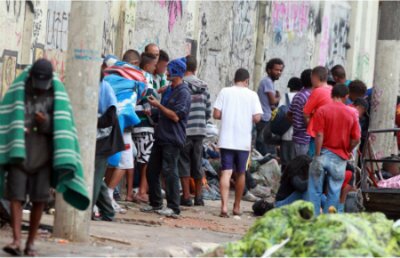 In many countries across the Global South, urban centers are also centers of crime and violence. This can take many shapes, including gang violence, sexual assault, petty theft, drug trafficking, domestic violence, and human trafficking. Coupled with issues of inequality, rapid urbanization, and a young population, crime takes off and thrives thanks to weak law enforcement and high levels of corruption. Violence and crime create a vicious circle: developing countries have high crime levels, which in turn derail further development.
Read on to learn about initiatives that are working to reduce crime and violence in Bangalore, Cairo, Mexico City, São Paulo, and then join the discussion in the comments below.

|

|

|

|
 |
Dreaming of positive paths for India's youth: Dream a Dream
Carlin Carr, Bangalore Community Manager
Juvenile crime all over the world often goes hand-in-hand with lack of opportunities. Blight-stricken areas from New York to Nairobi with low employment rates and education levels leave directionless youth with few options. Lacking support systems to show them alternative paths, teens often take to criminal activities. While crime amongst youth has not been such an issue in India's urban areas, recent studies show a marked escalation in illicit activities.
 In fact, the "State of the Urban Youth India 2012: Employment, Livelihoods, Skills" report that came out last year says that juvenile crime in urban areas of India rose by 40 percent between 2001 and 2010. The youth involved in criminal activity were largely from low-income working families, and the study found that "lack of education is an important factor with over 55 percent juvenile criminals being illiterate or with limited primary education," says a DNA article reporting on the study.
A Bangalore-based organization, Dream a Dream, has found a solution to setting youngsters from vulnerable backgrounds on a more positive path. Dream a Dream focuses on building life skills to equip youth with the decision-making, problem-solving and interpersonal and emotional skills necessary to transition better to adulthood. "Young people from vulnerable communities often live in unprotected environments, where they are exploited or lack opportunities for growth. Support institutions such as residential centers, offer a more loving and protective environment and meet the basic needs. But what happens when children from vulnerable backgrounds leave the safe zones of their homes and support institutions and need to cope with real life challenges successfully," says Dream a Dream.
Helping children and teenagers cope with life challenges is a skill that is not taught in school and is often lacking in their close personal networks. Without these essential skills, youth can often be led down the wrong path. Dream a Dream's holistic approach focuses on six key programs:
Dream Life Skills Through Sports, which uses football as a medium to develop skills and complement class-room education.
Dream Life Skills Through Arts for interactive sessions where young people use art and craft to communicate effectively.
Dream Outdoor Experiential Camps, where adventure games and outdoor camps build self-esteem and team work in participants.
The Dream Connect Program for career development. It offers the tools and foundational life skills that help transform ability to capability.
Dream Fundays, where young adults learn on fun, educational visits to new places.
Dream Mentoring, where a caring adult mentor encourages young adults to find answers to the challenges of growing up.
Many of the youth that have passed through Dream a Dream's program since 1999 have gained a greater sense of confidence and self-awareness. Eighteen-year-old Radha, for example, was on the path to quitting school due to family pressures. A Dream a Dream mentor helped Radha see the long-term value of her education, and worked to help Radha become a better decision-maker and to take initiative in her life. Empowering youth to initiative positive steps in their lives not only makes for better individuals but better communities as well.
Photo: Vinoth Chandar


 In an official a press release, OpAnti SH announced that there were 46 reported incidents of sexual assault in the June 30 protests, but the group assumes that there were many others that went unreported. In order to reduce the number of incidents, the group has suggested illuminating the entrances to Tahrir and using state media outlets through the Egyptian and Radio Television Union to create public service announcements and anti-harassment campaigns.
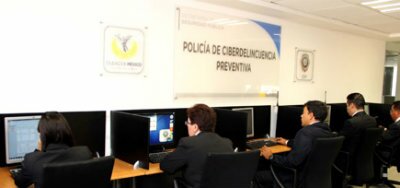 Este tema salió a la luz pública en el D.F. a partir del secuestro de un joven hijo de un empresario que fue capturado y asesinado en el D.F. Eduardo Muriel, especialista en seguridad, afirmó que las redes sociales además de exhibir a una persona, dan información de quiénes componen a la familia, en dónde viven y en dónde estudian. Esta información crea la posibilidad de un secuestro, sobre todo en población vulnerable, como los jóvenes que se exhiben de manera atractiva entre su grupo virtual.
 Dar uma resposta adequada à complexidade da Cracolândia virou um desafio de politica pública. Por uma parte, existia um evidente problema de segurança e ordem público. Por outra parte também existia um grave problema de saúde pública com a presença dos dependentes químicos. Além destes problemas existe uma problemática social enorme, com um grupo grande de crianças, jovens, mulheres e homes precisando um apoio integrado de assistência social, tratamento à dependência, moradia, educação e outros esforços para melhorar suas condições de vida.
Comments
Seguridad
Un factor común en la publicación de esta semana es la falta de factores que garanticen la seguridad. En este sentido, el establecer un contexto libre de violencia implica que las personas vulnerables se inserten en a dinámica de las ciudades a través de acceso a la educación, un estado de gobierno efectivo y oportunidades de empleo. Así mismo, el vincular las zonas marginadas con el centro de las ciudades a través de actividades económicas, como pudiera ser la agricultura urbana, puede generar insumos para conectar estas zonas con la economía local para generar alternativas de ingreso.
Counterinsurgency cops
Catalina, while the situation in Sao Paolo is very different from Mumbai, it did make me think about a city very near to where I grew up in the U.S. The city of Springfield is extremely poor, and in recent years, saw a rise in violent crime and gangs so high that the gangs had totally taken control over certain areas. In a recent episode of a popular US tv program called 60 Minutes, they featured new tactics to fight gangs, drugs and violence in these neighborhoods: cops who had been in Afghanistan saw parallels with the situation in Springfield, so they employed the same counterinsurgency tactics they were using in Afghanistan in this American city. Two things stand out to me that might be of interest to you: 1) the police had to be there on the streets, going door to door helping people in a variety of ways (getting them jobs etc--areas that were normally out of cops' job description), but all of it was to gain allies in the neighborhoods who could then help them to identify where the problems were and as they were happening. Secondly, children felt unsafe even going to school, so they came up with an idea of a "walking bus." The children of the neighborhood would walk altogether with police in uniform on their sides and teachers leading the way. It sent a powerful message to the neighborhood that safety was a priority. Here's the video, which you may find interesting: http://www.cbsnews.com/video/watch/?id=50152295n
Violence against women protestors in Cairo
Howaida, I was very interested to learn about Cairo’s initiative to prevent violence against women protestors. I actually wasn’t even aware of this situation.
In your opinion what are the main challenges faced by this initiative to effectively combat violence against female protestors? Are you aware of any practical actions from the local government to enforce punishment for this type of violent acts?
Accountability
Hi Catalina,
Sorry for my late response. Yes, you are absolutely right in saying that the main problem faced by OpAntiSH and other similar groups is the fact that it is hard to hold perpetrators accountable for their actions. Not only is it easy for those that initiate the attack to disappear within the large crowds but there are also others that are in the vicinity that "join in" because the opportunity presents itself.
To tackle this OpAntiSH has teamed up with other initiatives to try to address the cultural roots of sexual harassment. They also provide legal counsel to victims that want to bring forth sexual assault charges when the perpetrator is known. Moreover they have been using different traditional and social media outlets to empathize with women that have experienced sexual violence as victims. The number of sexual assault cases that have been brought to court has also risen in the last two years.
Howaida Kamel
Community Manager, Cairo | URB.im
Add new comment