
Books and projects worth sharing
 With the holidays fast approaching, you may be searching for ways to give meaningfully to those close to you as well as to communities and organizations around the world.
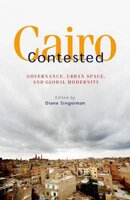
Our community managers in Mumbai, Cape Town, Cali, and Cairo share some great suggestions: innovative initiatives they think are especially worth supporting, as well as books that provide an in-depth glimpse into the vibrant histories and present-day complexities of some of the world's most dynamic cities.
Read on to learn more about these highlighted initiatives and book recommendations, and then share your own ideas in the comments below.

|

|

|

|
 |
Exciting projects and new books from Mumbai for the holidays
Carlin Carr, Mumbai Community Manager
In early November, the Duchess of York and Prince Charles visited Mumbai. The royal couple had many stops on their itinerary, but one of those was a very special project we featured for this issue last year, Mumbai Mobile Creches. For decades the organization has been quietly working in the most invisible parts of the city — the construction sites where families from poor villages around the country make their home temporarily to engage in this work for months or years on end. Mumbai Mobile Creches provides a school and daycare for the children of these families, and has expanded into working to help them receive proper medical care and check-ups.
 Mumbai is the type of city that makes you want to do something. When I first came in 2008, I had the same feeling. I started an English language program at a shelter for 20 homeless boys. This year, I decided that the kids needed to see the world beyond their very rudimentary makeshift home on the beach, right next to some of the fanciest five-star hotels in the city. We launched a crowd-funded campaign on Indiegogo called "Send Mumbai Street Children to Aurangabad" to send them on a trip outside the city. In a few days, we had met our goal, and within a couple of weeks, we doubled it! The project has inspired us to start a bigger "fresh air" trip campaign for the kids to visit their national treasures, enjoy the lovely nature of India's countryside, and bond together in a new environment.
There are many initiatives around the city working to improve the lives of children living in poverty. Anukruti, a project launched by Austrian architect Martina Spies, has found a unique way to bring playgrounds into informal settlements. She has designed handbags with the leather workers of Dharavi and is using the proceeds to fund the small-scale playground projects. The initiative gives work to the stitchers within Dharavi, while also providing much-needed spaces for children to jump, hang, crawl, and slide.
On the subject of Dharavi, the growing body of literature on Asia's best-known slum has a new addition. Earlier this year, "Dharavi: The City Within" was released. The book, edited by Joseph Campbell, includes articles on everything from how the slum accesses water to its mafia bosses. One of the most interesting pieces, written by Kalpana Sharma, a well-known journalist in Mumbai, is on the history of the Dharavi Redevelopment Project. The book stitches together a very vibrant portrait of its industrious, entrepreneurial residents and the challenges they face as the city seeks to "improve" the conditions on this much-coveted piece of real estate. "Dharavi: The City Within" is a must-read for all researchers interested in getting a broad perspective on the issues around redevelopment in one of India's megacities.
Photo credit: Dell Inc.

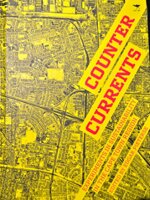 Counter Currents: Experiments in Sustainability in the Cape Town Region (2010): Cape Town is undergoing a growth spurt driven by both public and private sector investments, although there are very few book-length perspectives on the nature and direction of this growth. Addressing the gap in the literature and to shift public ideas and discourses, the book argues that Cape Town's physical metamorphosis is both unsustainable and culturally questionable. It explores several alternative urban development initiatives or "counter currents" to these processes, toward creating a more inclusive, vibrant, and sustainable city.
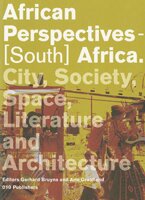 African Perspectives - [South] Africa. City, Society, Space, Literature and Architecture (2012): This book is the culmination of a series of discussions that began at the Faculty of Architecture at the Delft University of Technology. It forms the seventh volume of the Delft School of Design Series focusing on particular questions of urbanism and sustainability related to the South African urban context. The book seeks to construct a contemporary critical dialogue of current spatial practices and contemporary design instruments in relation to social, political, and governance structures. Topics within this volume are addressed under headings of 'Other Urbanisms', 'Tradition, Culture and Education', 'Urban Design, Civic Action and Agency in South Africa', and 'Future Perspectives'.
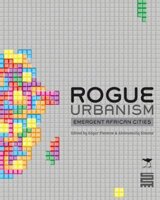 Rogue Urbanism: Emergent African Cities (2013): Rogue Urbanism is the outcome of a research exploration by the ACC at the University of Cape Town. The ambition of Rogue Urbanism is to produce new and relevant theoretical work on the "specificity" of African urbanism, working between theory, artistic representations of everyday practices, and phenomenology in African cities. The result is a series of exchanges between scholars and artists through textual and photographic essays, which showcase an ensemble of diverse perspectives to approaching and understanding African cities.
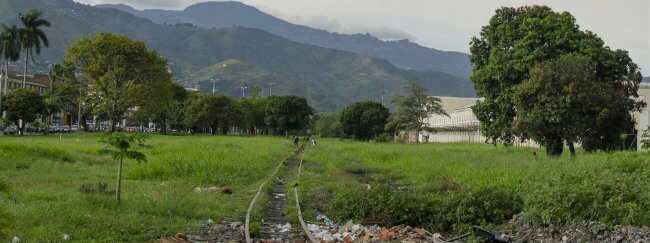 Cabe destacar que anteriormente se había aprobado la construcción en ese mismo corredor de una autopista de peaje, la Autopista del Bicentenario, cuyo proyecto llegó a estar bastante avanzado. La autopista hubiera creado una barrera física, incrementando aún más las diferencias sociales existentes en la ciudad, y existían serias dudas sobre la aceptación del pago de peajes por parte de los automovilistas. También hubiera tenido un efecto perjudicial en el uso de la bicicleta: Cali es una ciudad idónea para su uso, tanto por su orografía como por su clima, y pese a las barreras que suponen las vías rápidas, un 11 por ciento de los caleños la utilizan como su medio de transporte habitual. En su mayoría lo hacen por no poder permitirse ningún otro.

Comments
Planning
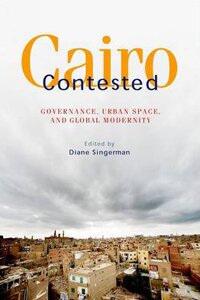
Lack of planning underlines many of the problems in large cities in the developing world. The terms used in the cover of some of the recommended books cannot be more eloquent: "rogue," in the case of Cape Town, or "out of control" in Cairo. Thus the project I recommend supporting, the Green Corridor in Cali, really strikes out, for its scope and its ambition. I will keep monitoring it closely for the group.
Green corridors
Jorge, the green corridor project in Cali is so fantastic. About a decade ago in the US, many of the old train track corridors that were no longer in use began to be changed over into bike tracks that, for now, connect many towns, but eventually, were supposed to connect an entire region. They have become a point of pride for the areas that have them, and great way to convert an unused section of run-down facilities into a healthy lifestyle focus area. Another great urban project like this is New York City's highline, which was an old section of train tracks in the city that were derelict and is now a long park for walking, art and street vendors. This article even mentions that an eco-friendly tram is going to be put up because the project is so popular: http://inhabitat.com/nycs-high-line-park-so-popular-that-creators-plan-a.... Looks like Cali is heading in the right direction!
Inter-disciplinarity
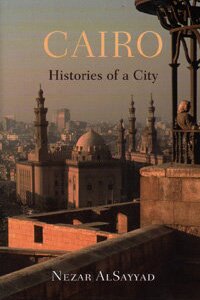
The projects and books are all really interesting. As a researcher, I find Nezar AlSayyad book on Cairo particularly fascinating for its inter-disciplinarity. It seems to be both a hybrid approach and product, allowing not only a novel end product but also allowing people from various disciplines different entry points to access it. As we increasingly realise the need for more inter/cross- disciplinary approaches, I think/hope we will increasingly see more of this kind of work in the future.
Add new comment