Urban Planning

An Urban Sustainable Development Goal. Why? And What?
Next year, the Millennium Development Goals (MDGs), adopted by the United Nations after the Millennium Declaration, are set to expire. The next set of global development goals, which are supposed to be more environmentally focused — the Sustainable Development Goals — are currently under discussion at the UN and elsewhere, including The Nature of Cities. Thomas Elmqvist wrote a piece on the justifications for an explicitly urban SDG; and a group of 12 writers participated in a panel to discuss just what an urban SDG would look like. Read more.

Innovating in an Urbanizing World: Leading From the Middle

Last month, I attended UN Habitat's World Urban Forum, the world's premier gathering on the subject of cities and our urban future. Every two years, stakeholders from across the globe come together at the Forum to examine the most pressing issues facing our rapidly urbanizing world. Over the next three decades, 2 billion people will be added to our planet and most of this growth will take place in cities in developing countries. So, for international development organizations like mine, Global Communities, being able to hear perspectives from the growing number of policy makers, foundations, private companies and city residents that travel to the Forum is an invaluable learning opportunity. Read more.

Frontier Cities: Forging Paths for Partnerships and Learning

As the world urbanizes, cities are poised to take the lead on many global issues like climate change, economic development, and poverty reduction. And the world will increasingly look to cities to take the lead. In the face of stagnant international negotiations on climate change, for example, cities are taking the lead through groups like C40, a network of the world's megacities taking action to reduce greenhouse gas emissions. Likewise, in an increasingly globalized economy, cities are investing in infrastructure and assets that maintain and attract companies in an effort to keep their competitive edge. Read more.

Event: World Cities Summit 2014
1–4 June 2014 Marina Bay Sands, Singapore

The World Cities Summit is the exclusive and premier platform for government leaders and industry experts to address liveable and sustainable city challenges, share integrated urban solutions and forge new partnerships. Highlights of the World Cities Summit include the Lee Kuan Yew World City Prize, World Cities Summit Mayors Forum, Plenary Sessions, Thematic Tracks, In-Focus Forums, Site Visits, Networking Events and strategic co-located events.

The 4th edition of the biennial World Cities Summit will be held in conjunction with the Singapore International Water Week and CleanEnviro Summit Singapore. This is an integrated platform to deliberate the solutions for a sustainable tomorrow. For more information or to register your interest to attend, click here.

Urban planning and design: laws, regulations, and the informal city

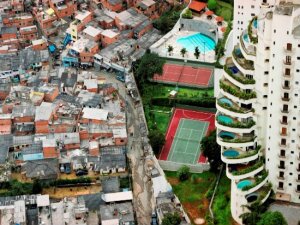
Urban policy and regulations in São Paulo have historically pushed the city to informality. These laws include complicated building codes that make it impossible for the poor to build legally, and contrasting laws that make "emends" with the existing city through numerous amnesty laws. Read more.

Urban planning and design: laws, regulations, and the informal city

My introduction contains a statement and a question. First, for city governments to truly embrace and innovate around the informal city concept they require a defined measure of discretion to design, plan and regulate. However, they often find themselves "at the bottom of the food chain" when it comes to regulatory authority. For example, South African cities (who work in what is perhaps the most "city friendly" constitutional framework on the continent) are still severely constrained by national and provincial laws and policies. What complicates this is the fact that the African city is often a hot bed of opposition, a place where urban-based opposition movements begin to chip away at the hegemony of the national ruling party/coalition with its rural constituency. Kampala, Addis Ababa, Nairobi, Cape Town and Harare are but a few examples of cities where this scenario plays or played itself out. Partly as a result of this phenomenon, there is then the central governments' anxiety with these "oversized" local authorities exercising unfettered planning authority and they are prompted to insist on tight "one size fits all" planning frameworks that stifle city innovation. Read more.

Urban planning and design: laws, regulations, and the informal city

Like many emerging cities around the world, Mumbai faces complex challenges related to rapid urbanization. The land-starved peninsula city has grown chaotically over the last couple of decades. Economic liberalization in the early 1990s opened up new opportunities across the country, particularly in cities, attracting millions of rural migrants seeking a better life. With few plans in place to handle the mass influx, Mumbai has developed into a city of massive disparities: official figures say upwards of 50 percent of the city lives in notified slums, yet slum dwellers occupy just 8.75 percent of habitable land. The population density is among the highest in the world at 20,000 people per square kilometer — a statistic that has nearly doubled since the 1991 census. In Dharavi, long known as Asia's largest slum, that density spikes: a half-million people are packed into one square kilometer. Read more.

Urban planning and design: laws, regulations, and the informal city

As the capital of Indonesia and its center of government, politics, economics and culture, Jakarta serves many purposes. These functions have attracted migrants coming to Jakarta in search of a better life, but rapid urbanization coupled with poor city planning contributes to the city's issues like over-population, pollution, traffic jams, flooding, and informal settlements. Read more.

Urban planning and design: laws, regulations, and the informal city

Out of the 24 million residents in the Metropolitan Area of the Valley of Mexico (MCMA), 9.8 million live in poverty (according to CONEVAL data). This means that planning, project design and development strategies must be targeted in terms of justice and protection of human rights to help reduce poverty and marginalization of this population. Read more.

Pages

Subscribe to RSS - Urban Planning