
 (Re)sourcing waste: waste management projects in Dhaka
Raiya Kishwar Ashraf, Dhaka Community Manager
Dhaka, 26 June 2015
The management of solid waste is a massive challenge in Dhaka. With landfills reaching their full capacities, the municipality and community actors are undertaking pilot projects to improve source segregation and the treatment of biodegradable waste, which constitutes 74 percent of the waste produced by the city. Waste Concern, a social business, has started a food waste composting program in Dhaka's largest slums and residential areas to teach communities how to process and decompose food waste that they later sell as compost.
 The key to Waste Concern's (WC) activities has been simple technology and community education. They initially started training families in informal settlements how to separate waste at the source and how they could transform waste into fertilizer. WC then created the framework so that the compost these families produce can be sold back to WC. Keeping the needs of the community in mind, large Indonesian composting drums were brought in to conceal the waste and minimize odor. Several families use one drum, and each month earn up to Tk. 950 (USD $12) per drum of compost. This project has allowed Waste Concern to expand to more affluent residential areas, where they started a similar door-to-door training and waste collection program. This is done at a price that allows them to cross-subsidize their operations. The organization has also opened its own composting premises for their Solid Waste Management program. Their approach was to start composting programs on a small scale and then to form partnerships with the municipality for larger projects. Waste Concern is now in the process of formulating a larger integrated waste management program between 19 cities, including Dhaka, in cooperation with their municipalities' Private-Public-Community Partnership Schemes.
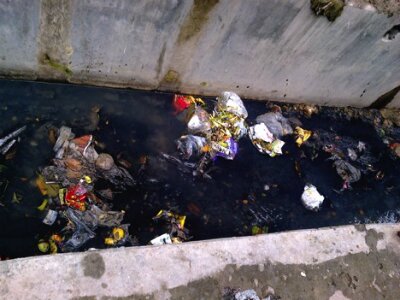
Programs like these introduce new perspectives to city residents regarding waste. Several studies have revealed that South Asian families generally do not consider biodegradable waste as reusable material. Waste is often dumped on city streets, clogging drains and spreading vermin. Composting projects provide a sustainable alternative to more expensive waste management programs. As city residents are made more aware of Waste Concern's technology, the youth are mobilized to challenge traditional waste production. One finalist in the Social Business Champs 2015, a competition hosted by the Social Business Youth Alliance held in Dhaka, focused on introducing environmentally friendly plastic bags as an alternative to plastic packaging. Meanwhile in Chittagong, at Asian University for Women, a group of students developed a social business plan for biodegradable bin-liners made from starch, vinegar and glycerin — a cost-effective formula coined by MIT students that can be produced using existing technology and resources in Bangladesh.
These projects indicate a key shift in focus for waste management in Bangladesh. Organizations like Waste Concern are using the experiences and observations from informal settlements to develop projects that may be implemented city-wide. They are also supported by young thought partners who are developing (and engineering) products and services that will cater to the needs of these communities.
Photo: Farah Moriam
Permalink to this discussion: http://urb.im/c1506
Permalink to this post: http://urb.im/ca1506dhe