
City planning instruments
 In cities around the world, the question of who does urban planning, and how, is central to the creation of just cities. This week's conversation focuses on how to design city planning instruments to be more inclusive. Examples include government programs, participatory development schemes, biometric databases, and promising newly-elected officials. Read on to learn more about urban planning in Mumbai, Nairobi, Rio de Janeiro, Jakarta, Dhaka, and Mexico City, and then join the discussion below.

|

|

|

|

|

|
 Can India's unique identity initiative influence urban planning?
Carlin Carr, Mumbai Community Manager
Urban India can boggle the mind of even the most seasoned planners. The country's economic growth has put metropolitan areas at the center of aspirations, causing widespread migration from rural villages and towns. With little urban planning on which to base the massive population growth, Mumbai has mushroomed chaotically. Transport, housing, water, sanitation, healthcare, and education fall short of residents' most basic needs. Few master plans have moved from theory to action. And frustrated citizens have grown increasingly wary of political inaction. Yet one government program, the country's ambitious Aadhaar initiative — which aims to provide every citizen with a unique identification number — has the potential to return planning to foundational basics on which to base equitable urban development.
 India is giving its citizens unique identification numbers at a daily rate equal to the size of small countries. Daily, nearly 40,000 new registrants hand over biometric data to government database registration centers. The undertaking, says The New York Times, will be "the world's largest biometric database, a mind-bogglingly complex collection of 1.2 billion identities." The Aadhaar program hopes to improve access to the country's public distribution system and eliminate corruption by giving millions of poor people a simple but, until now, elusive official identity.
The unique identity will not only help understand better who lives in urban areas, but also provides a channel through which the government can distribute welfare programs and link people to formal banking channels. In fact, Housing and Urban Poverty Alleviation Minister Ajay Maken even believes that the Aadhaar number can aid in making urban planning more participatory. Following a workshop on the new national urban poverty alleviation program, Rajiv Awas Yojana (RAY), Maken said that it will be made mandatory that the impacted communities must be part of the planning and implementation of projects under the scheme. In order to monitor this, he says that Aadhaar cards and biometric data will be key.
While urban planning in India is often discussed in terms of large-scale mega-projects, the Aadhaar initiative challenges the very ground on which the programs are built. How can inclusive rhetoric be used if individual citizens lack such basics as identities? These identities are not just existentialist frameworks; rather, the unique numbers granted to each citizen gives the government a clearer picture of who lives here and what the needs are. It is also a mechanism, a new tool, for including all urban citizens in programs and projects that stand to benefit them. With that, more inclusive urban planning and implementation can help to tackle urban India's mounting issues, bringing into focus how to move forward most effectively with all citizens in mind.
 A new dawn for Nairobi
 Dr Kidero's has pledged to thoroughly re-examine the Nairobi Metro 2030 strategy, in order to ensure that Nairobi "residents enjoy a better life arising from better management of their city's resources".
 Plano Diretor do Rio de Janeiro
 O planejamento das cidades Brasileiras é uma responsabilidade municipal. O Estatuto das Cidades é o nome da lei que guia o desenvolvimento urbano e o planejamento no país. O Estatuto foi aprovado em 2001 e entre outros requerimentos, estabelece que cidades com mais de 20 mil residentes desenvolvam um Plano Diretor, como o principal instrumento para guiar seu desenvolvimento urbano. Este plano deve ser atualizado a cada 10 anos. Adicionalmente, o Estatuto estabelece que as cidades com mais de 500 mil habitantes deverão desenvolver planos de transporte integrado compatíveis com o Plano Diretor.
 Mengawal aspirasi masyarakat dalam proses perencanaan pembangunan
 Pemandangan gedung-gedung terbengkalai kerap merupakan akibat negatif pembangunan yang mengabaikan aspirasi masyarakat. Contohnya adalah kejadian yang terjadi di Jakarta Timur dimana masyarakat memprotes dan berusaha menghentikan proses pembangunan kios komersial yang diprakarsai oleh Pemerintah Daerah di dalam sebuah Taman Kota. Masyarakat berkeberatan dengan pembangunan tersebut karena dianggap merugikan dan dengan upaya warga akhirnya kegiatan pembangunan berhasil dihentikan. Sesuai sistem perencanaan kita, pada dasarnya Musrenbang merupakan wadah paling tepat dalam menyampaikan aspirasi. Pendekatan yang partisipatif memungkinkan warga hadir ke Musrenbang dan menyampaikan aspirasi secara langsung. Namun demikian seringkali prioritas kegiatan yang muncul sering hilang ataupun berganti saat dilaksanakan Musrenbang di tingkat yang lebih atas. Hal ini di percaya karena adanya intervensi politik dari beberapa pihak yang memaksakan agar programnya menjadi daftar prioritas untuk dibiayai oleh pemerintah. Intervensi dan tidak adanya keterbukaan informasi dan anggaran menyebabkan masyarakat seperti buta mengenai rencana pemerintah dalam melaksanakan pembangunan. Sekretariat Nasional Forum Indonesia Untuk Transparansi Anggaran (Seknas Fitra) merupakan salah satu garda depan dalam mendukung keterbukaan informasi anggaran melalui advokasinya menuntut agar masyarakat dilibatkan dalam proses perencanaan penganggaran dari proses penyusunan, pembahasan, pelaksanaan, hingga tahap evaluasinya. Dengan mengetahui anggaran daerah, masyarakat akan mampu mengetahui rencana pemerintah dan pada saat yang sama mereka juga akan menyampaikan aspirasi dan kebutuhan mereka sesuai kemampuan daerah.
 Secara konseptual, proses Musrenbang dimulai dari tingkat terendah yaitu desa hingga nasional, namun dalam praktiknya masih menyisakan banyak masalah. Proses penjaringan aspirasi masyarakat tidak selalu berjalan mulus dan tidak setiap kebutuhan masyarakat dapat terakomodasi dengan baik maupun dapat terealisasi dalam kegiatan pembangunan. Salah satu bentuk penjaringan aspirasi adalah melalui penyampaian usulan kepada anggota parlemen, terutama selama masa reses. Salah satu organisasi yang secara aktif memberikan dukungan kepada anggota DPR RI untuk menjaring aspirasi selama masa reses adalah Kemitraan melalui sebuah program yang disebut sebagai Jabat (Jangkau dan Libatkan). Tujuan utama dari program ini adalah untuk mendekatkan anggota parlemen kepada konstituennya dan menyerap sebanyak mungkin aspirasi untuk disalurkan melalui program-program anggota parlemen. Program Jabat mendapat sambutan baik dari anggota dewan yang ikut terlibat serta konstituen di dapil dewan sebab dengan agenda reses ini tercipta komunikasi dan ada mekanisme dimana masyarakat bisa berkomunikasi langsung dengan anggota dewan perwakilan mereka dan mengetahui sampai sejauh mana aspirasi yang mereka sampaikan telah ditindak-lanjuti.
 Selain itu, aspirasi dapat disampaikan masyarakat melalui rumah aspirasi yang dibentuk anggota dewan seperti halnya rumah aspirasi milik Budiman Sudjatmiko, anggota DPR RI dari fraksi PDI Perjuangan yang membuat Rumah Aspirasi Budiman di salah satu dapilnyaa, Banyumas, Jawa Tengah. Rumah aspirasi ini berfungsi sebagai wadah penyalur aspirasi dan tempat mengadu masyarakat terkait permasalahan yang terjadi di wilayah daerah pemilihan Budiman. Tidak jarang Budiman mengadakan dialog dengan masyarakat sekitar. Aktivitas Rumah Aspirasi Budiman sebagaian besar dibiayai oleh Budiman sendiri serta donasi yang sifatnya tidak mengikat.
 নগর পরিকল্পনা
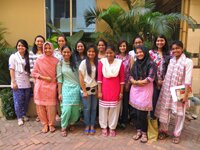
 রাজউক তাদের “হাতির ঝিল” প্রকল্পের কাঠামোর মধ্যে পরিবেশ ও সংযোগ সমস্যার সমাধান উল্লেখ করে। হাতির ঝিল খাল এলাকাটির পরিবেশগত অবনতির মাত্রা তীব্র হওার কারণে খালটি ‘মৃত খাল’ হিসেবে পরিচিতি লাভ করে, যেখানে শুধু কালো পানি প্রবাহিত হতো। সময়ের সাথে সাথে বর্জ্য ফেলবার কারণে হাতির ঝিল খাল একটি বর্জ্য জমি হয়ে ওঠে। পরিবেশগত অত্যাচারের পাশাপাশি, এই বর্জ্য-জমি ভূমিদস্যুদের শিকারে পরিণত হয় যারা খালের চারপাশে বৈধ ও অবৈধ বসতি স্থাপন করে। এই অসুস্থ পরিবেশ ও অপরিকল্পিত বসতি চর্চা হাতির ঝিল খাল এলাকায় অনেক উন্নয়নমূলক পদক্ষেপকে সমস্যাজনিত করে তুলে।
 Planeación urbana participativa
 En este sentido, para FOSOVI la planeación urbana participativa es un proceso de toma de decisiones compartidas sobre un deseo, donde los fines son seleccionados democráticamente y puestos en práctica colectivamente; y que además serán soluciones sustentables en el tiempo para lograr mejores condiciones de vida de los grupos involucrados.
 Para su implementación, se formó un Comité Técnico integrado por miembros de las diversas instituciones, consultores y representantes de entidades socio-económicas en el territorio, para direccionar el proceso de elaboración e instrumentación, la aprobación de los documentos y líneas de acción, la priorización de acciones y el establecimiento de sistemas de control y seguimiento. De tal forma, con la población interesada de San Andrés Totoltepec durante la primera fase se realizó un pre-diagnóstico a través de investigación de campo, mapeos y un diagnóstico participativo. En la segunda fase se construyeron objetivos, así como líneas de acción estratégicas para cada área de la Delegación, proyectos críticos y conciliación de opiniones en mesas de trabajo; lo anterior relacionado con los temas de usos actuales del suelo, medio ambiente, infraestructura urbana y estructura urbana. Durante la tercera fase se determinaron las prioridades específicas así como las metas y concreción de proyectos urbanos prioritarios; seguidos por la elaboración de proyectos y programas. En la última fase se llevó a cabo la aprobación del PPDU por el Comité, el establecimiento de los procedimientos para su ejecución y seguimiento al programa y la Consulta Pública. En este último punto, se presentó el programa a la población y vecinos de la demarcación para que fuera un proceso consensuado y democrático.



































Follow @urb_im














Recent discussions
Retooling 'Cities for Life': New approaches to urban infrastructure and service provision 03.14.2014
Urban planning and design: Laws, regulations, and the informal city 03.03.2014
Food security in coastal cities 02.17.2014
The competition for water 02.10.2014
Violence against children 02.03.2014
Comments
On the Aardhaar initiative: who will use the data and how?
Carlin, I think the Aardhaar initiative is an interesting program, especially regarding its main objective which is to provide every citizen with a personalized ID, a basic right that many people haven’t met yet. Would be great to know how exactly these initiative is intended to inform planning and how it will be able to specifically track the poor and vulnerable; for example do you know if the system is designed to track the thousands of migrants that come and go to Mumbai and are considered the city's "new poor"?
It looks that the Aardhaar initiative will definitely provide relevant information on the city’s dwellers. But who is it supposed to use such information? Good and updated information is pivotal for planning, but in order for information to translate into effective planning, there needs to be institutions who know how to process and use that information correctly. It will be great if you could share your views on the planning institutions in Mumbai, the challenges they face with the use of this new ID program and how such initiative will influence their planning practices.
Reaching floating populations
Great questions, Catalina. As you would imagine, one of the big barriers for the urban poor--in particular, this "floating" migrant population you mention--is 1) connecting to the program and 2) providing the appropriate documentation to verify their identity to get into the system. On the first part, many NGOs who are working with these communities are helping to link migrants and their families to Aadhaar registration sites. However, many of these people have no ID, no address and no documents. The UIDAI committee came up with an "Introducer" system "to enable inclusion of people into the UID system who are otherwise hard to reach and may not be able to provide proof of identity and address." Introducers are pre-registered and may be members of local administration bodies, postmen, teachers, doctors, NGO workers, etc.
Once in the system, citizens will be able to access information through their mobile phones and even place grievances. The system is setting the framework for e-governance, and the data collected has the potential to inform policymakers who can track which programs--say a food distribution initiative--are working and those that are not. Right now, that system and oversight is not in place. For city planners, the data will give designers a better sense of who is in the city and what are their needs, and down the road, will hopefully help inform better decision-making.
RAYUK project
I agree that projects doesn't need to implement a grassroots approach all the time in order to be sustainable, however it is important to foster the ownership of projects among stakeholders in order to consider their needs and to engage the community in the maintainance of the project. In this sense, are they some strategies in order to mitigate the lack of participation of the stakeholders?
Rio planning
Catalina I would love to know more about how the Rio Master Plan is funded. Does all the money come directly from the central government or is there a tax (in the UK called Council tax) that residents have to pay that gets funnelled into city planning?
Also who does the secretariat have to present its vision to and is it a complicated process to get it approved?
It's hard to imagine Nairobi establishing a community led process when it comes to city planning but who knows, we are still waiting to see if Kidero will turn out to be the city's saviour or not!
On Rio's city-wide planning and future challenges
Katy, the formulation of Rio’s Master Plan is funded by the local government's own resources. In order to produce the Master Plan, the Planning Secretariat coordinates its work with other local government secretariats, and then puts a proposal which is presented to representatives from civil society in various open audiences. This is when questions and suggestions come up, and of course there are topics that might generate greater debate and raise concerns, so in that sense additional time needs to be given for adjustments and revisions.
I wouldn’t consider this a “community- led process”, as it is led by the local government; and it is conceived to be that way. In Rio, as all around Brazil, city planning is one of the most important local governments’ responsibilities, and with time it is turning more professionalized, meaning it involves expert planners and modern planning tools, like zoning. This is intended to ensure the planning process is not an improvised procedure and guarantees a city-wide vision. Citizen participation is ensured, but is more focused on consultations and feedback, not on citizens leading the process.
As I mentioned in my article, it is still work in progress; many cities including Rio need to fine tune the process, specially the consultations with civil society. An additional immense challenge that I didn’t touch in my article is the future integration of Master Plans within metropolitan areas, which will promote an integrated metropolitan vision and ensure joint work among municipalities that compose these immense areas.
Participatory planning
Hi Maria, it was really interesting what happen with the Town of San Andrés Totoltepec and the work of Fosovi. I am impressed that they finally made it to influence the government to issue the urban bill with large community supporting the work. I think i saw this similar work in the US also where community designer working with community on certain issue and doing advocacy work.
My question maybe related on planning process in general in Mexico. is there any channel where people could deliver their want or need? and is there any master plan for, let say, national, province and district level?and what happen if what community plan such as what Fosovi works on does not fit the national master plan?
Participatory Planning
Widya, thanks for your comments. In deed in Mexico exists a new participatory planning scheme which fits the needs of citizens at district and munical level. Through this tool " Participatory Budgeting" the government implements a development strategy that fosters community development and find local solutions for local problems. Mexico City municipalities acquire this policy mainstream in 2010, the results have proof that this type of strategy empower communities and gives voice to the voiceless, motivate citizen from the municipality to participate and finally to empower the powerless.
Add new comment