
 Bangalore NGO gives local youths tools to improve slums
Carlin Carr, Bangalore Community Manager
Bangalore, 23 June 2015
Indian cities are challenging to traverse by any measure. For children, these obstacles can be even more complex, and children are rarely asked about the difficulties they face. There have increasingly been movements to make cities more child-friendly and even bring children into the planning process — a step that makes young people more aware of their surroundings while also giving city makers a look inside a child's world. Recently, children in India's slum areas were asked to map public spaces in their neighborhoods. More organizations have joined hands in giving youth a say in what is happening in their communities — a move that might not just make cities more child-friendly but more livable, too.
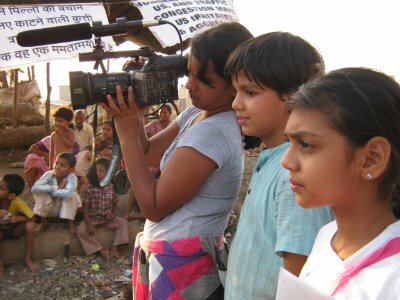 The Association for Promotion of Social Action (APSA) in Bangalore has been working to empower children and families in the city's poorest sections to become change agents in their areas. ASPA focuses on an integrated development approach that asks the community to take a collective stand, increasing their bargaining power on political, social and economic issues. For children in these areas, becoming part of the process to improve their circumstances is often a new endeavor, but central to APSA's belief in a child's right to participate. To get them there, APSA has had to devise creative strategies to build the involvement of young people in civic duties.
One way APSA achieves its goal to give voice to local youths is through a training program at their Media Center. Selected youth engage in workshops to build skills in graphic design, photography, animation and documentary filmmaking. The youths lead the entire process, from developing storyboards to writing the scripts and eventually using the cameras and editing. They begin to observe the world around them more acutely, and the various media channels allows them to share issues that matter to them: child labor, child marriage, challenges in access to education, inequitable access to land and housing and water. Many of the issues might be difficult to bring up in their homes, or even in with neighbors and extended family, so the films give students a medium with which to tackle some of these taboo topics and bring them to the community's attention.
The videos and other digital media help APSA in their goal to build Child-friendly Wards (CFW), which it defines as "one that has the active participation of children in local governance in identification and resolution of local community issues and those related to children." While ASPA focuses on building community collectives for all of its constituents to have an empowered, supported say in their needs and future, the organization has also created children's collectives, giving youths an opportunity to be part of local ward meetings and participate in the decision-making, implementation and monitoring of children's issues.
Making child-friendly cities ultimately means that children of all ages are able to roam safely in their neighborhoods with opportunities that support a bright future. It's a simple goal that often seems challenging in cities where public spaces are being gobbled up and car-focused streets are overriding room for sidewalks and bike pathways. Allowing young people to be part of the process doesn't ensure cities will respond, but if the movement grows and more young people demand change, it will be hard not to listen.
Photo credit: Anuradha Sengupta
Permalink to this discussion: http://urb.im/c1506
Permalink to this post: http://urb.im/ca1506bge