 Promover a inclusão digital ainda é um desafio em Curitiba
Andréa Azambuja, Coordenadora da Rede em Curitiba
Promover o desenvolvimento social não é possível sem inclusão digital. Ciente disso, um grupo de 80 mães da Vila das Torres, bairro de Curitiba com cerca de sete mil habitantes estigmatizado por ter um dos índices de violência mais altos da cidade, resolveu se posicionar frente à ineficiência do poder público e, em 2013, tomou para si o compromisso de promover o universo online na região, até então negligenciada e massivamente desconectada. Assim surgiu o Vila Torres Digital, projeto que já leva internet banda larga grátis às casas de mais de 80 famílias e a uma escola, beneficiando mais de 700 pessoas.
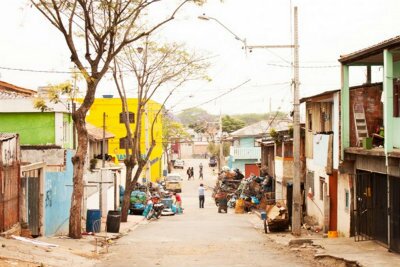 O VTD é realizado com o apoio de duas instituições privadas, a Zum Comunicação, empresa que conecta agentes sociais para fomentar soluções em tecnologia da informação através do Rede Cidade Digital, e da By Air Brasil, de TI e Telecomunicações. A By Air fornece o sinal, e as mães gerenciam o serviço: cadastram moradores interessados, recolhem documentos de comprovação de renda, avaliam a necessidade das famílias e providenciam a instalação do kit de recepção do sinal, quando justo. Parece simples, mas não é.
Segundo os dados mais recentes do Instituto Brasileiro de Geografia e Estatística, o acesso à internet cresceu cerca de 145 por cento no país de 2005 a 2011, enquanto o crescimento populacional foi de aproximadamente 9,8 por cento – apesar da disparada, que se manteve, 53,5 por cento dos brasileiros acima de 10 anos ainda não utilizam a rede. Muitos têm acesso, mas não aproveitam o recurso, fato que explicita uma realidade indiscutível: tecnologia viabiliza, mas não é sinônimo de inclusão digital.
Pensando nisso, além de providenciar o sinal, o Clube de Mães União Vila Torres integrou a ele uma plataforma online que expõem as potencialidades do bairro e amplia inciativas promissoras, a fim de aproximar a ecomunidade e incentivar o engajamento no desenvolvimento da área. Aí entra em ação a Zum Comunicação, que administra o conteúdo junto aos moradores. Num futuro próximo, a função deverá ser extendida aos estudantes da Escola Estadual Manoel Ribas, primeira instituição favorecida e que, graças ao projeto digital, receberá reforço pedagógico nas áreas de informática e tecnologia num programa em parceria com a Universidade Federal do Paraná.
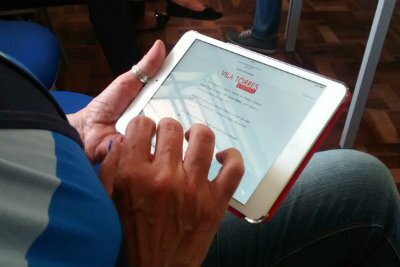 O Portal Vila Torres concentra jogos, galeria de fotos, classificados (o upload dos anúncios é feito pelos usuários), rádio, notícias gerais relacionadas ao bairro e e informações sobre as atividades promovidas na sede física do clube de mães. Depois de 18 anos de articulação (o grupo surgiu em 1997), não são poucas: oficinas de acesso à internet e redes sociais, sessões de cinema, aulas de pintura, orientação previdenciária e capacitação profissional, para citar algumas.
Apesar de iniciativas governamentais como a Estratégia Nacional de Ciência, Tecnologia e Inovação, o Brasil engatinha na democratização de ciência e tecnologia. A enorme deficiência na área da educação, que não estimula a curiosidade, a interatividade e a inovação, impõem sérios impedimentos à consolidação de uma cultura científica. Nesse contexto, até disponibilizar internet é um desafio – muitas vezes só enfrentado pela articulação civil. Close.
Foto: Portal Vila Torres Digital. Foto 2: Ao conectar a internet, o usuário do sinal da Vila Torres Digital é automaticamente levado à plataforma online do programa.
Permalink to this discussion: http://urb.im/c1501
Permalink to this post: http://urb.im/ca1501cup
Promoting digital inclusion is still a challenge for Curitiba
Andréa Azambuja, Curitiba Community Manager
Promoting social development is not possible without digital inclusion. This is very much an issue in Vila das Torres, a neighborhood of 7,000 people in Curitiba, stigmatized for having one of the highest rates of violence in the city. It is in this neighborhood that a group of 80 mothers decided in 2013 to stand up to government inefficiency and commit themselves to promoting the online world in this area, so far neglected and massively disconnected. That's how Vila Digital Torres emerged, a project that already brings free Internet broadband to the homes of more than 80 families as well as a school, benefiting more than 700 people.
The Vila Digital Torres project is carried out with support from two private institutions: Zum Comunicação, which connects social actors to foster solutions in information technology through the Rede Cidade Digital (Digital City Network) program, and By Air Brazil, an IT and Telecommunications company. By Air provides the signal, and the mothers manage the service: register interested residents, pull together income documents, evaluate each family's need, and provide the installation of the signal reception kit to eligible households. It sounds simple, but it is not.
According to the latest data from the Brazilian Institute of Geography and Statistics, Internet access grew by 145 percent from 2005 to 2011, while the population growth was approximately 9.8 percent. Despite the increase, 53 percent of Brazilians over 10 years old don't use the Internet. Many of them have access, but don't take advantage of it, a fact that explains an undeniable reality: technology enables, but is not synonymous with digital inclusion.
With this in mind, the Mothers' Club União Vila Torres also launched an integrated online platform that exposes the capabilities of the neighborhood and extends promising initiatives in order to encourage engagement in developing the area. Here's where Zum Communication works, managing content with the residents. In the near future, the function will be extended to students of Manoel Ribas State School, the first institution to receive computer science and technology pedagogical support in a program partnership with the Federal University of Paraná.
The Vila Torres web platform features games, photo galleries, classified advertising (the users themselves upload the ads), radio, general news related to the neighborhood, and information on the activities run by the Mothers Club. After 18 years of existence (the group first appeared in 1997), the club runs many projects: Internet and social network access workshops, cinema, painting classes, social security guidance, and professional training, to name a few.
Despite this program and government initiatives such as the National Strategy for Science, Technology and Innovation, Brazil crawls in the democratization of science and technology. The enormous deficiency in education imposes serious obstacles to the consolidation of a scientific culture. In this context, to provide Internet access is a challenge — one often only taken up by civil society organizations. Close.
Photo: Portal Vila Torres Digital. Image 2: When connecting to the free Internet broadband, Vila Torres Digital users are automatically taken to the program's online platform.
Permalink to this discussion: http://urb.im/c1501
Permalink to this post: http://urb.im/ca1501cup

 January 2015 — As new technologies are developed around the world, governments, foundations, and social enterprises seek to identify those with the richest transformative potential and champion them as tools for social change. From solar-powered homes and businesses to inventive uses of Internet and mobile technologies, high-impact solutions tend to combine technological innovation with community-centered communication and implementation efforts.

 تکنولوژی اطلاعاتی در خدمت فقرا

 Chai Mặt Trời: Thắp sáng nhà người nghèo thành thị
 Là những chai nhựa chứa nước sạch và thuốc tẩy chlorine với một tỷ lệ thích hợp và được lắp đặt nửa phía trên và một nửa bên dưới những mái tôn, Chai Mặt Trời áp dụng hiệu quả các nguyên tắc tán xạ ánh sáng mặt trời đơn giản để mang lại ánh sáng cho các ngôi nhà ổ chuột tối tăm. Một Chai Mặt Trời có thể phát sáng với công suất tương đương với bóng đèn 55-60W. Đây là một lựa chọn rẻ tiền, xanh, và dễ dàng bảo trì dành cho người nghèo, đặc biệt là dân cư trong các thành phố nhiệt đới có thời gian ban ngày dài và nắng nhiều như TP. Hồ Chí Minh.
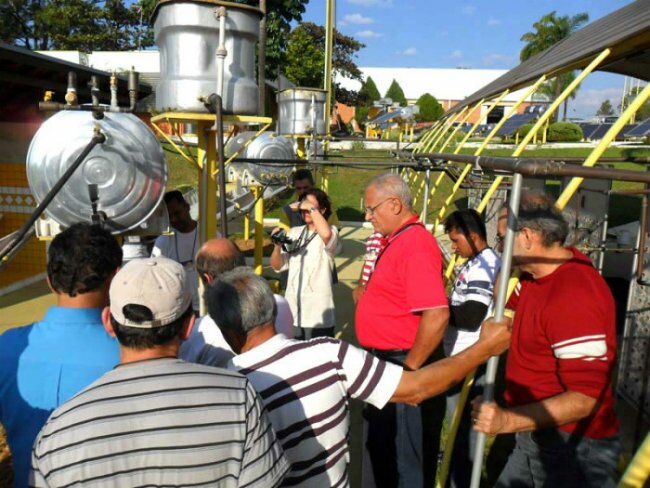 Assim, em 2011, com o apoio da Fiocruz – instituição de promoção do desenvolvimento social e difusão do conhecimento científico – elaboraram um plano de educação ancorado em tecnologias eco-eficientes acessíveis em habitação, que capacita pessoas não apenas para aplicarem as técnicas profissionalmente e nas suas casas, mas também para qualificar outros profissionais. A iniciativa foi implementada no próprio grupo, já mudou a vida de centenas de famílias e recentemente foi certificada pela Fundação Banco do Brasil, que premia e difunde soluções efetivas de inclusão para serem replicadas em outros contextos.
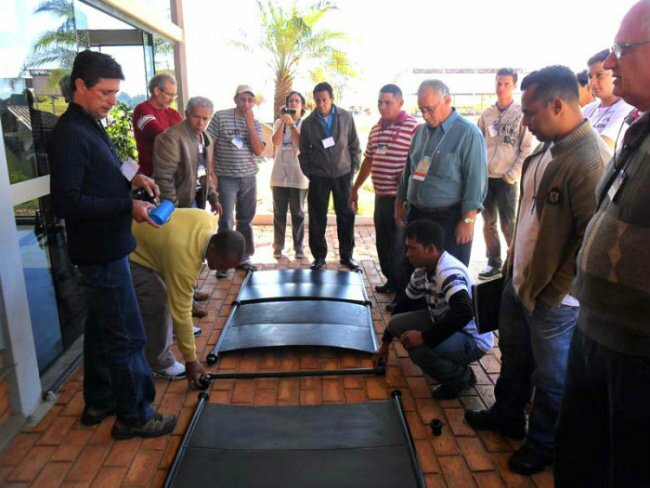 O aprendizado acontece através da construção efetiva de uma residência ao longo de 18 meses, metodologia definida pelos integrantes da Constrói Fácil com o auxílio de um consultor. A obra é realizada por tutores especialistas em conjunto com os aprendizes, que participam ativamente de todo o processo, da elaboração das plantas e da compra de materiais à realização de todas as instalações, visitas técnicas e avaliação de resultados. Paralelamente, os métodos são revistos e discutidos em oficinas teórico-práticas, das quais também participam outros grupos sociais (escolas, ONGs, associações de pais). O esquema pedagógico é reforçado com elementos audiovisuais e inclui a construção de protótipos das tecnologias ASBC e AAC pelos alunos, seguido da instalação real dos modelos nas casas de dois deles.
 Fishing for jobs, not houses: Fish farming in a shipping container in Cape Town
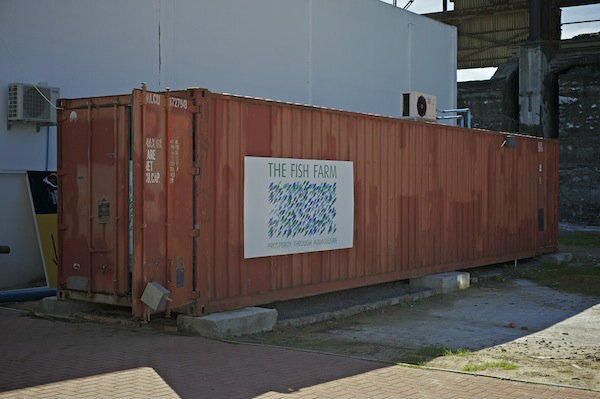 Educated in agriculture, environmental science, and oceanography, its founder and entrepreneur Alan Fleming has been working on the design and logistics of the Fish Farm for years, to bring "aquaculture" — and thereby protein and profit — to the world's poor. As a director at The Business Place in Cape Town, an organization to develop and assist entrepreneurs, Fleming has already worked in entrepreneurship development in Cape Town's poorer Cape Flats areas for ten years.
 The patented, microintensive farm has already won global recognition (winner in the Enablis Green Business Competition in 2010, a finalist on the SAB Innovations Award 2012, and Runner-Up in the global Siemens "Empowering People" Award 2013). For the future, through support from funders, corporates, civic organizations, and government entities, Fleming hopes to launch the commercial production of mobile fish farms for poor communities across the Cape Flats and worldwide. Fleming also hopes to develop the design to run on solar power, taking out the operational expense of electricity and instead putting it into the capital expenditure item. Another important idea is that the fish farm could catalyse the emergence of other industries, such as worm and snail farms to feed the burgeoning container fishing industry, and its nutrient-rich water discharge could also be used for an additional source of income or subsistence in vegetable gardens or a vegetable aquaponics system.
 Posyantek mendorong kemandirian ekonomi masyarakat miskin kota
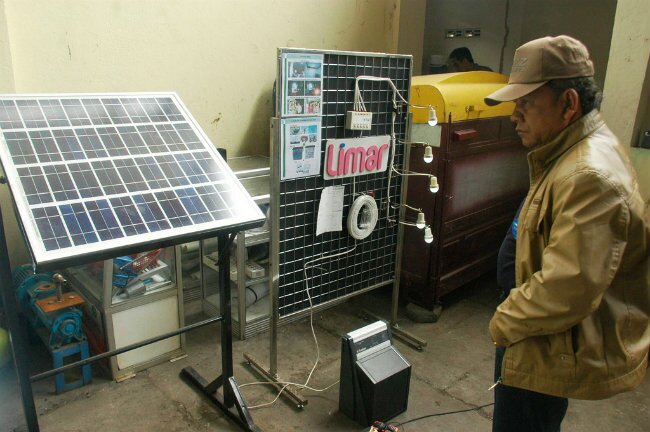 Untuk itu Pemerintah membentuk Posyantek (Pos Pelayanan Teknologi) yang didukung dengan dikeluarkannya Peraturan Menteri Dalam Negeri No. 20 tahun 2010 tentang pemberdayaan masyarakat melalui Pengelolaan Teknologi Tepat Guna (TTG). Peraturan ini kemudian diimplementasikan di Jakarta melalui Instruksi Gubernur dan Peraturan Gubernur No. 88 tahun 2011. TTG dipercaya mampu memicu pertumbuhan karena bisa memangkas produksi, memberikan nilai tambah produk, memperbaiki mutu produksi hingga akhirnya masyarakat mampu meningkatkan taraf hidupnya dan keluar dari jerat kemiskinan.
 ICT for knowledge sharing and healthcare
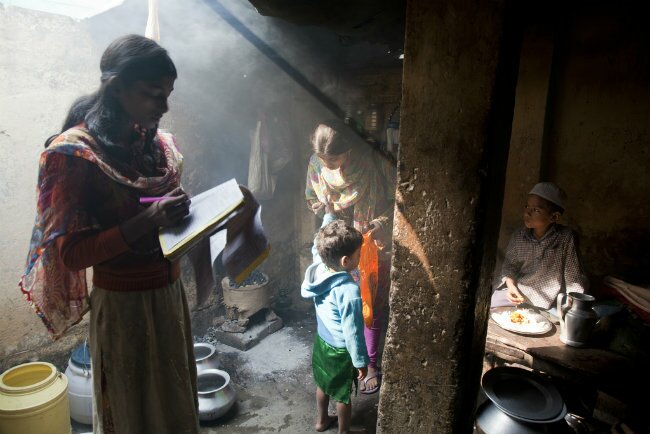 eNRICH
 Programa TITA: fomentando la educación digital en Cali
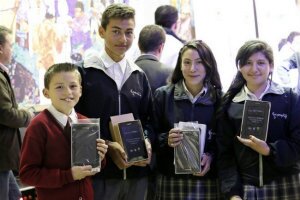
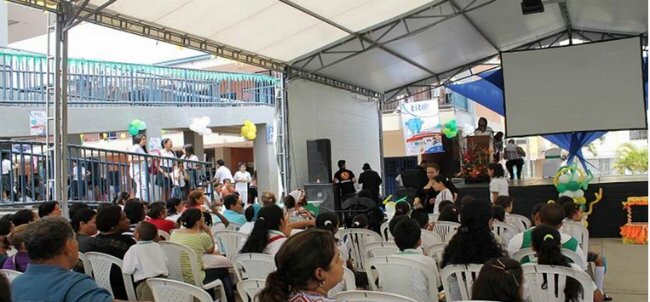 Al igual que vimos en el caso de Bogotá, Cali se está beneficiando de las compensaciones fruto de las adjudicaciones de licencias de telefonía celular 4G. En concreto, la empresa Claro entregará 35.000 tabletas con el sistema operativo Android. Las tabletas tendrán preinstalada la plataforma
 Mobile surveys: The innovative human microphone
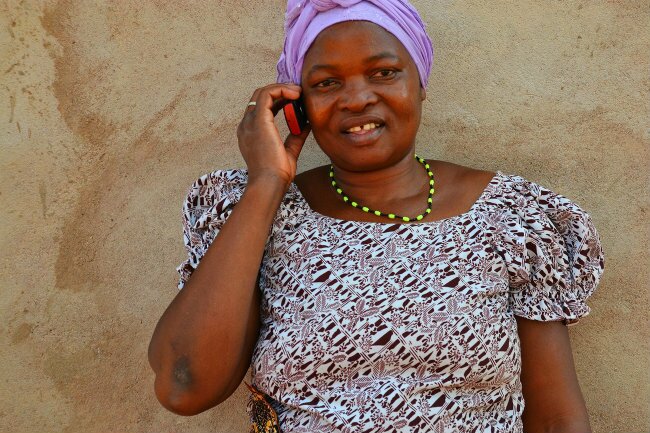 In 2011, it was found that 60 percent of Dar es Salaam's lowest-income households have no access to electricity; that one-quarter of residents were not satisfied with their available health care; and that one of the greatest burdens of their lived experience is water supply. That same year, Dar es Salaam integrated technology into the city's monitoring systems, initiating a mobile survey collecting information on public services (access, availability, and quality) from 350 residents. Once collected, this data is reviewed and interpreted to inform and enable Dar es Salaam's future policy, plans, and decision-making.
 Accelerating social innovation: Lagos' hub of technological progress
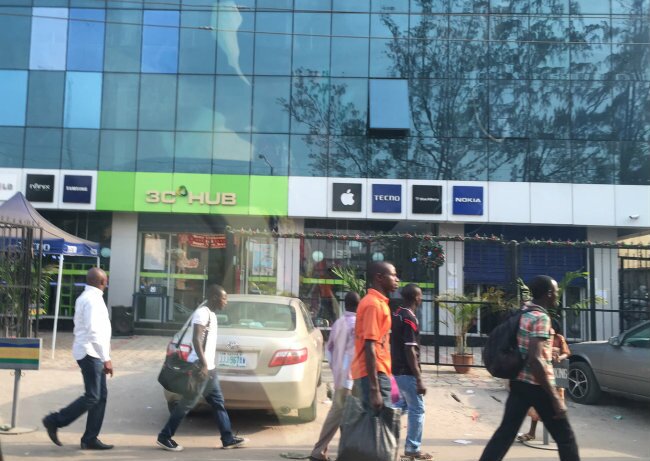 One of these social enterprises is the Co-Creation Hub (CcHUB) in Lagos, which was created to accelerate the emergence and the application of social capital and technology in Nigeria. The organization caters to and supports technologists, entrepreneurs, investors, tech companies, academics, and hackers, helping them grow both their skills and their network. Since its creation, the CcHUB has been a bedrock for young, technologically savvy Nigerians to create and promote their own business endeavors. It is largely supported by private technology companies who recognize its importance to the economy, and its potential as an instrument for creating employment and mitigating the effects of poverty on the city's youth. Their programs include the Tech-In Series, an initiative aimed at accelerating the application of social capital and technology to solve challenges in critical areas of life in Nigeria. They also run the CcHUB Bot Club, which is an after-school program for high school students to encourage technological innovation and skills.
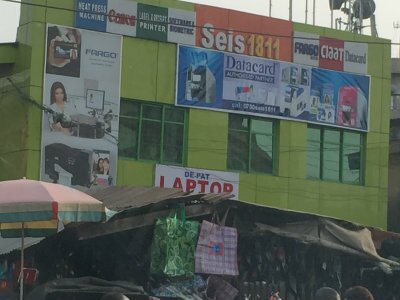 Another prominent technological space in Lagos is the famous IT trading and technical hub known as "Computer Village". It is the largest concentration of tech traders in West Africa, trading in computers, mobile phones, and their accessories. Like the CcHUB, it caters to individuals with various "tech" skills including developers, mobile phone and computer repairs, and alterations. This one-stop shop for all things technology serves both as a market and a training ground for those living across Lagos. It has been described as a melting pot of tech hobbyists, hardware enthusiasts, and anyone interested in the IT space. While different, these two hubs have one thing in common: an avenue to promote technological innovation and its accompanying benefits. They also serve as a source of informal education and employment to those who would otherwise lack access to technology. This role is especially important in the Computer Village.
 New technologies for the differently abled
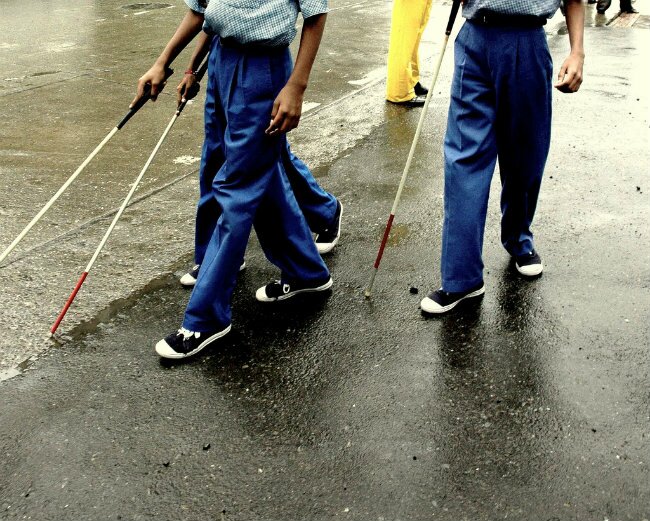 Mumbai-based Barrier Break has championed the cause of India's differently abled by experimenting with technologies to help people with a variety of impairments. The groundbreaking organization has brought many assistive technologies to those in need around India, and today, 75 percent of the organization is made up of people with a disability — emphasizing, Barrier Break says, their employability in a society where many of these issues are still taboo.
 One young business, named Rethaka and based in Rustenburg outside Johannesburg, is part of a small but growing number of innovators in South Africa who are making technology speak the language of 'other' contexts. The new company manufactures schoolbags from discarded plastic shopping bags which are up-cycled into trendy backpacks, and markets these to companies with corporate social investment budgets. Other design features of the backpack include a lightweight solar panel inserted into the bag, which charges its batteries during the day, while at night it can provide up to twelve hours of light from small LED lights when inserted on top of a Consol glass jar. The simple technology is designed to allow schoolchildren from underprivileged communities with little or no electricity to study after dark. The schoolbags are also made with reflective material, increasing visibility and safety for children who walk to and from school (three children die daily on South African roads).
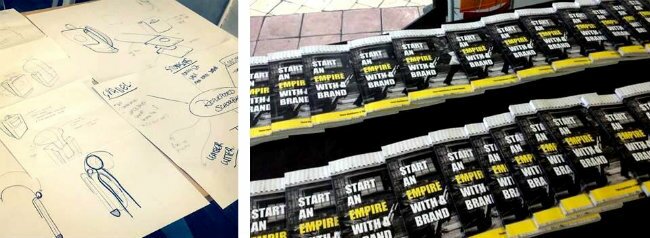 Even though the backpacks only went into production as recently as January 2014 and the founding duo are still only in their early twenties, the schoolbag has made news not only in South Africa but around the globe, with an ever-growing number of online articles, appearances on CNN, TEDx, and even a tweet by Bill Gates. Added to this is a slick website as well as two recent awards (first place at the Inventors Garage competition at the SA Innovation Summit, and second place for The Anzisha Prize). Innovation aside, the fame therefore is also due to "a lot of hustling," with both of the two founding duo coming from branding and marketing backgrounds (one has even co-authored a book titled Start an Empire With a Brand).
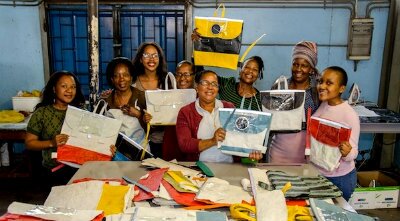 The story here, however, which should invoke our inspiration and imagination, is more than an African success story of two creative and entrepreneurial childhood friends from rural North West South Africa, or even their individual product per se. More significantly, the Rethaka team also speak lucidly of 'uplifting the greater society', about being 'change agents' and 'plowing knowledge back into a marginalized society', and 'doing work that matters'. This, then, is an imagination and creativity not intimidated or disinterested in sobering or unfamiliar surrounding social realities, preferring more dissociated, unburdened, individualistic or elite forms of creative expression. Rather, it does precisely the opposite; directing its purposes toward it and drawing energy and inspiration from within it.
 المجتمعات المحلية في القاهرة: استخدام التقنية كأداة للتنمية

 Entre la tecnología y la política pública
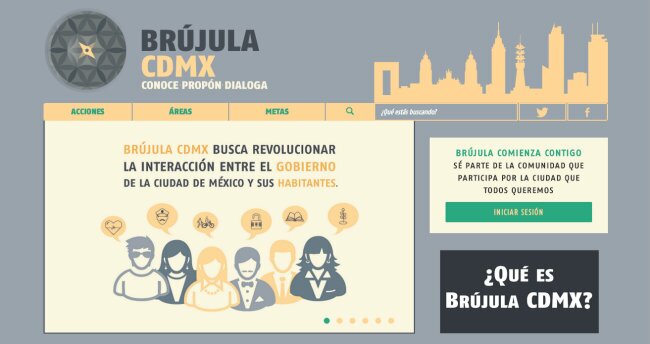 'Yo Propongo' confía en que las personas más cercanas a un problema específico sean las que poseen información valiosa sobre cómo abordarlo; en este sentido la plataforma forma parte de la inclusión de estas nuevas perspectivas que pueden facilitar la construcción de una visión integral con soluciones que aborden las problemáticas desde diversos frentes. Este proyecto recopila en primera instancia información muy valiosa del problema, tal como las causas, los programas que tratan de abordarlos y el impacto en la población. En segundo lugar, contribuye a la creación de una cultura de participación ciudadana a través de una vía de participación sencilla y segura en que los involucrados deciden el nivel de participación deseado.
 Collaborative hubs and hackspaces leveraging high-impact technology for poverty eradication
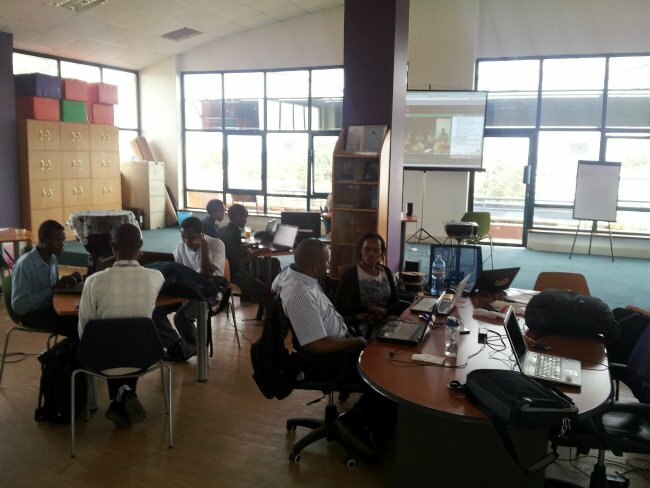 To date, they have successfully graduated three classes of 16 start-ups and have another five companies enrolled for the 2015 season. Part of NaiLab's 2014 class, SokoText, is a company that leverages simple mobile technology to aggregate trader demands across informal settlements to make wholesale pricing available to small-scale traders. A high-impact technology company that provides kiosk owners within their network free texting and discounted food alongside financial literacy and business training incentives, SokoText is unlocking markets and breaks barriers to access.
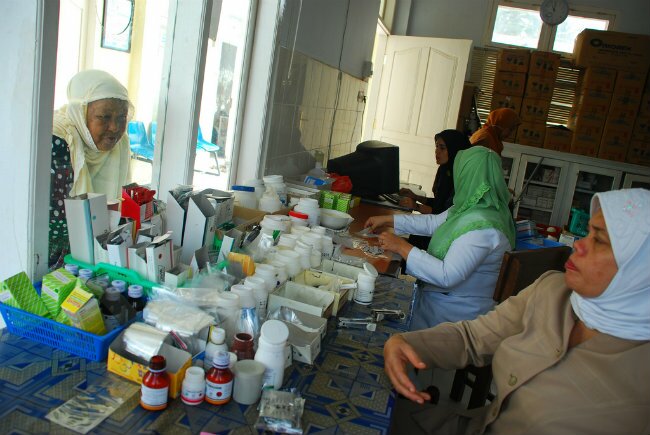 Pemkot Surabaya sudah mulai menginisiasi e-government sejak tahun 2003 berdasar Keputusan Presiden No 18/2000 dimana pemerintah melakukan fasilitasi pengadaan barang dan jasa secara elektronik dengan membuat portal yang kemudian diperbaiki menjadi Surabaya Eproc. Dalam perkembangannya, Pemkot Surabaya telah mengelompokkan dua jenis e-government yaitu dalam hal pengelolaan keuangan daerah (e-budgeting, e-project, e-procurement, e-delivery, e-controlling, e-performance) dan pelayanan masyarakat (e-sapawarga, e-perijinan ,e-musrenbang, pengaduan elektronik). Keseluruhan penerapan e-government ini menurut Risma, walikota Surabaya, mampu menghemat anggaran hingga 30 persen. Keberhasilan e-governernment sendiri telah membawa Surabaya menerima penghargaan sebagai inovasi pelayanan publik terbaik kategori Future City versi FutureGov.
 Solar power for better water
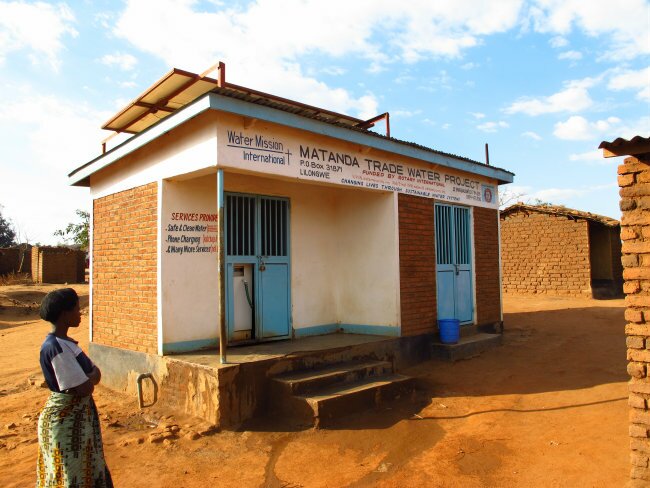 While Lilongwe's poor across the city face challenges accessing potable water, residents in the city's northwest are arguably worst off. LWB water pipes do not extend to the area, while water from boreholes and household wells is not always available and can be contaminated.
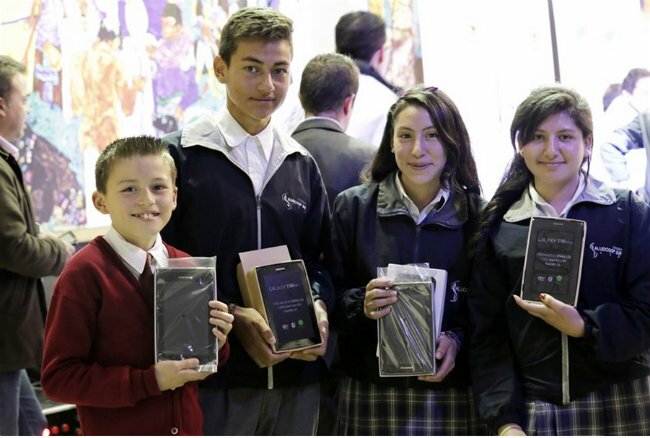 En Bogotá es especialmente significativo el programa público-privado que han desarrollado entre la Empresa de Teléfonos de Bogotá (ETB), la Secretaría de Educación del Distrito (SED) y la Alta Consejería Distrital TIC. El origen de este acuerdo está en los compromisos adquiridos por ETB tras la adjudicación de una licencia de telefonía celular 4G en el año 2013. Como parte de estos acuerdos ETB entregó a la SED 33.700 tabletas, con el sistema operativo Android y con una ranura para la inserción de una tarjeta SIM que permite el acceso a las redes celulares. Estas tabletas están reservadas para los estudiantes de
 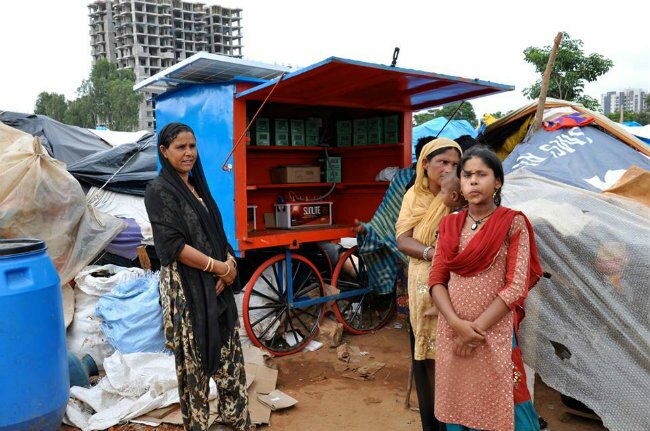 Selco's urban model centers around one key question: How can communities be inspired to take the initiative to solve their own local community problems or improve their situation? The IECs go beyond providing electricity — they aim to be "everything the under-served urban communities need it to be — right from facilitators, connectors, solution catalyzers, incubators or simply bridging a gap in an existing ecosystem." The IECs are owned and operated by the communities they are in and adapted to meet the specific needs of the particular area and residents.
Comments
Solar Powering Water Provision
Thanks for this interesting article Nora the frustrating and precarious situation faced by residents without access to clean water is complex and impacts on community health, economic development and sustainability. I recently saw a statistics published that in Africa women spend a collective 16million hours a day in the hunt for water. The use of innovative pay-for-water services is increasing in a number of communities and this particular tech approach is interesting but as you point out presents a challenge to residents who now pay for a service that used to be free. Implementing a technological solution such as this should be complimented by some sort of community outreach that provides information on the incentives to clean water that paying creates. In addition, many social projects of this nature fail because they neglect to account for the dynamics of ownership. The question of where the money goes is a valid one and social divisions should not be increased because those perceived as benefiting [the kiosk operator] may be the target of resentment as a result. At the end of the day everyone still needs access to water and finding sustainable and realistic delivery mechanisms is critical, however once the LWB pipes to the area, won't this innovation become obsolete?
Lilongwe solar water
Hi Hilary,
Thanks for your thoughts. That 16 million hours statistic is pretty mind-blowing. Don't suppose you remember where you saw that?
I think all the issues you raise are very valid and mimic my own. What drew me to the project was that I think there is something very interesting about using solar power to provide potable water. So there is probably some tuning needed, but the idea is solid and with the right approach... On the issue of obsolence - I don't think it will be obsolete as an innovation given that WaterMissions (and others) can use the technology in other areas, particularly rural ones. Unfortunately I don't know what the law/regulations say (if anything) regarding the presence of the kiosk once LWB (hopefully) extends services to the area.
In response to Nora
The statistics was from a tweet coming out of Beijing20 by @UN_Women https://twitter.com/UN_Women/status/552940348096667648
This is a link to the main site I can not confirm the study as I have not seen it but likely it is a estimate based on data from individual countries. http://beijing20.unwomen.org/en/in-focus/poverty#facts
Solar Powered Communities
Carlin, this article was really interesting and highlighted a unique approach to providing integrated services to individuals living in slum areas. The dynamic factors that affect livelihoods are can to often be overlooked in planning infrastructure and connectivity projects and it is important to see clear examples where these factors are taken into account. It appears due to their continuing scale-up that Seleco Foudnation's Urban Community Lab is able to address a complex challenge faced by slum dwellers while also providing critical services and education opportunities. Great piece
Tariq is correct in pointing
Tariq is correct in pointing to the need of new thinking on what innovation and technology can bring in a local context. On his article, and in several other this week, we have seen how the plummeting cost of solar panels is allowing for the solution of problems that were too expensive to solve before, by using traditional technologies. Without cheap panels and bright LEDs the solution he identifies to the lack of electric supply at night would not have been possible. And I am talking about only a few months ago.
Urban Community Lab
Thanks for your comments, Hilary. I think it's so interesting to see an organization that has been so rural focused for so long to launch such a thoughtful and integrated idea in urban communities. I like the rural-urban cross pollination here and I wonder if it would inspire more organizations to cross that line. Are the two really so different? How much do models need to transform? I do think the Urban Community Labs are different from Selco's rural initiatives, but the underlying sensitivity and responsiveness to community needs runs through them both.
E-Government & Open Data
Widya you bring up a really important point in your article that of political will. Through transparency initiatives are widespread many face significant road blocks due to lack of community buy in and lack of political will. Particularly when working to increase the effectiveness of services the willingness of public officials to be open and responsive to feedback can have a positive impact on bringing citizens into the conversation on governance. This undoubtedly also has distinct benefits on service delivery as a more informed and realistic picture of community needs and preferences increases the efficacy of service provisions. It is encouraging to see that in in Surabaya these approaches are proving useful in developing sustainable and inclusive cities.
Technology promote participation
It is very interesting to read on how communities are able to utilize technology for improving their live and increasing their political participation as can be seen from Indonesia and Mexico case. Those are interest me because there is an action by government and community reacts to those policies. Improving political participation is difficult and took a long time for the process of increasing awareness on how participation can actually transform their live, but of course it has to be supported by strong political will from government. However I am curious about sustainability of several projects such as Water Missions that I think is very promising but apparently they haven’t made a strategic cooperation to support their work, or is it because political situation that prevent water mission goes further?
Jorge is also present an interesting case as it is also similar to Indonesia, but I think my country is a little bit lack of plan in implementing it and forget about the fact that providing tablet should come with the connection and educational program within the tablet, and also they do not involve private in the process. If I can ask Jorge, how long did the plan it and who is reviewing the plan and as much as I am happy that this program tough many schools and children, what is the biggest challenge this program face besides your question about sustainability after the program ends?
Citizen Participation
Wydia, I totally agree with you that to close the gap between government and citizens is needed to reinforce participation, in Mexico City I may say that citizens are very active in challenge politicians but there is still work to do in order to empower citizens to make them appropriate the process of participatory policy building. Civil society may play an essential role in order to trigger this participation.
Hi Widya,
Hi Widya,
the tabled distribution programs I describe in Colombia do mimic the problems you point out in Indonesia. First of all, the tablets are being paid for by private telecommunication companies that were awarded cell phone licenses. Thus there are serious doubts bout their long term sustainability. Once the programs are over, they are currently ongoing, new funds will have to be found in order to continue the free tablet distribution.
The biggest problems, in addition to sustainability, are the availability of content and the need to raise awareness on teachers of the teaching potential these new educational tools offer. Even though the tablets are purchased by the telecom companies, they are then given to local educational authorities who determine the criteria for distribution, and do the actual distribution. The IT ministry, which awarded the licenses, is supervising the process.
In one previous experience, the lack of coordination between the IT ministry and educational ministry resulted in insufficient content for the tablets. This time the local educational and IT authorities appear to be more coordinated.
Disability statistics?
Carlin, I like how you've highlighted technology and disability in your piece this month. The massive increase in the number of disabled people in India however seems a bit over the top. Do you think it's possible that it's a result of better data collection techniques or perhaps a sign of more disabled people out in the public (vs e.g. locked up in their homes by family members) as opposed to an actual increase? And if it is an actual increase, why?
Inclusive Technology
Very interesting human development aspects to technology highlighted in Johannesburg and Mumbai.
It is very interesting to see the multifaceted impact of technology. I have to agree with Tariq often the concept of technology and its use is parochial. More often than not, its revolves around innovation that is exclusive in its use (e.g Google glass, apple mosquito killing ac's etc). The rethaka innovation demonstrates technology in an inclusive manner. Also fascinating is how increasing hub spaces are springing up across the developing south for both entrerpenurial and social innovation purposes. The CChub hub for instance have been able to contribute to the upcoming Nigerian election, by creating an online platform making voting polls and registration information easy in support of the electoral body.
Using technology for more than commercial gain holds a lot of promise and as Tariq noted, this lies in expanding the scope and concept of technology.
CcHUB
Hi Olatawura, the CcHUB is a purely private initiative, or is it a public-private partnership? You do mention that it is supported by several private companies, but I wonder if it also gets some public support.
Using technology to inform public policy
Hi Maria,
Great article. I have a question on Yo Propongo.. Does this initiative cover only the Mexico city- the capital only- or it expanded to other underprivileged villages and towns in the country. Also, are there specific statistics indicate the development and the impact of this initiative in terms of increment of actual participation and gender diversity?
Thanks a lot for the great information.
Nigeria's Hack-Spaces
Olatawura, I enjoyed your article on hack spaces and tech hubs in Nigeria. Kenya and Nigeria are great examples of regional leaders working to promote these collaborative tech environments that have been popping up all over the world. I find the CcHUB example especially inspiring because they explicitly focus on high-impact social technologies. Like Jorge I am interested in their public support and how they leverage the private donations/funding to reinvest in the companies and initiatives they incubate?
ICT & Knowledge Sharing
Priyanka, this article was great touching on a critical maternal and child health as well as a number of cross-cutting gender issues that affect quality of care, access to information and continuum of care. The eNRICH application is a tool that can be applied across a number of sectors as well and is a good learning example for organizations and communities looking to increase access to traditional and indigenous knowledge, something that has been a a priority in many communities in Kenya especially as the loss of languages continue. Also the Tracking system is really revolutionary for targeting an under-serviced demographic and also increasing the importance of midwives and other health care workers that have been shown to have a direct positive impact on reducing maternal mortality and child/infant mortality. I really enjoyed your article!
TITA: promoting digital education in Cali
Hi Jorge,
It makes total sense and seems very right that the (huge amount of) money moved by cellular/ internet operators is directly invested in digital inclusion, doesn't? Digital inclusion is fundamental to the promotion of social development and to overcome the poverty framework that large part of the population still faces. I was curious: was the donation of the equipment part of the deal with the government, was it in the contract, or came from a parallel initiative?
You pointed out something very important in your article: the role of education, the engagement of the educational community. Digital inclusion is not synonymous with social inclusion. In Brazil, for example, 166 million people already have web access (which means that about 30 million still don't), but the network is significantly underutilized, because people don't know how to do it, because of the lack in guidance and educational improvement. Giving access to the Internet is fundamental, but equally are the programs that inform how people can use it to improve their lives, that show how it can be useful. Technology and education need always to run together, otherwise the results should be innocuous – that's why Tita's programm is indispensable.
Tita - comment review
I'm sorry, what I wanted to say actually is that web access (not digital inclusion) is not synonymous with social inclusion.
Add new comment