
Toxic waste and the urban poor
 Toxicity is a growing challenge with today's expanding global market and rampant industrialization. Many substances, from industrial discharge and household waste to e-waste, pose all sorts of dangers to the health of people and of the environment. The following articles profile solutions to the problem of toxic waste across the Global South: an e-waste recycling plant, tough legislation, sewerage service provision, and door-to-door collection of hazardous materials. Read on to learn more about toxicity in Accra, Nairobi, Bangalore, Chittagong, and São Paulo, and then join the discussion below.

|

|

|

|

|
 |
The dangers of toxicity in Accra, Ghana
Felix Nyamedor, Accra City Community Manager
The toxicity situation in Accra is very challenging to the health conditions of the city's population. This situation is aggravated by a high level of urbanization and a large population. These chemical substances are from e-waste, industrial and institutional waste-discharge, environmental, and household waste. In the landfills where electronic waste substances are disposed of, children, mostly boys between the ages of 11 and 18, take apart the electronic scrap, often with their bare hands, burn it, and sometime use stones to extract metal parts. These activities pose many health challenges to these young children and others in the city, like itchy eyes, lung and kidney infections.
 In light of these challenges, the Government of Ghana has signed the Basel Convention to regulate the flow of hazardous waste from industrialised nations. This has led to the formation of various committees and stakeholders to expedite action on toxic waste in the country. The Accra Metropolitan Assembly (AMA) has launched a number of projects to take care of toxic substances and to improve general sanitation in the metropolis. One important project, the construction of a central culvert in Accra's largest landfill, was recently completed with the funding of the Department For International Development and the World Bank.
The AMA's Millennium City project aims to promote sanitation and to restore the position of the city to a millennium standard. With the support of Zoom Alliance and the Environmental Protection Agency of Ghana, it has led the construction of a recycling plant to convert otherwise harmful substances into usable forms. The Ministry of Natural Resources and the Environment has started work on the Odaw River, which is so polluted with garbage that it poses a major environmental threat to the city. The AMA is helping in efforts to return the Odaw River to its former glory and to have it serve as an ecotourism site for revenue generation, and to lessen the level of stench and pollution in central Accra.
The Fisheries Commission and its subsidiary body at the Assembly encourage the sustainable use and conservation of marine resources through legislation, regulations, education, and awareness-creation programmes. Sanctions and penalties have also been clearly spelt out to curb the use of chemicals for fishing. The Ga Mashie Development Association is consciously making efforts to stop the burning of tyres to limit smoke and other related toxins in the environment.
These efforts and many more are being mounted by the Government and the donor community to ensure a toxic-waste-free Accra. Lessons from other countries are incorporated and the best strategies are being undertaken. Regulations should include the essential elements of effective enforcement such as enforcement targets, monitoring, follow-up of suspected violators, and tough prosecution of violators — a fair price to pay to protect the health of Accra's residents and environment.
Photo: My Joy Online

 Kenya is no exception to this trend: it is estimated that every day the port of Mombasa receives thousands of electronic devices. These subsequently get sold on to businesses and other institutions, but their shelf life is approaching its end and most of this equipment lives out its final years in the country and is subsequently not adequately disposed of.
 Since 2009, the technology giant Hewlett-Packard has been operating an e-waste recycling plant in Mombasa. Initially the only facility in East Africa to dismantle, separate, and recycle e-waste components, the company has since 2012 opened a branch in Nairobi as well. One of the consequences of establishing this recycling plant has been the recognition that there are significant financial benefits to be accrued from the recycling of e-waste.
 Working in close collaboration with the National Environmental Authority, WEE have successfully created a series of different sustainable approaches to electronic waste management. Of these, one that has received a lot of attention is a scheme made in collaboration with Kenya's telecommunications provider Safaricom. The initiative involves a caravan that for five weeks makes the rounds of Nairobi's many street and informal markets, in order to collect electronic waste and exchange it for branded items and other promotional materials.
 What's more concerning is that not all of the hazardous waste each year is not all being generated domestically. Although there are laws that ban other countries from depositing their hazardous materials in India, loopholes in the system have perpetuated the exploitative practice. The passing on of the problem happens internally as well. Villagers around Bangalore, which produces 64,379 million tonnes of hazardous waste each year from 1,702 industries, complain that they are suffering from Bangalore's waste being dumped on their lands. "It is well known that villages around Bangalore have become victim to the massive and largely illegal dumping of about 5,000 tonnes of solid waste generated daily in the city... Several villagers have died as a direct consequence of such dumping of toxic waste, and many more are suffering a wide range of infectious and chronic illnesses," says a press release from the Environmental Support Group Trust.
 Every year, hundreds of workers die from toxic waste-related diseases as the working conditions are extremely bad and safety measures are barely existant. The shipping industry sends 800 to 900 end-of-life ships to yards where they are recycled, mainly by hand, to recover steel. Most of the time, workers use blowtorches and hammers without wearing protective gloves. Many of the ships contain toxic materials, sometimes hidden in pipers that workers cut with their torches. These include asbestos, PCBs, arsenic-laced paint, and tons of oil and grease, most of which are identified as hazardous waste under the Basel Convention. Workers constantly being exposed to a deadly cocktail of toxic fumes, asbestos, and dust can face serious injury or death. According to the International Federation of Human Rights (FIDH) and Greenpeace, on average, one ship worker gets injured every day, and one dies each week.
 A local non-profit organization, Young Power in Social Action (YPSA), has significantly contributed to gathering information about the injuries and accidents of ship dismantling workers since 1997. Today, YPSA is working to improve social policies at the national level, which have a direct influence on 50,000 ship dismantling workers. YPSA organizes social campaigns and does advocacy to raise public awareness regarding workers' rights. The organization is also working to minimize the impact on caused by the pollution generated from the unsafe and uncontrolled ship dismantling practices.
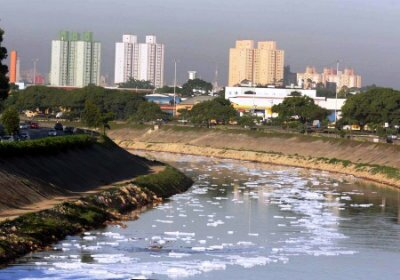
 A poluição do rio continua devido principalmente às indústrias que ainda lançam no rio materiais inorgânicos, tais como metais e produtos químicos resultantes de processos industriais. Mais atualmente o maior poluente do rio é o esgoto doméstico. Por isso o foco das intervenções de despoluição do Tietê estão focadas na ampliação da rede de tratamento de esgotos para a população que mora em torno do rio. E aquelas intervenções tem apresentado melhoras importantes: Em 1990, apenas 24 por cento do esgoto em São Paulo era tratado. Hoje, é 68 por cento. Em duas décadas a extensão da faixa de rio completamente poluído diminuiu mais de 200 quilômetros e a agua tratada aumentou de 1992 até 2007 de 4.5 m3/s para 13 m3/s, equivalente ao tratamento de esgoto de mais de 5 milhões de pessoas.
 Mais estas melhoras significativas tem um preço. A partir de 1992, a Companhia de Saneamento Básico do Estado de São Paulo (Sabesp), empresa encarregada da execução do projeto de despoluição do Tietê, tem recebido do Banco Interamericano de Desenvolvimento (BID) mais de US$1,2 bilhão no apoio das primeiras três fases do projeto de um total de quatro. Atualmente a terceira fase está em execução; além do BID, o Banco Nacional de Desenvolvimento Econômico e Social (BNDES), tem assinado recentemente um contrato de financiamento de US$600 milhões para apoiar a terceira fase do projeto de despoluição do rio Tietê.
Comments
Bangladesh Pollution, Told in Colors and Smells
A recent article in the New York Times on toxic waste issues in Bangladesh: http://www.nytimes.com/2013/07/15/world/asia/bangladesh-pollution-told-i...
Toxic dumping grounds
It would seem that both African and Indian coastal areas continue to be treated as the dumping grounds for much of the ewaste that has made up the technological revolution of the past half a century. The ease with which first world countries liberally dump their unwanted technology in the Global South is representative of an attitude of disregard towards these countries' environmental needs.
As restrictions on how to get rid of waste get increasingly tighter in the Global North, one option that circumvents the problem remains simply sending it to places which do not have such stringent regulations or that have administrations with easily greasable palms, ready to turn a blind eye if there is some profit in there for them.
The municipal government in Accra's efforts to tackle the problem are laudable but I wonder, is it making a tangible difference? Big projects with the backing of institutions like the World Bank always seem so great on paper but is the project actually delivering the goods and what incentives are there to keep up the cleaning of the city's waterways once the initial initiative has been completed?
In Kenya there is a law that says that it is illegal to import cars that are more than 8 years old. Interestingly this law is thoroughly enforced and only by jumping over a whole series of bureaucratic hurdles is it possible to import one's, say, favourite classic porsche into the country. Following through with this logic, it would make sense that Kenya implement a series of laws that also prohibit electronics from entering the country if they are already X years old. Conversely maybe it is about time that laws were made in the North that regulate where and how these products are disposed and what the consequences for dumping electronic waste on developing countries should be...
Katy Fentress
URB.IM - Nairobi Community Manager
@whatktdoes
Start with those responsible
Katy, I had similar thoughts after reading the articles this week: nearly all of them — from ship breaking to e-waste — are, in part, incidents and issues of international responsibility. It's astonishing to think that these cities are already struggling with how to deal with their own trash, polluting water systems and causing great public harm, yet rich nations are dumping more on to the problem rather than helping to solve it. I agree, the regulations need to start in the North, in the so-called "developed world," where no one has to see or deal with these issues, let alone suffer serious health problems from them. This has started with the ship breaking industry, but from what I've heard, the practice continues fairly unregulated. You can read about one initiative to help ship breaking workers, who work with extremely hazardous materials without proper equipment, here: http://urb.im/mm/120604st.
Turning waste into a sustainable (and lucrative) business
Katy and Carlin, I agree that some countries and international companies can be blamed for passing the burden of their own waste to other nations. But this international “link” should definitely not distract national and local governments from assuming their direct responsibility on waste management. I consider that each government should explicitly assume the responsibility to develop laws and rules to regulate the use of "foreign" waste and ensure an adequate overall waste management.
More importantly, countries, together with creative individuals can come up with innovations and initiatives to turn waste into a sustainable (and lucrative) business. Maybe that is of no surprise to me that Hewlett Packard and other companies have already set their eyes on e-waste... Hopefully there is still some space for low income groups and local initiatives to participate from the e-waste business in the near future. Maybe this could be an interesting future debate at the URB.IM platform...
Extended producer responsibility
Great overview of the problem in Nairobi. I know it has been alluded to in this comments chain, but are there any concrete discussions of implementing Extended Producer Responsibility (EPR) laws in Kenya? EPR regulations have been adopted by both the European Union and the United States and essentially hold the manufacturer accountable for what happens with their products after they have been taken off the shelf, thereby internalizing product externalities and promoting more sustainable electronic design. While this has been met with varying success in both the US and the EU thus far, it still seems to be the most logical, sustainable, and long-term solution out there in nations' efforts to 'close the loop' - which should be complimented, as Catalina has pointed out, by each government's own responsibility in setting regulations to monitor "foreign waste" entering into their country (also a very important part of the equation). EPR laws will soon be implemented in Israel (2014) to manage problems associated with their e-waste, increasingly known to end up in the occupied Palestinian territories and severely compromise Palestinians' health as it is informally dismantled. It would be interesting to see if this is something on the agendas of the Kenyan government officials (or any other African nation) as a viable solution in dealing with this issue, or if they are planning on staying with more 'curative' approaches that address the problem farther down the value chain.
EPR in Kenya
Hi Alize thank you for the question. The Kenyan governments environmental authority, NEMA has since 1999 had a series of laws in place dedicated to providing a framework for the recycling and disposal of e-waste in the country. The issue remains a prominent one and there are many papers and workshops that get conducted every year on the topic. However the problem remains as usual that issues of this kind boil down to the individual officer in charge of implementing the law on a case by case basis. As long as there are few incentives to cajole people into following the laws more often than not they will be circumvented or disregarded in favour of a cheaper and more easy option.
Katy Fentress
URB.IM - Nairobi Community Manager
@whatktdoes
Sanitation and wastage cleaning
India is the country with its all cities same situation of wastage and sanitation.
You can come across it very often it is common in India. People keep clean their house but the vicinity they do not care. This is something very pathetic in India. Unless each individual become aware of it, take it as the responsibility, the only way the change can happen.
Hazardous Waste Disposal
If only people will be cooperative, I bet India is a much better and greener place to live. They could somehow do their little shares in helping our environment by doing simple and easy recycling and hazardous waste disposal at home, it could be such a great help.
Add new comment