
Leveraging large-scale events for urban development
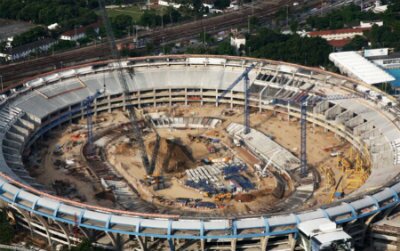 Large-scale events taking place in cities in the developing world present both a danger and an opportunity. On the one hand, governments use such events as a pretext to make big changes quickly — all too often enriching the few, excluding the many, and ignoring the voices of the poor and disenfranchised. On the other hand, such events and the preparations they require enable city governments to accelerate progress and put needed infrastructure into place — and, in the process, provide a crucial opportunity to reflect the views and address the needs of poor communities. The following articles tease out this dynamic and propose some lessons for properly leveraging big events.
Read on to hear reports from Nairobi, Delhi, Jakarta, and Rio de Janeiro, and then join the discussion in the comments below.

|

|

|

|
 |
Inspiring change in Kiberans one event at a time
Katy Fentress, Nairobi Community Manager
The 2007 Nairobi World Social Forum (WSF) was a controversial event because while it brought social activists together to discuss urban poverty, impoverished Kenyans were effectively excluded from the function due to the high cost of attending.
As a result of the controversy, many WSF participants decided to see for themselves how things worked in the slums. This resulted in a flurry of tours around Kibera, Nairobi's biggest informal settlement, effectively laying the groundwork for the creation of a slum tourism infrastructure in the area.
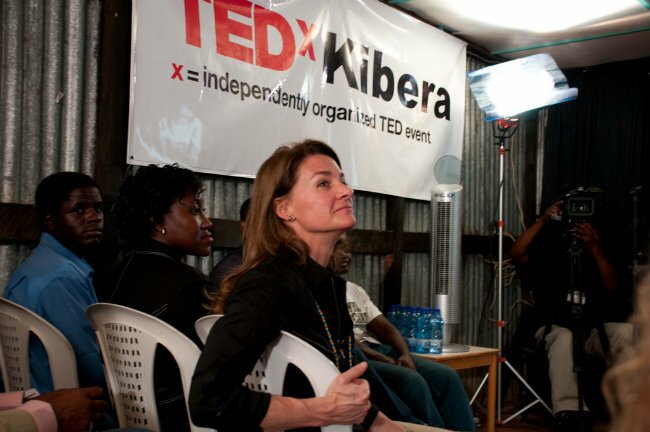 It is commonly agreed that the WSF was a turning point for Kibera, because it heralded an era in which people strove to weave a different narrative of the slum, one that went beyond the old refrain of poverty and desperation but attempted to tell another, more multifaceted story of life therein.
The merits and problematics of slum tourism have been discussed at length in a book co-edited by Fabian Frenzel, lecturer at the University of Leicester, entitled Slum Tourism: Poverty, Power and Ethics. Enough said that the creation of this trend in the context of Kibera resulted in a gradual change not only in the way that outsiders see slums but also in the way Kiberans see themselves and wish to present themselves to the world.
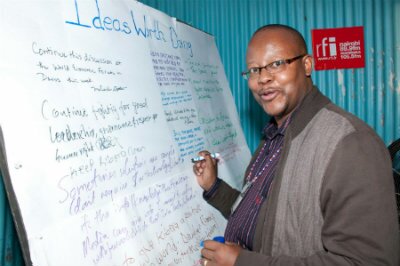 In August 2009, the first TEDx event was held in Nairobi, followed a week later by the first TEDx Kibera event. TEDx Kibera is the brainchild of Suraj Sadhakar a fellow at the Acumen Fund and Kevin Otieno, a Kibera resident.
"I met Suraj while working at Hot Sun Foundation and he introduced me to the concept of TED," says Otieno. "I was interested in trying to develop different perceptions of the way we Kiberans see ourselves and thought an event like this would help the community to think outside of the box. The idea was to encourage people to stop feeling sorry for themselves and gain motivation through inspirational stories of men and women who have made it despite growing up in the slum."
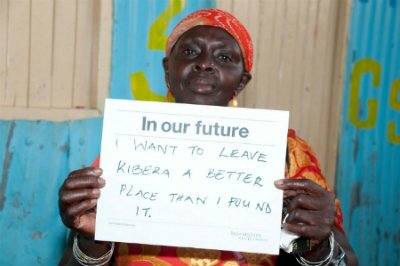 Otieno has gone on to organize many TEDx Kibera events that have been attended and moderated by a wide array of inspirational people. The concept has proved so popular that other talks have been staged in Mathare and Korogocho, both high-profile Nairobi settlements. According to Otieno, one of the results of these events has been a change in mind-set for the attendees: "I would say we have successfully managed to curtail people's expectations that they should receive a sitting allowance whenever they attend an event of this kind. This mentality is a by-product of the way NGOs work, and it has been very hard to convince people to be active agents of change and not passive recipients of humanitarian wisdom."
With themes like innovation, entrepreneurship, self-discovery, and rethink, it is apparent that the events are intended to target local people and attempt to harness their social capital without necessarily doing it for the international glory of putting on a TEDx event.
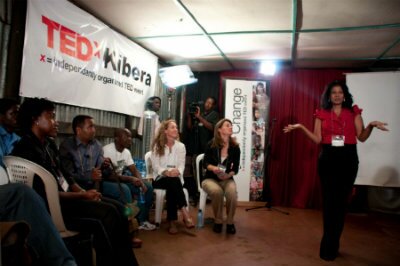 "TEDx Kibera has a long way to go, and I would like to see it scaled-up so we can achieve greater impact," concludes Otieno. "So far, we have secured some funding from the Gates Foundation that goes towards the rental of the hall we use, but we have still to find organizations willing to provide funding for the technical side of things. We would love to be able to train attendees in public speaking and help them to spread the word in order to create other events of this kind, but do not currently have the capacity to carry out this kind of training."
Photo: Gates Foundation

 Since all eyes were on the sporting event, the Commonwealth Games Organizing Committee designed the "Green Team." The goal of this team was to spread awareness among visitors and viewers on issues of land, energy, carbon, waste, and water. In order to create "informed global citizens," the Delhi committee focused on youth as ambassadors of the cause. "Delhi's youth will become the torch bearers and drivers of improvement in civic sense and will enhance cleanliness awareness among citizens of Delhi by a ripple effect," says the site. In this sense, the mega-events become a platform not just for sportsmanship and championships but also for promoting awareness on key issues among the public.
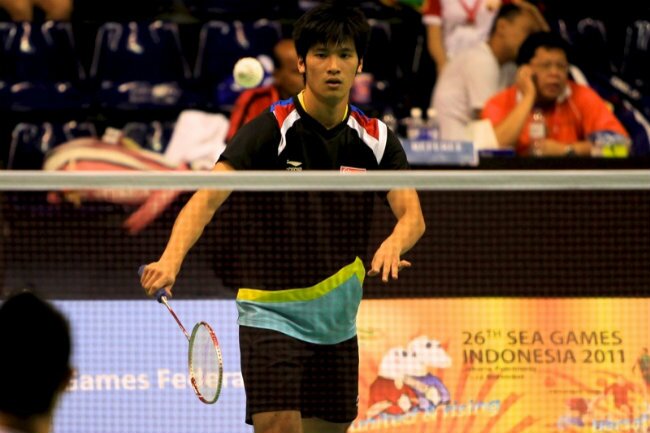 Pelaksanaan Sea Games selalu menyedot pengunjung dari luar negeri untuk datang dan mendukung tim mereka. Negara-negara yang berpartisipasi dalam event ini selain Indonesia diantaranya adalah Thailand, Filipina, Malaysia, Vietnam, Myanmar, Brunei, Cambodia, Laos, Singapore dan Timor Leste. Banyaknya pengunjung yang datang ke Indonesia diharapkan akan menguntungkan baik bagi pemerintah maupun masyarakat secara luas. Sebagai konsekuensinya, Indonesia harus mempersiapkan sebaik-baiknya semua infrastruktur yang dibutuhkan dalam pelaksanaan event olahraga terbesar di Asia Tenggara ini.
 Compreender os impactos financeiros de sediar eventos esportivos de grande porte: O maior foco dos debates referentes a sediar eventos esportivos de grande porte é dedicado ao retorno econômico para o país sede; existe muito pouco debate em torno aos impactos financeiros de sediar aqueles eventos e às considerações sobre investir em infraestrutura esportiva versus outros possíveis investimentos. Por exemplo, no Brasil o custo total dos 12 estádios da Copa teve um total de R$8,3 bilhões. As reformas do Maracanã só foram de R$1,2 bilhões. Muitos críticos argumentam sobre quais outros investimentos puderam ter sido feitos com aquela verba.
Comments
Long term legacies
This discussion reminds me of an extremely interesting debate I attended during Rio+20 last year titled "The Sustainable and Just City: Rio+20 and Beyond," which was sponsored by the Ford Foundation. See coverage from URB.IM: http://urb.im/rj/120618ri
One of the highlights of the event was when Joan Closi i Matheu (Former Major of Barcelona and UN Habitat Director) emphasized that large scale events’ legacies don’t just happen by chance and that they need to be planned. This idea is actually very important for cities wanting to define relevant legacies, like Barcelona did while hosting the Olympic Games in 1992. On one side, Barcelona was able to ensure the upgrading of its less developed areas and second, it was able to position itself in the global map of fun, safe and culturally influential cities. I think each city has its own legacy to aim for, but if it isn't planned, and if this debate doesn't engage the local dwellers, it's very unlikely it will take place.
Difficulties in putting the poor at the top of the agenda
This week the examples from Rio, Jakarta and Nairobi exemplify how often the consequences of mega events are not adequately thought through and that as a rule of thumb in these scenarios there are few accompanying pro-poor initiatives that are integrated into the municipal governments' agendas.
The above-mentioned cities are by no means the only ones: obvious examples include both London during the last Olympic games and the South African cities that hosted the World Cup - places which all came under fire from advocacy groups for failing to create adequate strategies to provide for local low-income residents.
Yet it is understandably very hard to advocate for the creation of successful pro-poor strategies especially in the case of large scale-sporting events, because these occurrences provide an opportunity for cities to shine on a world stage and hence there is apparently little to gain from focussing time and money on those who will not add gloss to the event. In order for such strategies to even exist it would depend entirely on central governments making sure that there are quotas put aside for the purpose and that those in charge of implementing them are of sound moral values with a real desire to see the events really help poor.
One can only hope that the Nairobi World Social Forum, an event that that had at its core a desire to see the lives of marginalised groups improves, can have created lasting lessons to other cities that have gone on to host the same event.
The example of the Delhi Commonwealth Games is interesting. I wonder Carlin, did the Delhi authorities provide any kind of incentive to rickshaw drivers to swap from fossil-fuel to solar power? How much did the switch cost and was the drive accompanied by a complimentary sensitisation campaign? The idea seems great but one can't help but think that for your average rickshaw driver who does not have the environment as a major concern in life, investing money into switching means of transport cannot be a top priority.
Katy Fentress
URB.IM - Nairobi Community Manager
@whatktdoes
Entrepreneurship in the slums
Katy, I love the idea of TedX Kibera and have already begun thinking about how we could do that here in Dharavi. There have been just a couple of TED events in the city, and they've been held with varying levels of success. None of them, however, has been held right within one of the informal settlements. This is a really unique idea. I can see the focus in Dharavi being different, as the most fascinating part about Dharavi IS its sense of thriving entrepreneurship. However, focusing the event on leveraging that entrepreneurial spirit. I think it would be a great way to bring together the fascinating and inspiring stories of what people have built up for themselves inside this settlement. Some of these exist in a great new book--one of a growing repertoire on Dharavi — called "Dharavi: The City Within."
The fate of the solar rickshaw
Katy, the unfortunate part about the solar rickshaw prototype that was built for the games is that it remained just that. What I was trying to point out in my article is that these big events allow for the imagination to be stretched as to what could possibly exist in the city, but there's still a big disconnect between these ideas and game-time displays and what happens post-event (this can be said for the "green commission" that was set up as well as the rickshaw). There really was never a concerted effort to bring this to the public, and so there were no discussions with the auto drivers themselves. If the time ever does come to make a switch like this, your point about the cost factor is well taken. There will have to be some government subsidy for the initial cost. Though I would imagine long-term the rickshaw drivers' salaries would increase without having to pay for gas. Still a pipe dream at the moment, but certainly an idea that should remain in the discussions.
Pecha Kucha
Hi Katy, I also really like the idea of Ted, and maybe you could also try to do Pecha Kucha.
I did once in Congo and the audience was university students. You can make some changes depend on the target audience and it was great experience for them as for me.
widya anggraini
Fascinating
Widya the idea of Pecha Kucha is great. I'm interested in how they push for concise presentation making. This is definitely something people would benefit from in Kenya.
In what capacity were you part of the Congo one?
Katy Fentress
URB.IM - Nairobi Community Manager
@whatktdoes
Sustainability
Catalina, we have similar case and I was thinking about what kind of legacy that possibly left in the city without proper planning in implementing such big events. Big sports event in one side could promote the country and benefits in many aspects. In other side, it could harm citizens and disconnect the city from its people. It's also prone to corrupt practice. In the case of Indonesia, big sport development project was carried out by government, hence corruption became an issue and our sport minister resigned because of alleged corruption related to athlete development house shortly after Sea Games ended.
My other concern is about stadium sustainability. Can you share if there is particular plan what will government do with the new stadium once after the event finish? As I saw without proper maintenance, those sports avenue breaks down just like what happened in Indonesia after the Sea Games.
widya anggraini
Transparency and sustainability
Hi Widya you raise other two key issues concerning large scale events beyond adequate planning and ownership, which are transparency and sustainability. I agree with you, if not properly managed, these events can be subject to corrupt activities. In Brazil, there are many civil society groups watching over the contracts and use of resources from the upcoming World Cup. Not that this will ultimately prevent corruption, but these groups together with the media have been playing a key watchdog role in the event preparation.
Regarding the sustainability of the stadiums, Brazil has a large soccer culture, therefore it is expected that most stadiums will continue to be actively used. Maintenance and operation varies depending on who administers the stadiums. But in most cases, the same cities will be in charge of allocating resources to maintain these structures.
Sustainability
I agree that sustainability really becomes an issue after the sporting structures are built for particular events. In most cases you find that they are left to rot and additional funds are required to renovate the facility again should any other major event occurs. At least this was the case for Lagos after it hosted the Africa cup of nations in 2000 fast forward to today the facilities need complete revamping. The issue of who maintains it also comes up, mostly the state government has other expenses and the facilities become less of a priority.
Regarding Brazil though with all the costs going into preparations I wonder if there is any talk on the projected revenue from hosting the events and their planned legacy, for African cup of nations in Abuja, it was the games village and that contributed to housing.
Three years to the Olympics in Rio
Yesterday, the municipal government of Rio posted on its webpage an update of the preparation for the Olympic Games, which will take place in exactly three years. The update highlights several infrastructure the city has already built, as well as the support of the Olympic Committee, which apparently carries visits every three months to follow up on the preparations. Besides the focus on infrastructure, the update mentions some other "non-tangible" legacies, such like that up to 2014, 100% of all students from the municipal public schools (more than 500 thousand children) will benefit from English classes offered as part of the standard curriculum. From this official update, it seems the local government wants the legacy of the Rio Olympics to be focused on the social gains. Here is the link to the complete update: http://www.rio.rj.gov.br/web/guest/exibeconteudo?id=4279322
Please note that up to now, the municipal government hasn't published any formal numbers on the costs of the infrastructure required to host the Olympic Games in 2016. Apparently those figures will be presented in December 2013.
Wura, to respond your specific question, up to now there aren't official estimations of the revenues expected from the World Cup.
Change in Kibera slums
I am one of the people who have benefited from Tedx events, having participated in giving speeches about my work to audiences both in Kibera, Mathare, Korogocho and Kagemi under the banner of Tedx Kibera.
Inspiring and motivating lessons come out of such gathering at no costs which has a positive impact to those who attend unlike other forums where you have to go through the bureaucracy of verification before you can attend or even pay to attend. If we are to achieve greater heights of our mind shift, such like initiatives are just what we need.
Shifts in mind set
Thanks Sande. I think it would be very interesting to find a way to quantify the impact that TEDx has had in achieving "greater heights of mind shift" in its attendees... I wonder what kind of indicators one could use to track the direct impact that an event like this has in communities?
Katy Fentress
URB.IM - Nairobi Community Manager
@whatktdoes
Add new comment