
 Regulating buses to ensure safe commutes
Olatawura Ladipo-Ajayi, Lagos Community Manager
Lagos, 23 July 2015
Before the advent of Lagos' Bus Rapid Transit system, there were commercial buses popularly known as "danfos" and "molues". Many members of the younger generation have never seen molues. This is due to new policies improving mass transportation in recent years. The Lagos bus transport system was fragmented, inadequately regulated, and lacking in discipline. The system suffered from an absence of well articulated and implemented government policies, a weak legal and strategic framework, and fragmentation and duplication of institutional responsibilities among various agencies at the three levels of government. This situation gave rise to the review of the policy and the introduction of sustainable modes of transportation such as the BRT. However, the changes did not stop at introduction of improved modes of transportation; they also featured an upgrade to the current danfo system through improved management and regulation of operators through well articulated policies.
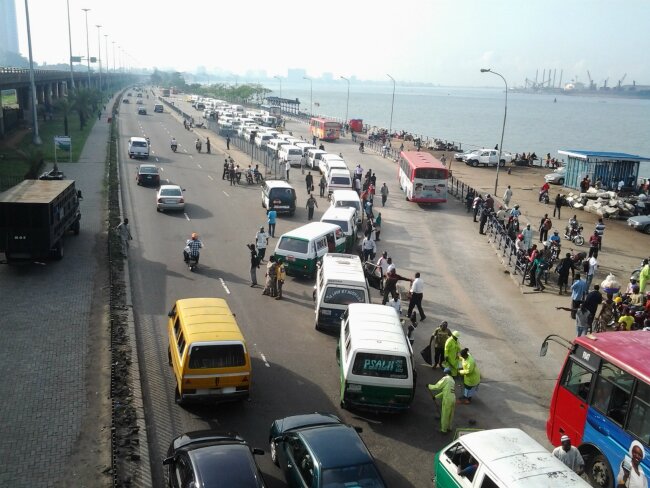 The BRT is currently 22 km long, and the next phase extension will increase its length by 13 km. These 35 km of bus rapid system are part of the total 5,000 km of Lagos' road network. Although the system is expansive, the existing danfo transport system clearly needed to be improved. Some of the initiatives to do so have focused on improving safe commuting and ease of commuting through policy decisions. A common practice of the danfo system was to drive with the bus doors open, while passengers and conductors hung from the side when the buses were filled above capacity in order to maximize income. This posed a serious danger for commuters. An rule was created indicating that all buses had to desist from such practices, and load according to the vehicle's capacity.
Another measure taken to improve commuter safety is the recently introduced regulation requiring danfo drivers and conductors to register with a regulating body and wear identifiable uniforms and badges. This policy might seem insignificant at first glance; however, it goes a long way toward curbing the Lagos phenomenon known as "one chance." "One chance" is a form of robbery that involves pre-boarded thieves disguised as passengers in commercial vehicles dispossessing unsuspecting genuine passengers (usually in danfos) of their belongings at gunpoint. With the introduction of the uniforms, it is easier to identify legitimate commercial vehicles from trap vehicles. In addition to proper identification of commercial transporters, the new policy curbs the culture of casual dress among commercial transport workers, instilling respectability into their profession and possibly reducing the culture of poor driver behavior. Indeed, public transport operators' unruliness was among the issues that made the commuting system so poor before BRTs. Furthermore, the policy mandates that commercial bus operators not operate vehicles more than eight hours in a row, as a road and passenger safety measure.
These decisions and policies were designed to improve security and to put an end to issues such as kidnapping and robbery in commercial buses. While more danfos now shut their doors while driving, the policy of operator uniforms, badges, and registration is yet to be visibly implemented.
Photo: Bankole Oluwafemi
Permalink to this discussion: http://urb.im/c1507
Permalink to this post: http://urb.im/ca1507lge