সৌর বোতল বাতি: আলোকজ্বল দরিদ্র বাসভবন
লেখিকা: প্রতিভা টেন্ডুল্কার, অনুবাদিকা: নুসরাত ইয়াসমিন
Dhaka, 14 April 2015
ঢাকায় নিয়মিত ৩ থেকে ৪ ঘন্টা অন্তর লোড শেডিং দেশের উন্নয়নে নেতিবাচক প্রভাব ফেলছে। সূর্যালোক প্রবেশ করে না বললেই চলে এমন অবৈধ জনবসতির আবদ্ধ পরিবারও সমানভাবে বিদ্যুৎ সঙ্কট দ্বারা প্রভাবিত হচ্ছে। ঢাকার বস্তিগুলো অবৈধ বিদ্যুৎ সংযোগের উপর নির্ভর করে; তারা প্রতিদিন ১০০ ওয়াটের বা এর বেশী দশ ঘন্টার অধিক সময়ের জন্য ব্যবহার করে। ঘন ঘন বিদ্যুৎ বিভ্রাটের কারণে এই পরিবারগুলো প্রায়শই অন্ধকারাচ্ছন্ন থাকে। এই সমস্যা মোকাবেলা করার প্রয়াসে, চ্যাইঞ্জ, একটি ঢাকা-ভিত্তিক গবেষণা প্রতিষ্ঠান ও উপদেষ্টা-বৃত্তি’র প্রধান সাজিদ ইকবালের নেতৃত্বে ‘বোতলবাতি' প্রকল্প শুরু হয়। প্রকল্পের লক্ষ্য বিদ্যুৎ ব্যবহার হ্রাস করে বস্তিতে শক্তি সঞ্চয়ে উন্নতি সাধন করা। প্রতিষ্ঠানটি বস্তিতে দৈনিক বিদ্যুত ব্যবহার হ্রাস করার জন্য বৈদ্যুতিক বাল্বের একটি বিকল্প সমাধান হিসেবে বোতলবাতি চালু করেন।
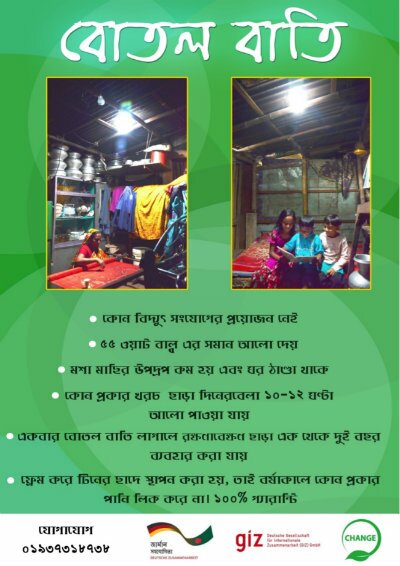 বোতলবাতি প্রকল্পের উদ্যোগ ২০১২ সালে শুরু হয় যখন এনভায়োরনম্যানটাল ম্যানেজমেন্ট’এর স্নাতক ছাত্র, সাজিদ ইকবাল এমআইটি ছাত্রদের সহযোগিতায় একজন ব্রাজিলিয়ান সংস্কারক, আলফ্রেডো মোযার’এর 'লিটার অফ লাইট' – এর উপর একটি ফেসবুক ভিডিও দেখে অনুপ্রাণিত হন। সৌর বোতল সস্তা এবং পরিষ্কার পানি ও অল্প ক্লোরিনে ভরা প্লাস্টিকের বোতল দিয়ে তৈরি।বোতলগুলো তারপর টিনের পাত এবং ওয়াটারপ্রুফ আঠার সাহায্যে ছাদের গর্তে এঁটে দেওয়া হয়। সৌর বোতলগুলো সূর্যালোক প্রতিসৃত করে এবং ৫৫ ওয়াটস উত্পাদনের মাধ্যমে সম্পূর্ণ রুম আলোকজ্জ্বল করে রাখে।
জিআইজেড’এর (জার্মান উন্নয়ন কো’অপারেশন) সঙ্গে, চ্যাইঞ্জ, ২০১৩ সালে ঢাকার মিরপুরের বাউনিয়া-বাধ বস্তিতে একটি সামাজিক ব্যবসা হিসেবে বোতলবাতি প্রকল্প শুরু করে। বোতল লাইট বস্তির ২৫০ পরিবারের মধ্যে স্থাপন করা হয় যা পরিবারগুলোর মধ্যে দিনমান আলো সুবিধা প্রদানে সফল হয়েছে। যখন সাজিদের মতে, এই এলাকার৮৩ শতাংশ মানুষ এখনও এই পদ্ধতি ব্যবহার করছেন এবং মাত্র ১৬ শতাংশ বিদ্যুতের উপর নির্ভরশীল। এই উদ্যাগটি কার্বন নির্গমন ও বিদ্যুতের অপব্যবহার কমাতে সফল হয়েছে। ধারণা করা হয়, এই প্রকল্পের ফলে প্রতি বছর প্রায় ৯৮.৮৪ মেগাওয়াট বিদ্যুত সংরক্ষিত হচ্ছে। একইভাবে, স্থানীয় বাসিন্দারা এই প্রকল্পটি সাদরে গ্রহণ করেছে যেহেতু এটি তাদের বিদ্যুৎ বিল হ্রাস এবং লোডশেডিং দ্বারা সৃষ্ট ব্যাঘাত ছাড়া নিয়মিত কাজ করতে সাহায্য করছে। দরিদ্র স্কুল ও পরিবারের মধ্যে সৌর বোতল আলোর উচ্চ চাহিদার কারণে, চ্যাইঞ্জ, ঢাকার মোহাম্মদপুর এলাকার জেনেভা ক্যাম্পের স্কুলগুলোর শ্রেণীকক্ষের মধ্যে বোতল লাইট লাগিয়ে দিয়েছে।
সৌর বোতল লাইট যেহেতু শুধুমাত্র দিনে কাজ করে থাকে, তাই চ্যাইঞ্জ সৌর বোতল আলো প্রযুক্তির পরিবর্তিত আকারে রাতে ব্যবহারোপযোগী একটি সৌর লণ্ঠন প্রকল্প শুরু করেছে। সৌর লণ্ঠন তৈরী করা হয় একটি সৌর প্যানেল এবং একটি ব্যাটারি সঙ্গে একটি ২০ ইঞ্চি ব্যাস পাইপের সাহায্যে প্লাস্টিক বোতলের মধ্যে সংযোগ স্থাপনের মাধ্যমে। সাজিদ মতে, সৌর লণ্ঠন বাজারে পাওয়া অন্যান্য বাতির তুলনায় সস্তা। প্রতিষ্ঠানটি স্থানীয়দের জন্য বাতি মেরামত বা তাদের নিজস্ব ব্যবসা শুরু করতে সাহায্য করবে এমন কর্মশালা আয়োজনের পরিকল্পনা করছে। তাই, প্রতিষ্ঠানটি দরিদ্র জনবসতি এবং গ্রামীণ এলাকার মধ্যে এই মজবুত প্রযুক্তির ব্যবহার প্রসারণ করবার উদ্দ্যেশ্যে সরকার ও মানুষের কাছে সাহায্য ও সমর্থন প্রার্থনা করছে। বর্তমানে, বেশ কিছু যুব সংগঠন লিটার অফ লাইটের অনুরূপ প্রকল্প শুরু করেছেন । তবে, সাজিদ মনে করেন প্রকল্পটি সংবেদনশীল এবং পর্যাপ্ত সতর্কতা অবলম্বন না করলে এটি দরিদ্র পরিবারগুলোর ঘরের ছাদে ফুটো সৃষ্টি করতে পারে।
চিত্র: চ্যাইঞ্জ বর্ণিত বোতলবাতি প্রক্রিয়া’র লিফলেট
Permalink to this discussion: http://urb.im/c1504
Permalink to this post: http://urb.im/ca1504dhb
Solar bottle lights: illuminating the homes of the poor
Pratibha Tandukar and Nusrat Yasmin, Dhaka Community Managers
Dhaka, 14 April 2015
Load shedding is when authorities divert all electricity generated to power one part of the city, while keeping others in the dark for several hours. This is necessary since there is always more demand than supply, overloading the system. Load shedding takes place at regular intervals for three to four hours a day in Dhaka, negatively affecting the development of the country. Informal settlements, where sunlight hardly enters the cramped households, are especially affected by the electricity crisis. Slums in Dhaka depend upon illegal electricity connections, using bulbs of 100W or more for more than ten hours a day. These households remain dark during the frequent power outages. In attempt to tackle this issue, CHANGE, a Dhaka-based research organization and consultancy led by Sajid Iqbal, initiated a project called Botol Bati. The mission of the project is to improve energy efficiency in the slums by reducing the consumption of electricity. The consultancy introduced Botol Bati as an alternative solution to electric bulbs in order to reduce the daytime use of electricity in the slums.
The Botol Bati project started in 2012 when Sajid Iqbal, an undergraduate student in Environmental Management, was inspired by the Facebook video "Litre of Light," initiated by Brazilian innovator Alfredo Moser in collaboration with MIT students. Solar bottles are cheap and simple devices made of plastic bottles filled with water and a bit of chlorine. The bottles are then fixed in holes of the roofs using tin tiles and water-proof glue. The solar bottles refract sunlight and produce up to 55 watts of light, illuminating the entire room.
In collaboration with GIZ (the German Federal Enterprise for International Cooperation), CHANGE started the Botol Bati project as a social business in Dhaka's Baonea-Badh slum of Mirpur in 2013. Bottle lights were installed in 250 households, successfully providing daytime lighting facilities among the slum's households. According to Sajid, 83 percent of residents in this area still use this method, and only 16 percent are dependent on electricity. The innovation was successful in reducing carbon emissions and the misuse of electricity. It is estimated that the project saves approximately 98.84 MW of electricity per year. In addition, the solution is socially accepted by local residents, as it reduces their electricity bill and enables them to continue their regular work without disturbances caused by load shedding. Following the success of the solar bottle lights in households, CHANGE installed bottle lights in classrooms in schools at the Geneva Camp in the Mohammadpur area of Dhaka.
Since the solar bottle lights only work during the day time, Change launched a solar lantern project, a modification of the solar bottle light technology for nighttime. Solar lanterns have a 20-inch pipe that connects the plastic bottle to a solar panel and battery. According to Sajid, the solar lanterns are cheaper than other lamps available in the market. The organization plans to hold capacity-building workshops that will help local residents repair the lamps or start their own businesses. Thus, the organization seeks the support of the government and local community in order to expand the use of sustainable technology among the poor. Sajid adds that the project requires careful guidance as the solar lamps can cause leakage in the roofs of the poor households.
Photo: Leaflet from CHANGE describing the Botol Bati process
Permalink to this discussion: http://urb.im/c1504
Permalink to this post: http://urb.im/ca1504dhb