 Transport and the post-colonial city: Cape Town's new Integrated Transport Plan for 2032
Tariq Toffa, Cape Town Community Manager
Originally founded on a peninsula to serve European imperial sea trade, today the CBD of Cape Town is wholly peripheral. Deeply racialized during apartheid, the city is also radial; with the CBD ringed closest by white social groups and affluence, and further away by black, increasingly poorer and less developed areas. The latter typically commute long distances by public transport to the CBD and other employment centres; while the former, with high levels of car ownership and only 10 percent use of public transport, contribute to making Cape Town the most congested city in the country.
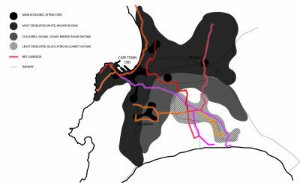 These socio-spatial structures began to be challenged for the first time in the post-apartheid/1994 dispensation. However, transport (train, mini-bus taxi, and bus) still remained fragmented/segregated. In 2012 the City established a single authority to integrate and manage this network called Transport for Cape Town, and in 2014 launched its R32 billion ($3.2bn) Integrated Public Transport Network plan to achieve this by 2032. This includes a BRT system across the whole city, called MyCiTi, to be implemented in five phases (Phase 1 is current) (fig. 1).
 The transport plan — like other City plans — rightfully understands transport to be about much more than efficient mobility. Specifically, it promotes the idea of "socially sustainable" transport, which "speak to the needs of the disadvantaged and the marginalized," and even seeks to "promote understanding and acceptance" by facilitating "interaction and social encounters."
Apart from a lack of historical context, there is little that can be faulted with the principles of the transport plan. What may be in question, however, is the appropriateness of the solutions proposed. Criticism, for example, has been directed at the focus on relieving traffic congestion for the CBD and adjoining areas first, before addressing the needs of poorer areas. Others have argued that the city's spread-out, low average densities were not suited to BRT corridor development, which typically require more passengers along shorter routes, and that incremental upgrading of existing rail and bus infrastructure was more appropriate.
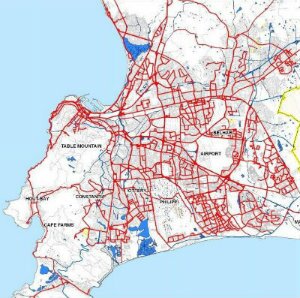
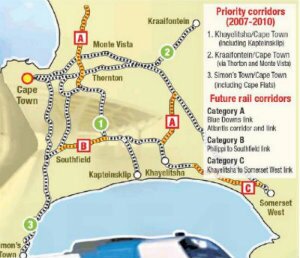 Moreover, to avoid a dispersal (like the city's web-like taxi network - fig. 2) of investment, impact, and opportunity — albeit via selected BRT corridors — it is crucial that bus and rail be fully integrated, to allow development zones to be strategic, and not scattered along lengthy BRT corridors (a total of 57.79 km). However, critical rail proposals (fig. 3) are still in the discussion phases, while BRT plans are already well underway.
More generally, a contiguous and high quality (rapid) rail supported by road-based infrastructure probably has the best chance to manage public transportation in large, polycentric urban areas. In the South African context, this should also be geared toward catalyzing new centralities and urban systems over the long term, which redress colonial and apartheid structures to create more just and integrated cities. If the primacy of established nodes remains entrenched, apartheid-shaped transport patterns will also remain unchanged, and there will also be little opportunity for new social interactions across the city.
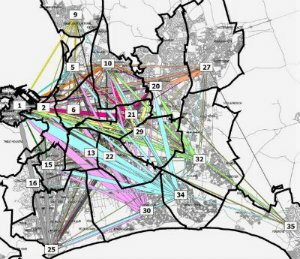 Described by the City as "practical," "realistic," and "sensible," ultimately Cape Town's transport plan is a conservative answer to deep social, economic, racial, spatial, and historical divisions; essentially, to bring greater efficiency to current commuter flows (fig. 4). However, as implied in the plan's foundational principles, transport must take on a wider, proactive role: to respond to the growth and complexity of modern cities, but also a responsible role, in redressing its own complicity in the creation of unjust settlement patterns. In the most unequal society in the world, simply put, it is a case of modifications to the status quo, or transformation of it. Close.
Photos: Fig. 1: Author; fig. 2, 4: City of Cape Town; fig. 3: PRASA
Permalink to this discussion: http://urb.im/c1410
Permalink to this post: http://urb.im/ca1410cte

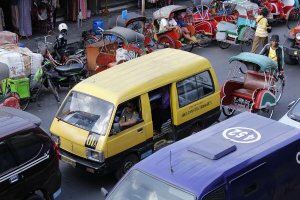 October 2014 — Every modern city grapples with the challenge of facilitating residents' journeys to their workplaces, whether formal or informal, fixed or mobile. Public transportation's positive impact on congestion and the environment is clear, yet commuters often experience it as inefficient, overcrowded, and costly. Likewise, transportation in cities — for some, a way to get to work; for others, a means of income — often leads technological innovation, but can also lag woefully behind.

 Mengurai kemacetan Surabaya dengan Angkutan Masal Cepat
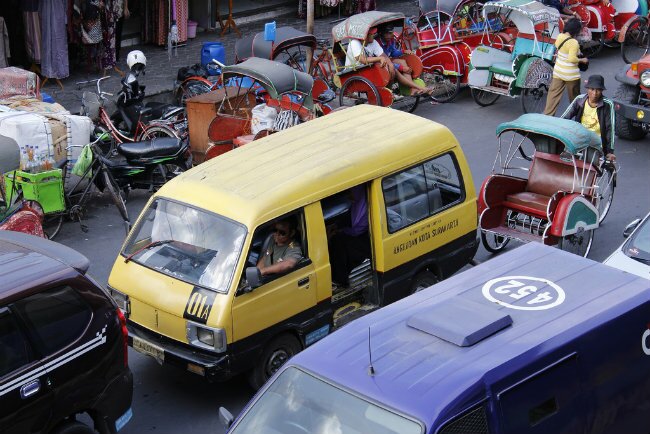 Sejalan dengan waktu, Kota Surabaya berkembang menjadi kota metropolitan terbesar kedua di Indonesia. Kota ini tumbuh berkembang menjadi kota industri, pendidikan dan pariwisata. Saat ini sebagian besar pekerja di Surabaya adalah pendatang dari berbagai kota sekitar seperti Sidoarjo, Gresik, Pasuruan, dan Mojokerto. Terbangunnya jembatan Suramadu yang mengubungkan Surabaya dengan pulau Madura menyebabkan bertambahnya jumlah pekerja terutama dari Bangkalan, Madura. Daerah-daerah tersebut merupakan daerah penyangga Surabaya yang berkembang disekeliling pusat pertumbuhan.
 Convirtiendo el uso de la bicicleta en un medio de transporte efectivo y seguro
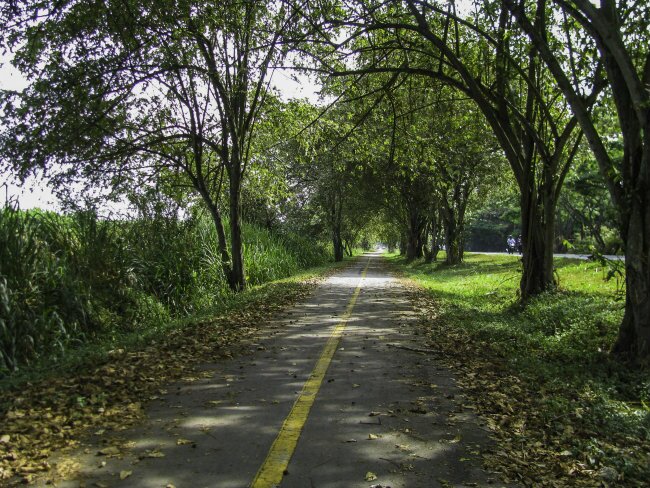 Sin embargo, Cali tiene la mayor tasa por habitante de uso de bicicleta como medio de transporte en Colombia: cada día unas 200.000 personas utilizan su bicicleta para llegar desde y hacia el trabajo, un 11,7% del total. Esto se debe en gran medida a las altas tasas de pobreza, y al hecho de que muchos ciclistas simplemente no pueden permitirse el pago del transporte público. Para mejorar la situación de los ciclistas y fomentar el uso de la bicicleta, será necesario implementar una mejora de las infraestructuras, una reducción de la velocidad máxima en las vías rápidas, y lanzar proyectos educativos que conciencien a los automovilistas sobre la necesidad de extremar las precauciones.
 Plataformas para la movilidad en la Ciudad de México
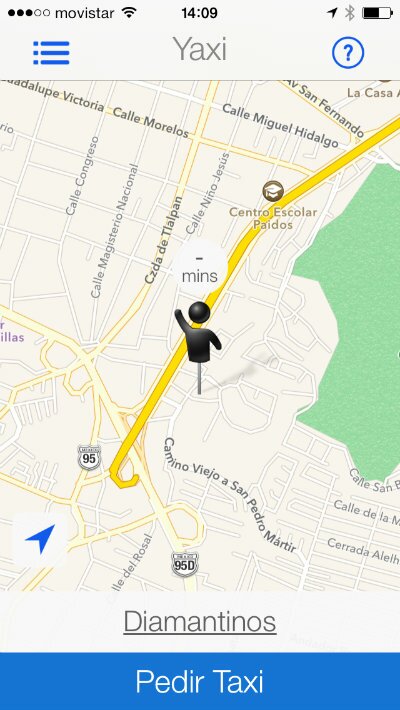 En la Ciudad de México, existen diversas formas de transporte público al cual pueden acceder los habitantes del Distrito Federal. Desde hace unos años, la capital de México es reconocida a nivel global por el Metrobús como sistema de transporte colectivo no contaminante. Asimismo, también existe el Metro y Tren Ligero los cuales ofrecen un medio diferente para poder trasladarse a diferentes puntos en la ciudad. Sin embargo, estos medios no siempre tienen la mejor conectividad, por lo que otro método de transporte cobra un valor agregado para la movilidad en la Ciudad de México, "el Taxi".
 Putting Mumbai's skywalks to use
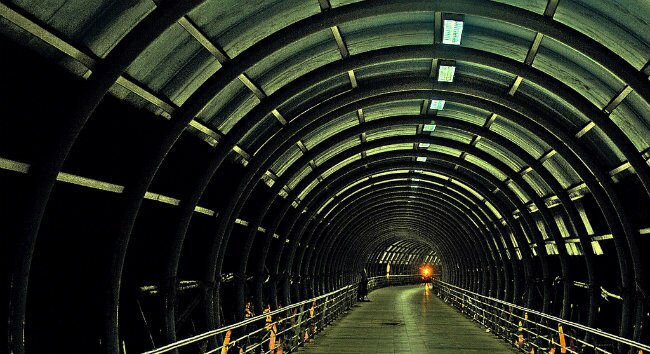 The "war on the car" is a shift that has yet to take hold in cities such as Mumbai, where car-centric development dominates discourse, even while millions get around by walking. A majority of the poor still commute on foot — a challenging feat in a city badly in need of sidewalks, crossing signals and, yes, even pedestrian zones.
 Governance and the informal-formal transport divide
 مشروعات النقل العام في القاهرة... طريقة لنقل المواطنين والحد من البطالة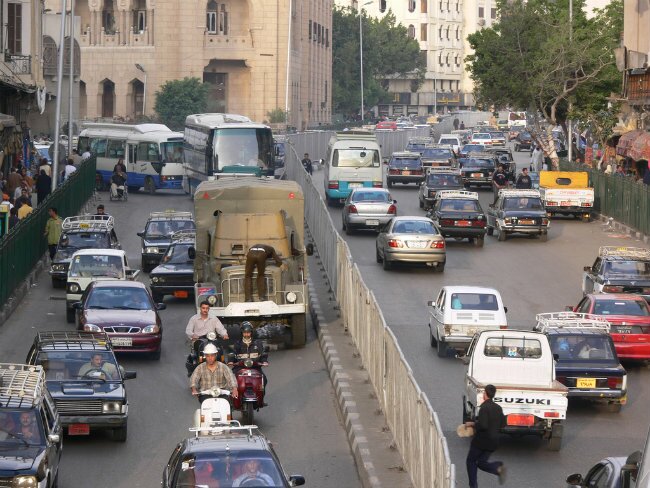
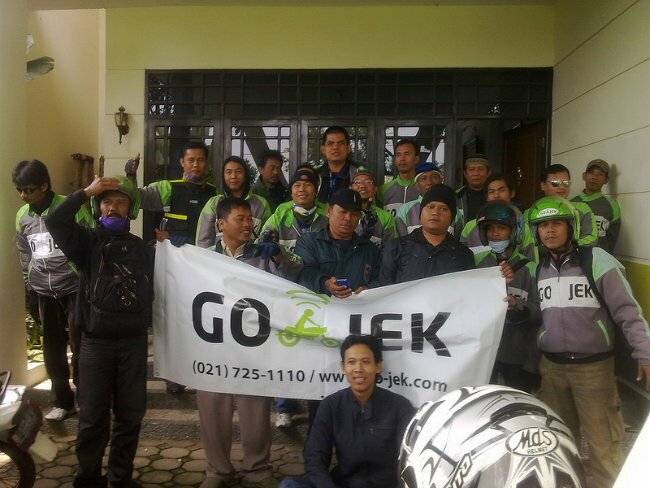 Semakin lama kemacetan di Jakarta semakin sulit untuk dikendalikan. Menurut data DItlantas Polda Metro Jaya, tahun 2013 jumlah total kendaraan yang lalu lalang di ibukota mencapai lebih dari 16 juta unit. Dengan tren yang terus meningkat dan fakta bahwa tidak ada penambahan luas jalan, maka bisa dipastikan kemacetan makin sulit diatasi. Situasi tersebut memberikan kesempatan kerja bagi tukang ojek, apalagi banyak titik kemacetan yang belum terjangkau.
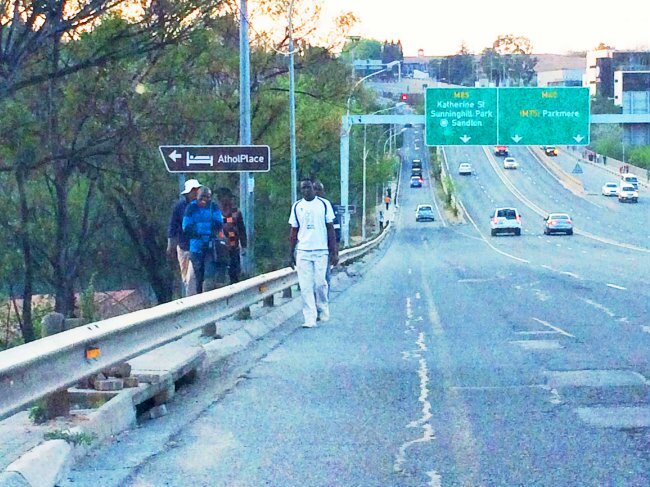 The City of Johannesburg recently embarked on a new spatial vision — dubbed the "Corridors of Freedom" — where
 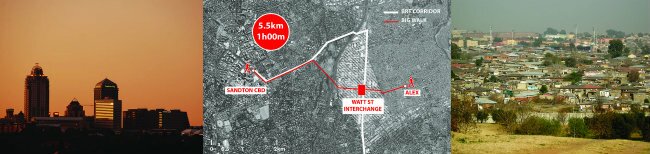 The challenge for the "Corridors of Freedom" in such contexts is not only its mandate to manufacture magnets for mixed and integrative forms of development along its route, but also to meaningfully address the radically unequal conditions that exist on the ground. Fortunately, through interdisciplinary debate, the crucial intersection between the north-south 'Corridor' and the east-west 'Great Walk' was conceived of as more than a utilitarian space for modal transfer as it was initially earmarked (the 'Watt Street interchange'), but as an opportunity to offer much needed mixed-use and public space for Alex residents, while penetrating into the divisive industrial buffer. If these principles are carried through into implementation, the Watt Street interchange and public space could successfully translate and pilot fundamental principles which the "Corridors of Freedom" hopes to achieve.
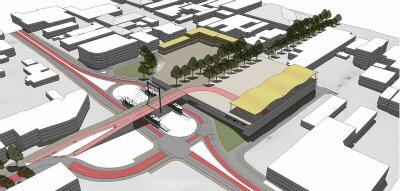 Today, transport infrastructure cannot continue to be conceived of and implemented as a hard, scientific discipline apart from its social affects. South Africa's modern history, especially, simply no longer allows it that kind of luxury. Rather, a reimagining of modern architecture for post-apartheid spaces is required, joining the high-level infrastructure needs of modern cities with the lived realities of its citizens on the ground, in hybridized spaces.
 Keke NAPEP: Redefining work, space, and commuting for the urban poor
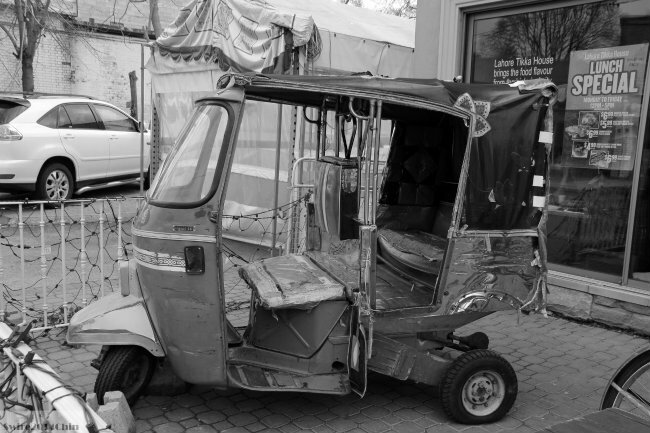 In an attempt to alleviate poverty, the national government started the National Poverty Eradication Programme (NAPEP) with the aim of equipping citizens with skills for employment and wealth creation as its focal point. One of the programs was focused on the motorized tricycle, hence its name "Keke NAPEP". The program has gone beyond the government providing the free and subsidized motorized tricycles to the poor, to becoming a major transportation business. Since the okada ban on major Lagos roads, more now turn to operating Keke NAPEP as their source of livelihood. The appeal of Keke NAPEP goes beyond the ban on motorcycles, as it is considered a safer alternative due to its enclosed nature compared to the open one of a motorcycle, more affordable for the rider, and it allows operators earn more in one journey than with an okada since they can carry multiple riders at once.
 A revolução da bicicleta em São Paulo — uma vitória do cicloativismo
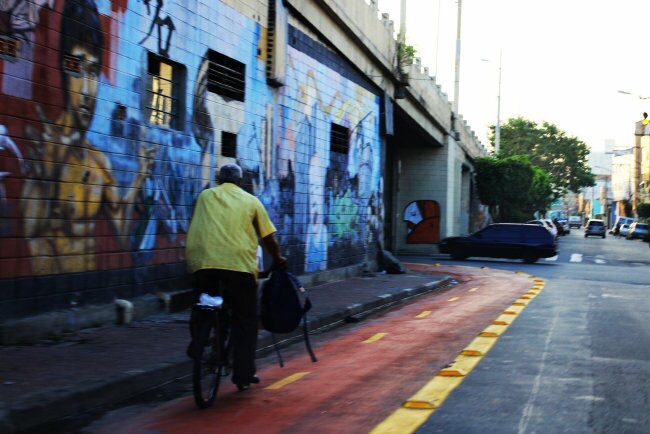 Assim, apesar da falta de políticas – ou por conta da falta de vontade política – formas de ativismo voltadas ciclista cresceram nos últimos cinco anos na cidade, com o aparecimento de ONGs como Vá de Bike, Ciclocidade, Bike Legal, Bike Anjo, entre outras. De grupo de ciclista organizando bicicletadas, a ONGs de suporte ao ciclista iniciante, pudemos assistir uma crescente discussão, demandando um olhar mais atento à bicicleta como uma alternativa séria no complicado sistema de mobilidade da cidade.
 Master planning Nairobi's way out of the jam
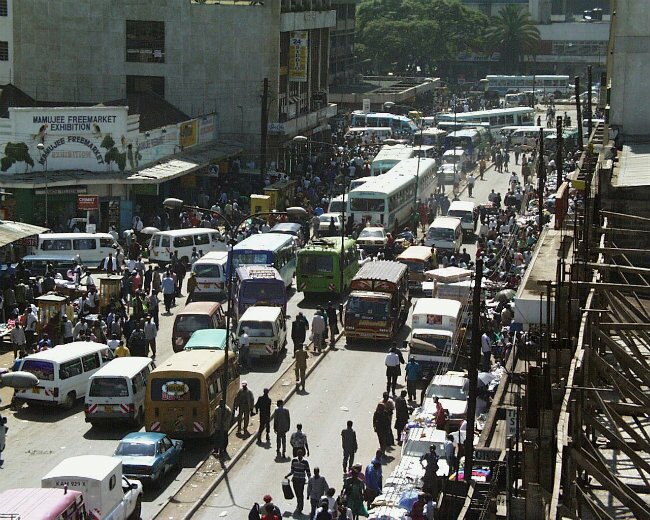 Originally founded as a halfway transit point on the Mombasa-Kisumu railway line; Nairobi has rapidly grown into a national and regional hub for business and trade while also serving as a major access point for goods bound to the wider East African Community. Greater Nairobi has a population growth rate of 4 percent and is home to 8 percent of Kenya's 38.6 million residents. Poorly planned infrastructure, lack of accounting for actual population growth, and inadequate public expenditure on transportation continues to have direct impacts on millions of residents daily in their jockeying to get to town.
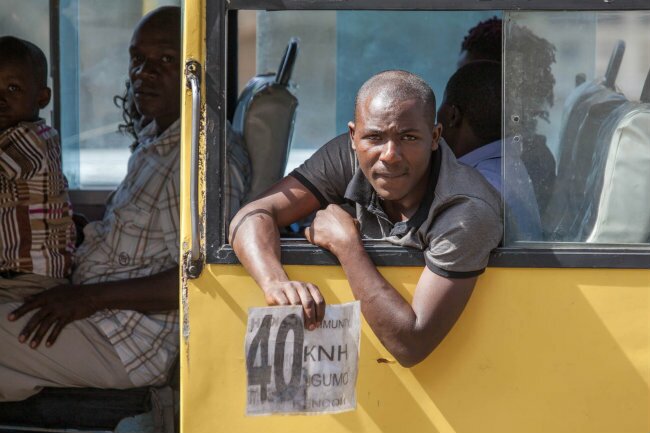 The Sustainable Transportation Solutions for East African Cities initiative, or Sustran East Africa, a project launched in collaboration with the United Nations Environment Programme (UNEP), UN-HABITAT, and Nairobi's municipal government in conjunction with a number of private sector partners, will assist the Ministry of Transportation and the Kenya Urban Roads Authority to address congestion issues in the capital in line with Integrated Urban Development Masterplan for the City of Nairobi (NIUPLAN) unveiled in May 2014, the first update to the capital's planning documentation since the 1970s. This comprehensive and strategic report is broken down into six thematic areas covering: (i) Land use and housing; (ii) Governance and institution; (iii) Population and social system/urban economy; (iv) Urban transport (road, railway, airport); (v) Environment; (vi) Infrastructure (water supply, wastewater, power, solid waste and disaster prevention, ICT & telecommunications). The 60-day period of public comment on the NIUPLAN recently closed and based on the tone of political willpower it is hopeful that Governor Evans Kidero and the Nairobi City County Government will follow through on stated commitments.
 What can Delhi's public transport goods achieve for the poor?
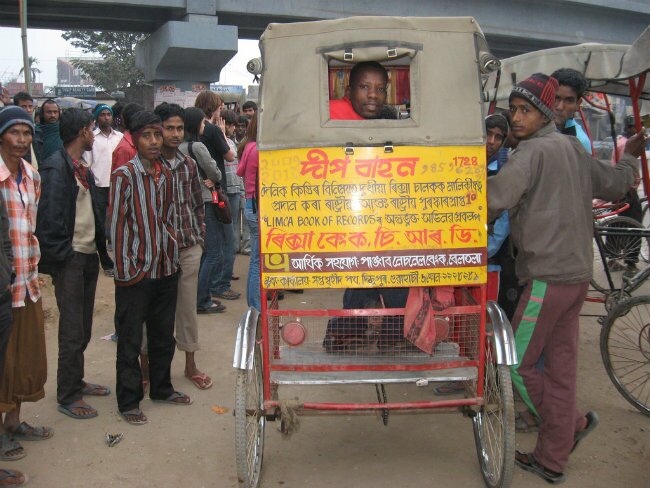 First, there must be an attempt to link the public transport goods to something more fundamental. We need to understand the reason to seek accessibility. The primary question: What can it achieve for the poor? And how can the success and failure of the instruments adopted for public transport and infrastructure development be judged? This question is best answered by examining the case study of E-Rickshaw.
 Tax breaks to improve commutes in Lilongwe
 A
A 
 Smart moto-taxi in Ho Chi Minh City: a creative initiative or a bigger jam?
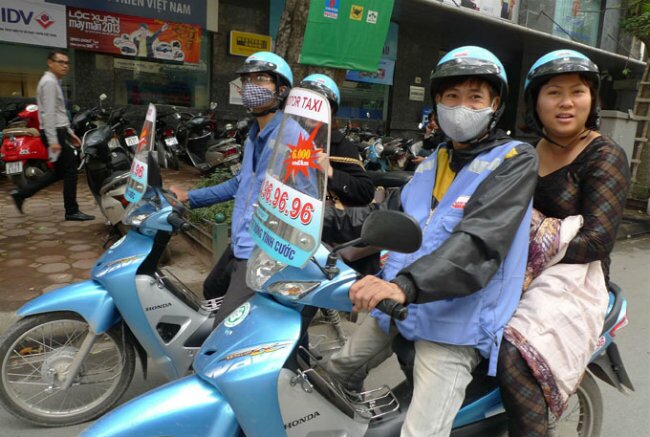 Solving mobility and employment problems?
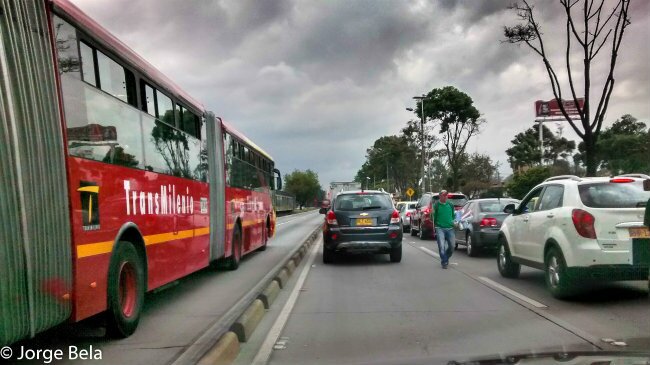 En la actualidad se están concluyendo los estudios técnicos finales (serán entregados en noviembre) del metro, y se cuenta con la financiación suficiente (un 70% de recursos de la nación, y el resto del distrito, especialmente impuestos a los combustibles) La construcción del metro es sin duda la obra mas compleja y costosa a la que se enfrenta Bogotá en estos momentos. Aunque el presupuesto que se maneja es de 3,000 millones de dólares, el coste final puede aproximarse mas a los 5.000 millones, sin contar imprevistos. Para acometer este proyecto, será imprescindible conformar una estructura institucional fuerte, que impida que su trabajo quede sujeto a las presiones políticas coyunturales. Esto es especialmente crítico en Colombia donde los alcaldes tienen una limitación de mandatos a 4 años.
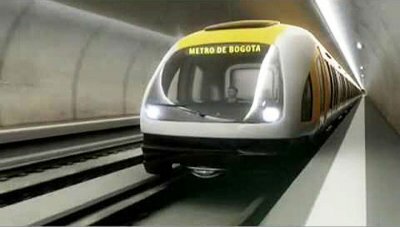 Una vez tomadas todas estas decisiones, en un proceso que está siendo acompañado por el Banco Mundial se podrá concretar la licitación. Difícilmente se podrá lograr antes de un año. Una vez culminado el proceso de licitación podrá comenzar la construcción que se demorará entre dos y tres años, si no surgen complicaciones técnicas. Debido a la característica del subsuelo de Bogotá, probablemente no se podrán utilizar las tuneladoras, y se tendrá que ejecutar mediante la técnica del "cut and cover," con lo que se producirán grandes disrupciones en el tráfico rodado durante un periodo prolongado.
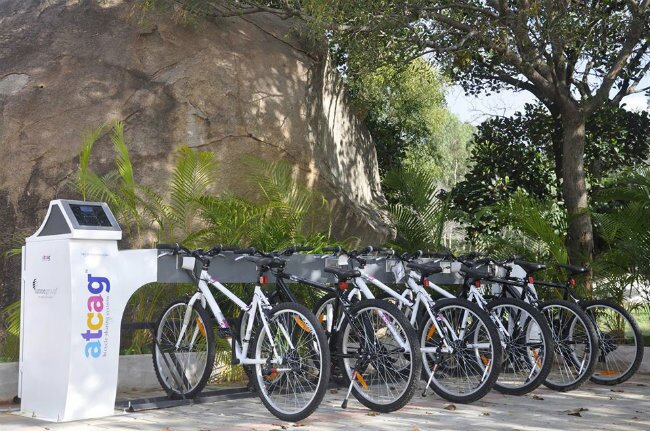 With an estimated 200,000 bicycles already on Bangalore's roads, the city inaugurated one of the country’s first urban cycle track along 22 roads in Jayanagar. The project, which was supported by the Department of Urban Land Transport (DULT), had great potential, but a Times of India article reported last year that just 17 months into the bike lane initiative, the tracks were taken over by parked vehicles. A member of the organization Ride a Cycle Foundation says in the article that the issue, like many in urban India, stems from lack of coordination among multiple agencies: "Right now, DULT does the planning, BBMP implements the work and traffic cops enforce the project on the ground. When there is little coordination between these agencies and in the absence of leadership to oversee them, projects like cycle tracks end up in limbo."
Comments
HCMC Motorcycle Taxis
I agree that this is both a gift and curse at once. I've been living in Hanoi for a short period of time, and see the benefits that this service would bring, but also see how it isn't solving the real issues of needing better public transit and walkable infrastructure. While it isn't easy in lower-middle income countries, the state should play a bigger role in these types of transit (in my opinion).
Waiting for the Metro Lines
Hi Corey Pembleton,
As for the overall mobility problem, moto-taxis should indeed be a temporary solution only. HCMC citizens are looking forward for a broader-scope and longer-term metro lines, which are expected to cover the whole central area and connect the central with satellite cities. This, and not the moto-taxis, should be the focus of the government in the long run.
With the public transportation improved, in my opinion, moto-taxis should be limited to its special purposes - tourism & medicals. These vehicles are currently the great choice for non-local & foreign tourists to have a direct experience of the city. In addition, they also offer a great help to regular patients who have to pay frequent visits to hospital but are too weak for buses or metro lines.
Best.
I agree. I may be off point,
I agree. I may be off point, and am basing what I know on speaking with colleagues here, but I agree that both cities need massive investments in public transit and related infrastructure in order to make the switch. I can only speak for Hanoi, but I feel there is also the potential for some very novel solutions. The motobike "issue" isn't just that, it is a vital part of the cities' culture, and I feel couldn't be easily replaced and as such maybe a different solution is needed? I don't know what that solution is, but maybe after living here for a few years it will all make more sense! Thanks for the article, look forward to more,
Waiting for Metro Lines
Hi Corey, as I mention in my article, Bogotá has been waiting for the first metro train to arrive for more than 50 years! Now the plans are underway, but still the hurdles are huge. The initial coost estimates, made after a costly study, were about 5 billion US$. Yesterday, the City presented the final geological studies, and cost has suddenly escalated by 50%, o almost 8 billion US$. Itr is quite likely that the costs will escalate even further before the project is concluded.The big question is if this level of investment is what the city needs. The answer is not so obvious. The problem is that if not enough resources are reserved for all other modes of transportation, and a way to integrate them, Bogotá will have a wonderful metro line, but the City's transportation problems will not have been solved, perhaps they would have been made even worse.
The World Bank has just said so in a statement regarding the metro in Bogotá. The WB has been accompanying the city through the process so far, so they are very familiar with it. They warn that it is necessary to consider all transportation forms and to make sure that the huge financial costs of building the metro will not siphon away resources needed to expand and upkeep the BRT and the integrated feeder lines, which are still half baked.
tourism and medicals?
Hi Nguyen,
Thanks for your piece on the smart moto-taxis. Having spent 6 years haggling with Phnom Penh's (and occasionally HCMC's) moto-dops I see the semi-formalisation of the moto-taxi trade as a great step forward (particularly the inclusion of female drivers). While I agree with you that there is a need for more investments in public transportation, I wonder why you think the moto-taxis should be limited to tourism and medicals only? Ideally, public transportation would eventually out-compete moto-taxis for regular journeys, and moto-taxis would be available for 'other' trips - whatever they may be.
E-Rickshaws Delhi
Nice piece Priyanka. I wonder if the Rickshaws drivers mentioned have a syndicate or some sort of association that can help them overcome the government regularities.. We have same transport means in Cairo, however also they are not welcomed in all Cairo districts given the housing standard in each place..
Support of the local party
Dear Shaima,
Thanks for your comment on the article on e-rickshaw. Arvind Kejriwal, party convener of local political party called Aam Admi Party (AAP), is strongly supporting the E-Rickshaw drivers and have been fighting for their rights. The main issue is also that many drivers took loans to buy e-rickshaw in aspiration for a better future. But the model soon fell under controversies and most of them drive rickshaw at night in fear of the ban. They are repeatedly beaten by police personnel as its illegal under the current circumstances. The transport minister had made many promises but policy didn't change much to lift the ban.
The good news is that on October 2 the ban was lifted by high court and the e-rickshaws can officially ply on Delhi city roads. We now wait to see if enough changes will be made under the vehicle act for E-rickshaws to be cheap enough for the poor man.
E-rickshaws
Hi Priyanka, thanks for the recent updates on e-Ricks in Delhi. I've been hearing about these since the Commonwealth Games, but it seems for a variety of reasons, they haven't taken off. Besides the recent roadblock with classification as motorized transport, do you have any other sense of why they've been so slow to expand in the city? Have any of them actually been in use over the last few years? I also wonder what would be the incentive to drivers to switch to an e-rick.The initial costs would be higher, though they would save on fuel in the long-run. Look forward to any other specifics on their potential in the city. Thanks, Carlin
Cost of registeration and minimum education qualification
Dear Carlin,
Thanks for your comment. Let me reply to the concern regarding the cost of E-Rickshaws. The price of the Rickshaw is only Rs 80000. Thats low enough for many people to take a loan and switch to driving E-Rickshaw. The concern is that the classification increases the cost of registration drastically, more than 5 times the cost of the rickshaw itself. They were used at the times of Common Wealth Games but now used only on the outskirts of delhi or at night because of the ban and controversies around it. There is also the requirement of E-rickshaw drivers to have completed education till Class X. That leaves out a lot of uneducated people from availing the opportunity. Thanks, Priyanka
Making transport policies work for all
Hi Priyanka,
I have to agree, policies for transportation really need to consider its overall effects, particularly on the economy and those the different modes of transportation target. Lagos traffic is terrible and the fastest and cheapest mode of transportation way the commercial motorcycles, like Delhi, transport policies recently banned most of these from major roadways for safety reasons,however its benefit can be argued outweighed its detriments. This ban cost arguable the urban poor operating these machines their jobs, and middles class citizens a cheap and fast way to making livelihood, and created increased hours in traffic which at the end of the day affects productivity.
Transport policy in Lagos in the city's defense is attempting to upgrade the transport system to the 21st century through BRT systems, trains, cable cars etc. The issue with this however is the complex systems of the city's transport network, its varied class groups and economic status of residents are not being fully evaluated in the decisions being made. This affects not only the poor but also general economic productivity as most workers tend to spend half of their day on the road.
I would disagree that the primary question in forging transport policy should be what can it achieve for the poor but more looking at transport policy from the perspectives of what problem these policies solve, which do they create and how best to make it work for the majority of city residents both poor and rich.
transport for ALL
Hi Wura, great point re the need to develop transport policy for both the rich and the poor. While the poor man and woman's means of transportation often gets criticised for being unsafe and causing traffic jams and consequently banned as many of the above articles attest to, it's often the increase in cars owned by wealthier city residents that are the actual cause of gridlocks. So transportation policies need to look both at how to get the less off from where they are to where they need to be, but also on how to develop public transportation that is inclusive of both the rich and the poor - say like the New York metro.
Public TransportGoods and Poverty
Dear Wura,
Thanks for the comment. I agree that transport policy need to focus on all citizens. Here I am particularly talking about the public transportation goods. The reason to emphasise the need to look at what it can achieve for the poor is mainly because many decisions, for example bus versus metro or wider vehicular access than proper pedestrian and bicycle right of way, are often taken without considering the fact that in Delhi the transport goods are largely used by low income population. They form an important factor in their access to economic opportunities as well. For them, the public transportation goods is not a matter of lifestyle but a necessity. By focussing on their needs, the city automatically increases the quality of life of other residents as well. Nevertheless, I agree that on a holistic level, the policies need to address the needs of all citizens both poor and rich. Thanks, Priyanka
Route and transport mapping
Hi Hilary,
Interesting article, for cities like Lagos and Nairobi, the ability to map transport routes and traffic routes real time is invaluable. Much progress has not been made in this aspect in my city so I was wondering if there was a lot of corporation between the government and the efforts to map transport systems with the programs mentioned like the Digital Matatus project, Ma3route, and Sonar, or was it easier to get them going as the transportation was private? It would be interesting to see how these programs got integrated into policy planning if they were fully created privately without government support.
re: route & transport mapping
Hey Olarawure!
The Digitial Matatus project was carried out by a team of researchers from the University of Nairobi, Columbia, MIT and Groupshot.
Linnet Kwamboka @g33kmate had conducted a lot of this foundational work as well during the time. She developed some maps which I believe informed the Digitial Matatus project. Her work centers on open data and transparent governance. Through her work she had a strong relationships with government officers.
As to Ma3route they are based out of the Bishop Magua center where iLab, Nailab and Ushahidi are seated. They are a mobile app driven tech start up. Sonar is also a mobile app that draws on the Digitial Matatus project. Inclusion in the policy process is something that certain ministries are more engaged with than others. The Nairobi city government has been more outwardly open to citizen participation however who is actual in the room is a different story. However the government can be seen in media and social network sites encouraging comment.
As to larger infrastructure based planning such as road locations etc., this is more driven by private-public partnerships and Official Development Assistance (ODA) funding. For example the Thika superhighway project contracted to a Chinese company was done through ODA assistance from the Chinese Government.
Hope this answers your question.
Bike lanes in Sao Paulo
Hi Eliana,
I was a bit concerned about the idea of building hundreds of kilometers of bike lanes on the short term. The experience in Bogotá shows that it is best to plan carefully and not to cut on necessary costs. In Bogotá much of the bike lanes were built on the sidewalks, thus bikers are forced to share the space with pedestrians, informal sellers and cars turning into the streets that often are looking for cars at the opposite side where bikes are coming. This is a highly risky and inefficient approach. In some streets, as is the caso on 11thy St., the bike lanes are on the right side of traffic, where bus and taxi riders board and unboard their vehicles. The result is chaos, mutual anger and ultimately risk for pedestrians and bikers alike. Lack of proper maintenance is making an already bas situation even worse.
I am wondering if the plan for Sao Paulo avoids these pitfalls, and if dedicated, safe bike lanes are the proposed solution. Building hundreds of kilometers of unsafe and unsustainable lines can be politically advantageous on the short term, but will do little to improve the transportation problems of Sao Paulo on the long term.
first step
Thank you for your comment, Jorge.
I agree with you that softer modes (pedestrians and bikes) should be thought together.
For now, São Paulo is giving its first steps in terms of cycling integration, but I believe is an important step, since it could provide the critical mass the cycling activists base their activities on. Without increasing the number of bikes, the improvements in cycling infrastructure will be considered necessary. This first infrastructure, despite not ideal, offers a possibility. I strongly believe that our cities have to do what they can, with the resources they have to improve. In Brazil, the municipality is not even the legal responsible for the sidewalk (design and maintenance), therefore the painted cycling routes are a small advance, because they mark the place for cycling in the city, inexistent until now.
Cable cars in Nairobi
Hi, Wura. I wonder if you can provide some more info on the planned cable cars for Nairobi. They were used very successfully in Medellin, but they have been much less so in Rio de Janeiro. Once again, proper planning and sufficient investment on upkeep are essential. Thanks for your comment!
Cable Cars
Hi Jorge,
I'm not sure about Nairobi Hilary could possible have details, but for Lagos, the idea is to connect satellite cities to metropolitan Lagos. It is expected to limit congestion of the city, traffic and encourage living outside Lagos, to make urban planning easier. You are right though it will require a lot of maintenance, and proper planning. Currently a lot of people leave outside the immediate city hub of mainland and island Lagos encroaching on neighbouring states and the cable cars might prove as effective as it did in Medellin with adequate planning.
My personal fear is that the cost might prove to high for thoes who need it. This is speculation of course, but such technological projects and most urban city projects now tend to be PPPs which means the private partners will be looking for a little bit of profit which makes the social good initially overpriced, the city experienced the same with the road toll. Was there any such problems in Medellin?
Transport Options
Hi Carlin, in Mexico City has been implemented the same bike system in array that people have more transportation options, however this transport is just available in areas where there is greater sharing of economic activities. In this sense, one of the major challenges is the mobility of people living in marginalized and remote areas of the City, as they first have to use other means of transportation to get to these areas and such means offer poor quality of transportation due that is highly demanded by passengers..
bikes in the periphery of Sao Paulo
In São Paulo is the same. So far the bike lanes are still concentrated in what we cal expanded center, but bikes are more present as the main mode of transportation in the peripheries. There is an effort to concentrate the new lines around transportation hubs and we have a bike share system integrated with public transport, although it is very expensive (not affordable for the poorest). Still I believe is an important start.
how to change moto taxi culture
Hi Tam,
I think we covered similar topics this month. I’ve been to Vietnam twice and visited HCMC and Hanoi and experienced moto taxi culture. It is quite an experience because the city is full of motorcycles and drove pretty scary and I am wondering if this moto taxi company is providing their drivers with new motorcycle or recruiting current drivers and renews their motors? Because giving new motor will increase possibility of traffic. I agree with Pembletons that to change this kind of culture will be difficult, and Indonesia also found it hard because every year, there is high increase of motorcycle ownership in the city due to cheap price of Indian and china-made motor plus low awareness of city government in providing good and affordable public transportation.
Wura , you have strong argument and I am totally agree with you. City of Jakarta and Surabaya inhabits largely by middle-income people, and public transportation that is affordable and serve many routes for the poor are mainly city bus (Kopaja) with poor condition. While only people live in the city afford to use MRT (TransJakarta). Although the price is sometimes affordable for people live in poorer are, most of the time, few line of MRT reach their place, therefore, only few of poor people can actually enjoy good public transportation.
Putting Skywalks to Use
Hey Carlin,
Are there any network maps currently available to commuters? It would be interesting as you say to see how the skywalks can be better incorporated into other modes of public transit to increase use overall. However, safety issues are still considerable. Utilizing gender-inclusive planning is one step to addressing these issues and female security officers are an important aspect.
I would be really interested to see in other cities how skywalk networks have been successfully incorporated into overall mass transit networks. Do you know of any good examples?
Lagos - Keke NAPEP & Delhi - E-Rickshaws
Olatwara & Priyanka,
I am responding jointly as your articles both covered very interesting topics which I've seen challenge low income commuters and small business owners/entrepreneurs across Kenya who operate Boda boda [motorcycle taxis] &/or Piki piki [Keke].
In specific the frustrating and compounding effect of requiring at times expensive registrations and training while also daily facing extorted fees. Though a rather simple public transit good with respect to E-Rickshaws, by dragging their feet the Delhi authorities actually increase the burdens on operators and commuters. I say this because demand will require that they still be on the road, as you have noted they continue to operate at the fringes of town and in the evenings. As a result operators will undoubtedly face fees from police and traffic officials while indirectly increasing the cost of commuting for many of the cities poor. At the same time an opportunity for income generation is missed that could support a highly concentrated issue of urban poverty. Hopefully, a more equitable solution can be reached that accounts for the needs of low-income commuters, operators and local officials.
I agree with you Oltwara that any policy must be conceptualized and driven by a holistic understanding of its affects on all levels of society. This goes back to the point you raised regarding how these informal fees and extortion make it extremely difficult for individuals who took loans to begin small scale transportation businesses can be stifled and as a result the underlying poverty meant to be addressed continues to persist.
The challenge is how do you address the fact that there is a lack of accountability at the street level will individuals are faced with officers? For matatu drivers in Nairobi I know that paying bribes is simply part of the business. You get pulled over, boarded, and pay then move on. If you don't then all of your passengers disembark [often demanding their money back] and your towed or stand around until a price the authorities believe to be reasonable has been agreed upon.
This I think also highlights an opportunity. Reporting platforms such as I Paid A Bribe launched in Bangladesh allow for simple SMS reporting which would at least provide a time stamp and way to quantify the cost of these external pressures while also allowing the development of a better understanding of how from the supplier [transport operators] perspective, opportunities exist that can support poverty alleviation.
Id be interested in finding out if any city has a user-driven movement of this nature that attempts to hold public officials accountable while also providing commuters with valuable information on routes and fees.
Great articles enjoyed reading them both.
Add new comment