
Interviews with architects and city planners
 This week, URB.im met with top architects and city planners from cities across the Global South. Our community managers asked them about their experience, their vision for the city, and the challenges they face in bringing about change. These university professors, urban planners, architects, and even chefs gave us their take on urban issues in Mumbai, Cairo, São Paulo, and Mexico City. Read on to learn more, and then share your perspective in the comments below.

|

|

|

|
 |
PK Das on collaboratively remaking Mumbai
Carlin Carr, Mumbai Community Manager
One of Mumbai's best-known architects, PK Das, has used his profession as an instrument for social change. Arriving in the city in 1972 to study architecture, he soon thereafter got involved in movements for slum dwellers and against corruption. Forty years later, Das continues to experiment with the intersection of his craft and his conscience. Mumbai, he says, is his workshop for it all. "It's where I shape and reshape ideas. This city allows that kind of exchange," says Das. "What I argue is that planning and architecture are fabulous democratic instruments for social change."
 Although he has tackled a range of issues, Das has focused on the need to improve open spaces and affordable housing in the city. These areas, he says, have the potential, if worked through collaboratively, to positively influence the social, environmental and physical aspects of the city. While the issues he has taken up are some of the most complex and controversial, Das speaks with a great sense of optimism and hope, which he credits to collective achievements, even if on a small scale. "We are grabbing space and trying things, bringing about alternative models, working with slum movements. This is the democratic process that has opened up. If you are engaged in the democratic process, then hope is inevitable," says Das, speaking of the experiences with implementing two widely praised promenades along the seaface of Mumbai's suburb, Bandra.
The process of bringing these public spaces to life was one that turned normal development procedures upside down. "We said that the citizen's association had to be at the helm with the support of the BMC and financiers," explains Das, noting that as government has become enwrapped in privatizing interests in the city, public interests have been pushed aside. The citizen-led processes that brought the promenades to life are "all very positive urban governance developments in the city."
The success of this collaborate framework helped Das prove not only that these small neighborhood projects are possible, but that more wide-scale recapturing of open spaces in Mumbai is as well. Last year, Das launched the Open Mumbai exhibit, attended by politicians at all levels — right up to the Chief Minister. The exhibit showed — to the surprise of congested Mumbaikers — that 55 percent of the city's landmass is covered in natural assets and open spaces. "What you have," says Das, "is a very interesting geographic situation in which there is no shortage of open space — creeks, mangroves, wetlands, rivers, ponds, lakes, hills, and an enormous forest unrivaled in most cities. It is about recognition and inclusion of the natural assets and open spaces reserved in the Development Plan as playgrounds and recreation grounds. We argue in Open Mumbai that a comprehensive open spaces plan ought to be the basis of city planning."
Open Mumbai's proposals have been taken up by the Chief Minister and are en route to becoming officially part of the Development Plan (DP), which lays out the city's land use development for the next 20 years. Adopting his ideas into the DP, notes Das, is the "ultimate victory." For more on PK Das' Open Mumbai plans as well as his ideas on affordable housing in Mumbai, visit his website.

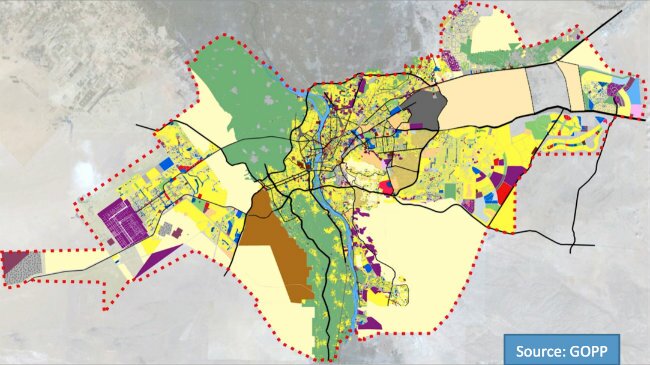

 Embora alguns dos temas que ele promove já estejam nas agendas de vários políticos e planejadores urbanos, as opiniões de Atala tem grande relevância e contribuem na formação de opinião pública. URB.IM participou o passado mês no
 Él es arquitecto por la Universidad de las Américas, Puebla, y maestro en arquitectura y diseño urbano por la Universidad de Harvard; también, es World Fellow para el 2013 por la Universidad de Yale y cofundador de CONTEXTUAL.
Comments
Urban Visions: Centralized vs. decentralized solutions
In discussing issues of urban planning in the Global South, there are of course parallels that can be drawn between each of our respective cities. What struck me as interesting was the way in which all of these city planners specifically focused on the creation of an urban vision for the next 30-40 years. These visions are designed to outline the goals that the city is to work to achieve in terms of both the physical allocation of urban spaces, as well as the social atmosphere that the city provides to its residents.
However there have been gaps in urban planning for those living in the informal areas and they have been excluded from these urban visions. I think it is especially important to point out that all of the city planners interviewed focused on the process and procedure in which these plans are being created and implemented for the residents of the city.
The approach of PK Das in Mumbai is particularly relevant in the case of Cairo, in which he argues planning can be used as an instrument for democratic change. The struggle for democracy in Egypt cannot only be about the current political transition and the inclusion of a ballot box, but must also be about utilizing any and all mechanisms available that allow citizens to voice their opinions and take responsibility for their space/place in society.
Howaida Kamel
Community Manager, Cairo | URB.im
More effective inclusive mechanisms
Maria Fernanda, I thought your conversation with Enrique Betancourt captures very interesting issues that aren’t only relevant to Mexico City, but to many other cities, both from developing and developed countries. I liked that he emphasized that cities need to come up with more effective inclusive mechanisms so they can create more opportunities and bring greater quality of life for all its dwellers. In my opinion, the challenge is that such efforts cannot take place in isolation and they need to reach scale and sustainability; more importantly, these efforts will require greater joint work between different levels of government and citizens.
In another part of the interview, Betancourt also mentions that the poor and vulnerable populations sometimes don’t have a sense of belonging given thier exclusion from the formal city. I agree with such statement and in my opinion, more effective efforts need to take place to transform such lack of sense of belonging. This can be achieved by investing more in vulnerable populations, not only on infrastructure but on social services, such as health, education, nutrition, culture, recreation, training, etc. Many of our articles and discussions within URB.IM already focus on interventions that are generating long lasting transformations. So as Betancourt suggests, lets keep such exchange of experiences and help identify potential good practises and lessons that could be of use in our platform's debate.
Inclusive mechanisms
Catalina, estoy de acuerdo contigo en que para que las ciudades sean más incluyentes es necesario que los ciudadanos y gobiernos sumen esfuerzos. Por ejemplo, en el caso de las áreas más vulnerables Betancourt me comentó un ejemplo de alternativas para que la sociedad civil pudiera tener un mayor alcance en donde muchas veces el gobierno no tiene presencia; en este sentido, una organización subcontratada por el gobierno fue la responsable de implementar una campaña contra las adicciones. Modelos como las alianzas públicas y privadas pueden ser alternativas para dar solución a las problemáticas sociales.
En definitiva espacios como Urb.im permiten identificar soluciones viables que pudieran ser escalables y replicables en las otras ciudades.
México DF
Considero que se debe realizar una reingeniería en todo el tema referente al urbanismo en el DF. Desde analizar las bases de datos de las propiedades (cosa que beneficiaría a aumentar la tributación de predial) hasta el establecimiento de metodologías serias respecto a los análisis de costo-beneficio al momento de autorizar una construcción o no.
De igual forma, la ciudadanía debe salir de su aletargamiento y participar. Por participar no me refiero a la toma de calles y disturbios; no, me refiero a que "cada derecho conlleva una obligación" y que si se desea una mayor planeación, todo empieza por un cambio en el paradigma respecto a la relación "ciudadano-gobierno"
Dharavi is no longer the biggest slum in Mumbai
While I wrote mostly on PK Das' thoughts on open spaces in Mumbai, he also talked extensively on slums and slum redevelopment. He is part of an organization called Navara Hak, which is one of the biggest slum dwellers' organizations for housing rights. With this organization, his firm took up a comprehensive mapping of slums in Mumbai, which he says had never been done before. Shocking! What they found was that Dharavi was no longer the biggest slum in the city, despite all the attention that it grabs. Here are their findings:
"We showed how slums are no longer individual fragmented pockets of land but they are actually a contiguous land across the city. And so we made a central argument that what we need is not slum redevelopment policy of the present kind, where each slum is looked at as an individual pocket of redevelopment, but what is first most important is to prepare a comprehensive master plan on this contiguous land and reserve the slums land as land for affordable housing." This idea is in contrast to the present policy of a 50-50 formula--removing slum dwellers from their current structures and giving them small residences in SRA buildings built on 50% of the land; the other 50% of the land is for commercial development.
"Our proposal demands very serious determination and will power on the part of the government to say that we stop trading: allowing private developers to trade on slum land. This has to happen. That this is our land for social housing. And we've showed through master planning how that is possible to also produce substantial amounts of affordable housing."
Mexico City Charter for the Right to the City
Do you know the Mexico City Charter for the Right to the City? It was developed by social movements, human rights networks and signed by the local authorities in 2010. It contains many things in common with the vision and proposals you are sharing. We prefer to avoid the "slum" and "informal" categories and use other more positive and powerful instead, recognizing the right to build and create the cities (social production and management), accessing the opportunities and participating at decision making processes. Full text and related materials available at website.
Charter for the Right to the City
Many thanks for your good suggestions and valuable comments. Enrique Betancourt mentioned the urgent need to develop processes that allow people to own their city under the respect for the rights and meeting their needs from a participatory perspective. Moreover the Charter for the Right to the City is an antecedent of a possible constitution of the Distrito Federal through a participatory approach.
Add new comment