
Mental health and the urban poor
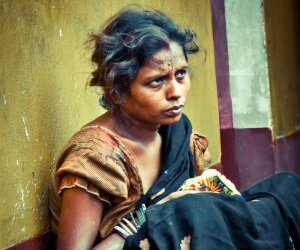 According to the World Health Organization (WHO), more than 450 million people worldwide suffer from mental disorders. These illnesses are particularly common, and are especially destructive among the poor, those with chronic health conditions, minority groups, and communities exposed to conflict and disasters. Moreover, almost 75 percent of the Global South's mentally ill remain untreated.
In recognition of World Mental Health Day (October 10th), read on to find out what is being done to resolve this issue in Bangalore, Cape Town, Accra, Bogotá, and São Paulo, and then join the discussion in the comments below.

|

|

|

|

|
 |
2013 marks a new direction in India's mental health care
Carlin Carr, Bangalore Community Manager
This year marks an important turning point in mental health care in India. The landmark Mental Healthcare Bill 2013 has been introduced and is under review to be passed as law. The new bill decriminalizes suicide and protects the rights of the mentally ill from inhumane treatment. It also "aims to ensure that proper medical treatment is provided to mentally ill patients" and "seeks to regulate the public and private mental health sectors and establish a mental health system integrated into all levels of general health care," says an article in the Indian Express. Gaps in care have been filled by NGOs that not only work to provide treatment but to increase public awareness around issues of mental illness that have added to stigmatization of these patients.
 In Bangalore, the Richmond Fellowship Society has been operating services since 1986, though it is part of the world's largest global charity network focusing on mental illness. The organization says that over 10 million people in India suffer from schizophrenia, "while the figure for those suffering bipolar affective disorder, depression and anxiety disorders stands at a colossal 150 million." While the numbers cut across socio-economic status, the poor, especially the homeless, are inordinately affected. Experts estimate that by 2020, mental health disorders will be the second leading cause of disability and death. The World Health Organization (WHO) has created a comprehensive Mental Health Action Plan 2013-2020 to increase awareness and services.
The Fellowship focuses on a Therapeutic Community approach which emphasizes using skill and compassion to enable the mentally ill to rebuild their lives with dignity. Outreach services include halfway homes, long-term stays, and public awareness campaigns as well as development, research and advocacy on related issues. Importantly, the Richmond Fellowship has also launched a training program for care providers to improve services on the ground. The Fellowship runs Asia's only M.S. degree in psychosocial rehabilitation and counseling "to address the paucity of trained manpower" in the field. The degree is affiliated with the Rajiv Gandhi University of Health Sciences in Bangalore.
While organizations such as the Richmond Fellowship are working to fill the gap in services to the mentally ill, the 2013 bill marks an important step in integrating effective steps for mental illness care into community health centers. The biggest challenge will be training care providers to be aware of symptoms and to create a chain of intervention points so that more serious cases can be referred outside. After all, NGOs such as the Richmond Fellowship are few and far between across the country, and a tiered approach — as the Fellowship uses, depending on the length and seriousness of care needed — is essential in providing long-term rehabilitation for healthier and happier people.
Photo credit: Huw Thomas

 Within such harsh conditions, one notable project on the Cape Flats is the Sultan Bahu Drug Rehab Centre in Mitchell's Plain, which has achieved the highest drug addiction recovery rate (87 percent) and retention rate (83 percent) in the entire province (its three drug rehab centres in the Western Cape also form some of the only internationally accredited facilities of their kind on the continent). This is all the more remarkable given that most rehab centers have a success rate of less than 3 percent.
 The Rehab Centre is a social outreach project of the Sultan Bahu Centre (SBC), a faith-based NPO which provides a wide range of social projects throughout the country, and its achievements have not gone unnoticed by Provincial Government. To improve service delivery to the poor, the government has increasingly recognized the need for partnerships with other stakeholders, such as faith-based organisations (FBOs) or NGOs. Thus, the Department of Social Development in the Western Cape recently announced that the Rehab Centre would be awarded the first pilot outpatient opiate replacement program in the country, which allows patients "a fine line of functioning" not based on intoxication and withdrawal. With this the SBC will form one of the beneficiaries of the R87 million (US$ 8.7 million) pledged to fight the province's drug scourge. Moreover, National Government has requested that it provide rehab programs throughout the country.
 The stigma associated with mental health issues stresses some family members, who then fail to associate with such patients even after treatment, making their integration into their families very problematic. Some relatives ultimately abandon their family member in state institutions in order to limit the negative perceptions others will have towards them.
 Existe una vinculación estrecha entre trastornos mentales, consumo de estupefacientes y los habitantes de la calle. Según el estudio de la SIS, en Bogotá el 68.1 por ciento consumen bazuco y el 80.5 por ciento de ellos lo hace todos los días. Además, el 64.6 por ciento consumen marihuana, el 63 por ciento de estos de forma diaria. Aunque la Secretaría de Salud de Bogotá reduce la incidencia de este tipo de problemas al 30 por ciento, y es muy difícil establecer una cifra exacta, es sin duda demasiado elevada. La falta de acceso a los sistemas de prevención y tratamiento agrava aún más los problemas de los habitantes de la calle, que se ven forzados a acudir a las salas de emergencia en momentos de crisis, poniendo una fuerte sobrecarga en estas salas, que en todo caso no están preparadas para solventar los problemas de fondo de este colectivo.
 Para atender o grande desafio da atenção à saúde mental, o governo brasileiro vem apresentando avanços importantes liderados pelo Ministério da Saúde. No tema regulatório, o ministério aprovou no ano 2001 a Politica Nacional de Saúde Mental que estabelece importantes orientações de política afastando-se das hospitalizações e dando prioridade aos serviços de terapia e reintegração social. Adicionalmente, a legislação orienta que os municípios são as unidades encarregadas de providenciar os serviços de saúde mental no seu território.
Comments
Mental health, drugs and extreme poverty
Perhaps the most common theme is week is the tight link between mental health problems, drugs and extreme poverty. It is difficult to establish cause and effect in this correlation, but it seems it is strong all over the world. Investing in tackling this problem, even creating targeted facilities (for the young, for example) is certainly a good idea. It not only helps in reducing severe human suffering and preventing suicide — for example — it also makes economic sense for cities. Emergency rooms are the places where the very poor end up when they reach the crisis point, and ER are both very expensive to maintain and ill-equipped to give the mentally ill the assistance they need. I was glad to see that not only Bogotá is paying attention to these problems.
Additional considerations: mental health and older adults
Today is the World Mental Health Day and the World Health Organization has proposed mental health and older adults as the specific theme for this year.
http://www.who.int/mental_health/world_mental_health_day/en/
Unfortunately there is little research and documentation on how to address mental health specifically within older populations. Hopefully in the near future there is greater awareness around the need for better family care to the elderly and also about mechanisms for preventing neglect and isolation for old populations suffering from mental health illnesses.
Greater awareness
Catalina, as you point out, these articles coincide with World Mental Health Day, and because of that, my Facebook feed has had a lot of posts about a new NYC campaign on raising awareness about mental health. The campaign is called iwilllisten was launched by the National Alliance on Mental Health in NYC to pledge to listen to anyone who might be in need. It says that 1 in 4 Americans are impacted by mental illness, and therefore, we all likely know someone who is affected. This campaign just shows how much work still needs to be done not only in places like India, Brazil, etc, but in the US and other countries in the North. The iwilllisten campaign is a great way to bring more public attention to the issue.
Greater awareness
Thanks Carlin, I wasn’t aware of this initiative. It is interesting to learn how in New York the campaign focuses on sharing concrete data and making us feel that mental illness is "closer to us" than we all think.
Treating mental disorders
The mind’s health is so subtle. Just the different approaches in this series already demonstrate that it isn’t a single issue problem; it’s too complex. We don’t even really understand what some of the prescription drugs actually do, except that they seem to have some kind of effect. And substance abuse too, for example, may be a cause of mental illness, or a coping mechanism for it. The problem of mental illness is certainly complex & needs to be addressed in all its complex dimensions. This, for example, was one thing which impressed me about the rehab centre case study I looked at, which was its multifaceted approach to what are complex issues.
For people who are more seriously affected and whose normal functioning is undermined, it becomes an enormous burden on most families, because they require almost constant supervision, which modern lifestyles simply do not allow. Every positive effort from every party is one that should be applauded. Different efforts should be harmonised, not antagonised; particularly when resources are few.
Add new comment