
The power of literacy
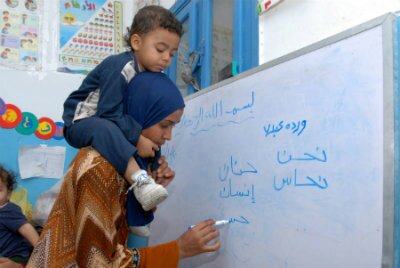 Illiteracy, the inability to read and write, affects 775 million people around the world, nearly two-thirds of whom are women. Literacy is a fundamental human right — one that opens doors to other rights, to empowerment, and to integration; it is essential for other forms of learning, for health and security, and for personal development. As the examples from São Paulo, Mexico City, and Bogotá show, literacy is more than just reading and writing: it also includes digital literacy, as well as a culture of reading. The following articles show a variety of approaches to combatting illiteracy, including national campaigns, the diagnosis of learning disabilities, and digital literacy initiatives. Read on to see examples from Mumbai, Dhaka, Bogotá, São Paulo, Mexico City, and Cairo, and then join the conversation in the comments below.

|

|

|

|

|

|
 |
Mumbai's municipal schools get first program to diagnose learning disabilities
Carlin Carr, Mumbai Community Manager
Mumbai's public classrooms are a manifestation of the complexities that exist outside the school doors. Students suffer from poor nutrition, unstable family conditions, and economic pressures. Since many parents themselves are illiterate, few can offer homework help or guidance to their children. Not surprisingly, in this challenging environment, learning disabilities, one of the most invisible disabilities, go essentially undiagnosed. The result is that many students struggle through school with few extra services. In time, many drop out of school, abandoning their studies, causing a cycle of illiteracy and unemployment.
Poojaa Joshi, founder of the NGO Mimaansa, has targeted two schools in the Thane district of Mumbai in order to change all this. She says that an estimated 15 percent of students in Indian schools have a learning disability — the majority of which will never be identified. Mimaansa is the only NGO of its kind focusing on Mumbai's municipal schools. "Government schools lack skilled facilitators to address the issue," she says. "The target community is such that there is little or no awareness about learning disabilities."
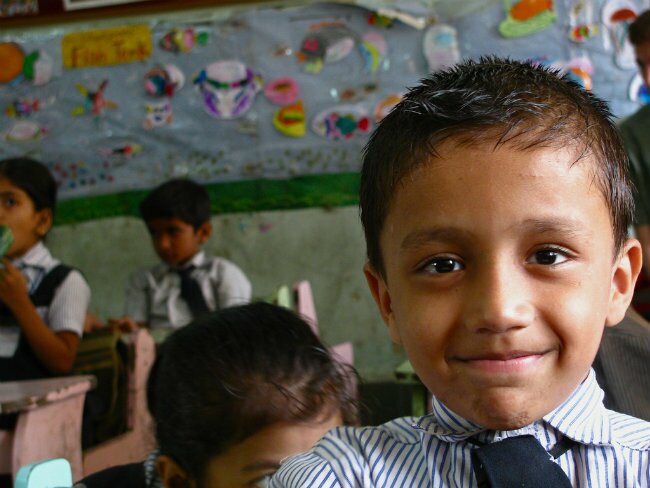 Students with learning disabilities often struggle in class, growing increasingly frustrated with affected aspects of learning. Behavioral issues often follow, since focusing on work becomes difficult. In this situation, parents who have never heard of learning disabilities begin to label the child as a "problem" child. Few testing options are available to diagnose these obstacles to learning.
With Mimaansa, Joshi has set out to provide exemplary remediation and counseling services to underprivileged students with learning disabilities. Mimaansa focuses on early intervention, and statistics show that in the program's first year and a half, 180 students have benefited, both academically and in their confidence levels toward classroom work. "Parents are happy with the performance of their children. And last academic year, we had 66 students fare better in math and 25 who showed progress in language," says Joshi of the program's early achievements.
An equally big success for Mimaansa has been that teachers have started reaching out to bring the program to their school. Joshi hopes to start replicating the program in other schools around the city, focusing on training for teachers, increasing awareness among parents and school administrators, and evaluating the success of students. The Thane Municipal Commission has supported Mimaansa's efforts, a necessary partnership in moving forward.
"One of the biggest challenges," says Joshi, "is convincing teachers and parents that their child is normal but just has a different style of learning." Mimmaansa hopes its program will break through some of these stereotypes and carve out a new and brighter future for these students.
Photo credit: Satish Krishnamurthy
 |
Education for empowerment
Ulfat Jahan, Dhaka Community Manager
In Bangladesh, where unemployment is rising and women's participation in the labor force is low compared to other developing countries, it is clear that very basic literacy (the capacity to read and write only a few simple words) is not enough to empower Dhaka's residents. The government of Bangladesh recognizes this and is therefore implementing the Post Literacy and Continuing Education for Human Development (PLCEHD) project, which includes educational programs and skills development trainings.
 This project is co-funded by the Bangladesh Government, the Asian Development Bank, the Department for International Development, and the Swiss Agency for Development and Cooperation. The first phase of this project (2001-2007) was implemented in 32 districts, and the second phase (2007-2013) is being implemented in 29 additional districts (there are a total of 64 districts in Bangladesh). The chief aim of this project is to alleviate poverty by creating self-employment opportunities for adolescents and adults who have basic literacy skills, by linking literacy and livelihood interventions. Learning centers are established near the target communities, and a number of NGOs are appointed to execute the program. There are equal numbers of male and female learners in the learning centers, ranging from age 11 to age 45, and the two genders are trained separately. The literacy skills of the participants are improved using the grade I to III Non Formal Education curriculum so that the participants can use their literacy skills to perform tasks like keeping track of the family's income and communicating effectively. Moreover, discussion sessions raise awareness about topics like health, nutrition, education, drug abuse, gender discrimination, women's empowerment, environmental protection, and so on. The program also provides a variety of trade training, on the basis of existing and future demand from the local labor and industrial market, in order to improve the socio-economic condition of the participants. These trainings include radio, television and mobile phone servicing, house wiring, welding, tailoring, and embroidery. The program also partners with different companies, organizations, small and micro-enterprises to create employment, loans, and other opportunities to earn money for the participants. Although the project officially ends in 2013, measures have been taken to make this project sustainable beyond the project period. The Sub-district Non Formal Education Committee has been given the responsibility to maintain the learning centers after the completion of the project, by using local primary schools and organizations. If the committee maintains the centers properly, the benefits of the project have a good chance of continuing.
 According to a report on phase I, this project has been successful in ensuring large-scale participation, since it provides life skills training in response to the needs of the society. However, some learners gradually lost interest in the program because the project does not provide direct financial rewards. Male participants were especially unwilling to devote time to the sessions. Moreover, teachers and facilitators were not well paid, which resulted in a lack of enthusiasm about the project. Therefore, to improve the project's performance in future, it should raise awareness about the benefits that it can bring. Additionally, significant financial rewards for both participants and teachers would help in making the project more effective.
Photo credit: EC Bangladesh and Society of Education
 |
Alfabetización digital en Bogotá
Jorge Bela, Gestor Comunitario de Bogotá
La tasa de analfabetismo en Bogotá, según datos oficiales, está ligeramente por debajo del 2 por ciento, el mejor dato en todo el país. Sin embargo, es posible que la cifra real esté por encima de la oficial, debido al constante flujo migratorio desde las zonas rurales, donde la tasa de analfabetismo es considerablemente superior, hacia la capital. El informe PIRLS (Progress in International Reading Literacy Study) de 2011 apunta además hacia una elevada tasa de analfabetismo funcional en Colombia. A estos problemas hay que sumar una mucho más elevada tasa de analfabetismo digital, superior al 50 por ciento según un informe del Ministerio de Tecnologías de la Información y las Comunicaciones, que está lastrando el acceso, generalmente de las personas en mayor riesgo de exclusión social, a la revolución tecnológica. El analfabetismo digital es un reto acuciante en las grandes ciudades latinoamericanas, pues aumenta la brecha que impide a los más desfavorecidos el acceso a la prosperidad económica, y reduce la competitividad de las economías locales en un mundo cada vez más conectado tecnológicamente.
 Para atajar estos problemas, una alianza entre la Alcaldía de Bogotá, a través de del Instituto para la Economía Social, IPES, y la Empresa de Telecomunicaciones de Bogotá (ETB) ha buscado mejorar los niveles de alfabetización digital en la capital colombiana. Para lograrlo han utilizados una serie de quince "portales interactivos" creados por ETB y ubicados en los barrios con mayores carencias. En estos portales los participantes en el programa tienen acceso a computadores conectados a Internet. En una primera fase se atendió a más de 10.000 microempresarios, quienes tan solo tenían que acreditar un año de funcionamiento de sus microempresas en Bogotá, y que la actividad principal fuera de agroindustria, servicios, industria y marroquinería. A lo largo de los programas, de 40 horas de duración, los microempresarios aprendieron a manejar un computador, adquirir conocimientos en el uso de aplicaciones de proceso de datos (Word), presentaciones (Powerpoint) y hojas de cálculo (Excel), aplicaciones en la "nube," gráficos, inserción de imágenes, navegación en Internet, trámites en línea y uso del correo electrónico.
En una segunda fase el programa se amplió a personas en riesgo de exclusión social, como recicladores, víctimas del conflicto, emprendedores de ventas populares y personas con discapacidad. La iniciativa comprende siete niveles certificados, de 20 horas cada uno. En su implementación prima la flexibilidad de horarios, para acomodar las cambiantes necesidades y disponibilidad de tiempo de estos colectivos. Este proyecto, aún en ejecución, cuenta con un presupuesto de 400 millones de pesos (unos 200.000$). Los cursos cubren, con una dificultad creciente : alfabetización digital, introducción a herramientas ofimáticas, Excel intermedio, Excel enfocado a la productividad (inventario, nómina, facturas), diseño de páginas web, comunidades virtuales y mercado laboral.
Otra iniciativa interesante es la lanzada por la Secretaría Distrital de Integración Social, destinada a capacitar en el uso de la informática y la tecnología destinada a los habitantes de la calle de Bogotá, y a sensibilizarlos sobre la problemática del vandalismo y el robo de las redes telefónicas. Aunque el programa es relativamente pequeño, se ha formado a 118 personas de la calle, el impacto social es considerable en un colectivo frecuentemente ignorado por las autoridades.
|
Tackling digital illiteracy in Bogotá
Jorge Bela, Bogotá Community Manager
The illiteracy rate in Bogota is slightly below 2 percent, according to official reports. This represents the best rate in Colombia. The real rate might, nevertheless, be somewhat higher, due to the constant inflow of immigrants from rural areas, where illiteracy rates are much higher, into the capital. In addition, the 2011 PIRLS report (Progress in International Reading Literacy Study) suggests that the rate of functional illiteracy is quite high in the country as a whole. These problems are aggravated by an elevated rated of digital illiteracy, as high as 50 percent as suggested by a 2010 survey by the Ministerio de Tecnologías de la Información y las Comunicaciones. Digital illiteracy is a pressing challenge in large Latin American cities. It affects more severely the populations already at a higher risk of social exclusion, and makes it harder for them to benefit from current economic prosperity. It also affects negatively the competitiveness of local economies, which are unable to meet the challenges of an increasingly open and technology-driven world economy.
To tackle this problem, an alliance between the City of Bogotá and the Empresa de Telecomunicaciones de Bogotá (ETB) has created several training programs aimed at improving digital literacy in the Colombian capital. Fifteen "interactive gateways," multimedia hubs equipped with Internet-enabled computers, are used for the training. These hubs were created by ETB and located in the neighborhoods with the greatest needs in Bogotá. The first program targeted micro-business and micro-entrepreneurs. The training lasted 40 hours and covered the basic use of a computer, word processing (Word), presentations (PowerPoint), spreadsheets (Excel), "cloud" applications, graphics, image processing, Internet navigation, online government transactions and email. The free courses were open to any micro-business owner in the agro-industry, services, industrial, and leather sectors. More than 10.000 people benefited from these courses.
In a second phase the program has been expanded to cover individuals at high risk of social exclusion: recyclers, victims of the armed conflict, informal sellers, and people with disabilities. The program includes seven increasingly difficult modules of 20 hours. Once a module is completed, the participant obtains a certificate. The ongoing program has a budget of 400 million COP (about $200,000). The courses cover basic digital literacy, introduction to office tools, Excel, intermediate Excel (inventory, receipts, payroll), webpage design, virtual communities, and job searching.
The Secretaría Distrital de Integración Social has launched another interesting initiative. In this case a training program was designed for homeless people in Bogota. The program was aimed at giving them basic digital literacy and to raise their awareness of the problems that vandalism and theft of copper cables causes to the city. A total of 118 homeless people have participated in this training program. Although the number might seem small, the program has had a significant impact in a community often neglected and even ignored by local authorities.
 |
Promovendo a leitura em São Paulo
Catalina Gomez, Coordenadora da Rede em São Paulo
Segundo o último censo de 2010, São Paulo apresenta uma taxa de alfabetização de 96.6 por cento. Embora a cidade tenha um bom indicador, existe pouca cultura de leitura entre a população, especialmente aquela de baixa renda. Com o objetivo de tornar a São Paulo numa cidade de leitores com foco nos estudantes da rede pública de ensino fundamental, a Secretaria Municipal de Educação lançou a iniciativa Minha Biblioteca em 2007.
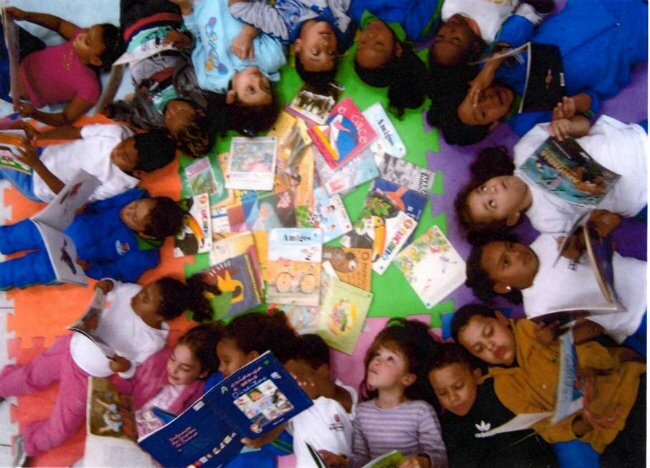 A iniciativa entrega para todas as crianças cadastradas uma maleta e dois livros para levar a casa e iniciar sua primeira biblioteca. A cada ano acadêmico as crianças recebem mais dois títulos. Muitos destes estudantes nunca tiveram livros em suas casas o tiveram pouco aceso a livros que não fossem no horário escolar.
A Secretaria Municipal de Educação de São Paulo é a instituição encarregada de financiar e coordenar a iniciativa. Mais também existe o apoio técnico e financeiro de outros parceiros como a Câmara Brasileira do Livro e varias companhias editoriais. Junto com a Câmara, a Secretaria seleciona os livros para os estudantes. Eles incluem uma coleção amplia de literatura brasileira e internacional, desde clássica até mais moderna. Minha Biblioteca organiza debates sobre leituras de literatura e jornais no horário escolar.
A Secretaria também lidera uma serie de iniciativas complementarias no apoio das crianças de baixa renda para que eles consigam-se destacar na escritura e leitura. Algumas destas ações incluem: (i) a promoção de pelo menos uma "sala de leitura" em cada escola que tenha uma ampla seleção de livros para todas as faixas etárias; (ii) o treinamento dos professores encarregados de orientar as aulas de leitura e escritura; e (iii) a promoção de atividades de leitura dentro da escola envolvendo pais e irmãos dos estudantes para expandir a cultura da leitura dentro das famílias paulistanas.
A Secretaria de Cultura de São Paulo também faz seus aportes na expansão da cultura de leitura na cidade por meio do estabelecimento de bibliotecas e pontos de leitura. Atualmente existem mais de 50 bibliotecas públicas localizadas pela cidade e mais de 10 pontos de leitura que são bem menores que as bibliotecas, mais conseguem oferecer uma serie de livros e revistas num ambiente próprio para a leitura e a pesquisa para todos os moradores da cidade.
Crédito fotográfico: Secretaria Municipal de Educação, SP
|
Promoting a culture of reading in São Paulo
Catalina Gomez, São Paulo Community Manager
According to Brazil's 2010 census, São Paulo has a literacy rate of 96.6 percent. Although this rate is quite high, there is not a culture of reading among the population, especially within low-income groups. This is why the Municipal Education Secretariat launched the initiative Minha Biblioteca (My Library) in 2007, aiming to promote a culture of reading among public school students.
Under Minha Biblioteca, at the beginning of the academic year each enrolled student receives a school bag with two books to take home, so that each child can start building their own library. The school bag is "refilled" each new academic year with two additional books. The program currently benefits more than 550,000 students. Many of these children have never owned books or have had very limited access to books beyond the ones they can use temporarily during school hours.
São Paulo's Secretariat of Education is the office responsible for funding and coordinating this initiative, but other technical and financial partners like the Brazilian Chamber of Books and several editorial companies also help support it. With the Chamber, the Secretariat selects the books to be included in the "library bag." They include a broad selection of Brazilian and international literature, including classics and more modern readings. Minha Biblioteca also organizes reading sessions, discussions about literature, and journal readings.
The Secretariat also leads a series of complementary initiatives to support children from low-income neighborhoods to excel in reading and writing. These initiatives include: (i) encouraging each public school to have a "reading room" with adequate book selections for children of different ages; (ii) training teachers so that they can better guide reading and writing sessions; and (iii) promoting reading activities within the school involving students, their siblings, and parents in order to expand the reach of the reading culture to the entire household.
Last but not least, in order to scale up the promotion and reach of the reading culture within the city beyond children, the city's Secretariat of Culture has been establishing a series of public libraries and "reading points" throughout the city. There are currently more than 50 libraries spread out throughout the city. There are 10 "reading points," which are smaller versions of libraries that offer a varied set of books, magazines, and other resources, so that all residents can have access to a space for reading and researching.
Photo credit: Secretaria Municipal de Educação, SP
 |
Analfabetismo digital: más allá de saber leer y escribir
María Fernanda Carvallo, Gestor Comunitario de Mexico D.F.
El alfabetismo, entendido como el saber leer y escribir, no representa un gran reto para la Ciudad de México. No obstante, las nuevas tecnologías y comunicaciones han orillado a la población a un analfabetismo digital. El analfabetismo digital es más que saber cómo utilizar una computadora básicamente ya que está ligado actualmente a las tecnologías de información que funcionan como canal de interlocución, y así es como se crea un medio de exclusión social en un sentido negativo. Esta falta de destreza para acceder y utilizar las herramientas disponibles es una limitación para los habitantes del D.F. y un gran obstáculo para ejercer la ciudadanía y la voz de una comunidad organizada.
 Este nuevo analfabetismo está ligado a diversos factores como la situación económica, el nivel de escolaridad y la edad de las personas. El estudio, "Tecnología en la Sociedad Civil Mexicana" afirma que "el sector ITC (Tecnologías de Información y de Comunicación) mexicano todavía enfrenta muchas dificultades a la hora de conectar personas con menos recursos en las áreas vulnerables. Cerca de las 30 millones de personas sin teléfono móvil pertenecen a las clases socio-económicas más bajas". En este sentido, el estudio argumenta que el alto costo de los servicios de telecomunicaciones en México ha prevenido el uso más agresivo del Internet. De acuerdo a Regina de Angoitia y a Fernando Ramirez, citados en el mismo estudio, "Entre usuarios de teléfonos móviles en la clases socio-económicas más bajas, sobre el 90 por ciento de éstos tienen planes prepagados, y gastan casi un 10 por ciento de su ingreso mensual en comunicaciones, en comparación con un 3.7 por ciento de las familias de clase media".
Ante esta problemática, la Comisión de Derechos Humanos de la Asamblea Legislativa del Distrito Federal (ALDF) propuso crear la Ley del Derecho al Acceso a Internet para eliminar el analfabetismo digital, promover el desarrollo de la sociedad en su conjunto y promover la participación ciudadana. Actualmente existen corredores con acceso gratuito a Internet a través de Wi-Fi en el Centro Histórico y Paseo de la Reforma en el D.F. La meta últimamente es atender a las poblaciones vulnerables en zonas donde no existe la capacidad de recibir la señal, como: Tláhuac, Gustavo A. Madero e Iztapalapa. Para hacer esto posible, se realizarán mesas de trabajo con ONGs y la Secretaría de Ciencia y Tecnología del Gobierno capitalino a fin de desarrollar una propuesta económica y tecnológicamente viable.
Una de las realidades de esta iniciativa es que todavía no se tiene el plan técnico para llevarla a cabo. No obstante, hay esfuerzos desde la sociedad civil que se deben tomar en cuenta. Por ejemplo, el Comité para la Democratización Informática, que se dedica a crear centros comunitarios de TICs en áreas rurales y de escasos recursos con la esperanza de empoderar a una juventud marginada que través de la tecnología puede actuar como agente de cambio social. Así mismo, para fortalecer la participación ciudadana, el Centro Nacional de Comunicación Social trabaja con ONGs, organizaciones sin fines de lucro, y movimientos sociales. CENCOS asesora a estas organizaciones y movimientos con sus estrategias y prácticas de comunicación, centrándose en ayudar a grupos con la difusión de su mensaje y a construir una red de miembros a través de la Web y redes sociales.
A través de la sociedad civil se puede fortalecer y apoyar esta iniciativa de ley, que por medio del acceso gratuito a Internet en todo el D.F., se garantizaría el derecho humano de los capitalinos de tener acceso a la información y evitar la discriminación a diversos sectores de la población.
Foto: CDI
|
Digital illiteracy: more than just reading and writing
María Fernanda Carvallo, Mexico City Community Manager
Literacy, the ability to read and write, does not pose a big challenge for Mexico City. Instead, it is new and constantly changing technology and methods of communication that have pushed the population to suffer from a new kind of illiteracy: digital illiteracy. The fact that certain Mexico City residents are unable to communicate and receive information makes social inclusion impossible. In addition, basic computer skills are not enough to be digitally literate nowadays. The lack of skills needed to access technological tools limits the inhabitants of Mexico City from having their voices heard, which makes it difficult for them to fully exercise their democratic rights.
This new form of digital illiteracy is associated with various factors, including income, education, and age. The study "Technology in Mexican Civil Society" indicates that "the ICT (Information and Communication Technologies) sector still faces difficulties in connecting low-income people in vulnerable areas to new technology and communication methods. Close to 30 million people without a mobile phone belong to low socio-economic classes." Furthermore, the study argues that the high cost of telecommunication services in Mexico has prevented many people from accessing the Internet. According to Regina de Angoitia and Fernando Ramirez, both cited in the study, "among mobile phone users belonging to low social classes, 90 per cent have prepaid plans and use close to 10 per cent of their monthly income for communication services; in comparison, middle class families use around 3.7 per cent of their monthly income."
The Comisión de Derechos Humanos de la Asamblea Legislativa del Distrito Federal (Human Rights Commission of the Legislative Assembly of the Federal District) proposed the creation of a bill called Ley del Derecho al Acceso a Internet (the Right to Internet Access Act) in order to eliminate digital illiteracy, promote the development of society as a whole, and promote citizen participation. The Historic Downtown and the Paseo de la Reforma in Mexico City currently offer free wifi Internet access. ALDF's goal is to be able to serve vulnerable populations in areas that do not have Internet connections, such as Tláhuac, Gustavo A. Madero, and Iztapalapa. In order to make this possible, working committees were put in place with members of NGOs and of the Secretaría de Ciencia y Tecnología del Gobierno Capitalino (Ministry of Science and Technology of Mexico City) with the goal of developing a proposal that will be economically and technologically feasible.
Unfortunately, there is currently no working plan to make the free Internet access bill possible. However, there are efforts from civil society that should be noted. For example, el Comité para la Democratización Informática (the Committee for the Democratization of Information) is working on creating ICT community centers in low-income areas. Their aim is to empower marginalized youth through technology so they can become agents of social change. Similarly, in order to strengthen citizen participation, the Centro Nacional de Comunicación Social (National Center for Social Communication) works with NGOs, nonprofit organizations, and social movements by advising them with strategic and communication practices. This organization's emphasis is helping people by spreading their message and by creating an online network using social media.
With the help of civil society, the bill for free Internet access can gain support and be strengthened. This bill would provide free Internet access to Mexico City's residents, guaranteeing them the human right of access to information, and would therefore help eliminate social discrimination in various sectors of the population.
Photo: CDI
 |
'العلم قوة' - الحملة الوطنية لمحو الامية
Howaida Kamel, Cairo Community Manager
من أكبر المشاكل التي يواجهها الفقراء في مصر هي مشكلة الامية. تشير الإحصاءات الحكومية على أن هناك إجمالي ١٧ مليون مواطن و مواطنة في مصر، معظمهم إناث في صعيد مصر و منطقة القاهرة الكبرى، لايستطيعون قراءة و كتابة اللغة العربية. في أواخر عام ٢٠١١، قامت مؤسسة فودافون مصر (Vodafone Egypt Foundation) بالاشتراك مع جمعية صناع الحياة (Life Makers Association) و منظمة اليونسكو (UNESCO) لإنشاء حملة مشتركة تحت عنوان 'العلم قوة.' والهدف من هذه الحملة هو القضاء على الأمية في مصر بحلول عام ٢٠١٧ من خلال توفير الفصول التي تعلم أساسيات القراءة، و الكتابة، و المهارات الحسابية في تسع محافظات مختلفة.
تتبع مبادرة 'العلم قوة' نموذج فريد لتنمية المجتمع من حيث أنها تجمع بين قدرات و جهود كل من الشركات الفاعلة، منظمات المجتمع المدني، المؤسسات الدولية، و غيرها من المنظمات العامة و المجتمعية من أجل تحقيق أهدافها الإنمائية. تعهدت مؤسسة فودافون لتمويل هذه الحملة لمدة خمس سنوات. تقوم جمعية صناع الحياة بمساعدة مؤسسة فودافون على تنفيذ هذه المبادرة، و توفر أيضا التدريب للعاملين المتطوعين بالمنظمات غير الحكومية و منظمات المجتمع المحلي المرتبطة بهذه الحملة. وقد ساهمت منظمة اليونسكو بتطوير المناهج الدراسية للحملة، التي تشمل تكنولوجيات حديثة مثل Java و Android و iOS. و قد وافقا وزارة التربية و التعليم، و الوكالة الوطنية لمحو الامية و تعليم كبار السن على تنفيذ هذه المبادرة، و بفضل الدعم العام للحملة، تتمكن المبادرة من تحقيق اهدافها. علاوة على ذلك، هناك أيضا ٢٠ منظمة غير حكومية (twenty associated NGOs and CBOs) مرتبطة بالحملة، تعمل من أجل مساعدة الأميين في مصر.

تنسيق الجهود بين جميع هذه المؤسسات يشكل عاملاحاسما في ارتقاء فصول محو الأمية من أجل مساعدة العدد الهائل من الأميين في مصر. تم تحديد أهداف سنوية لتعيين عدد كافي من المتطوعين، و توعية عدد مؤثر من الأميين كل عام؛ هذا الجدول يشير إلى الأهداف السنوية للحملة على مدى أول ثلاث سنوات:

يأمل المشروع لتحقيق النمو المتسارع كل عام بحيث يزداد عدد المتعلمين مع زيادة عدد المتطوعين. و قد حققت الحملة التقدم المذهل من خلال تدريب حوالي ٨٠٠٠ متطوع و الاستعانة بما يقرب من ٣٠٠٠٠ متطوع. و يدل هذا العدد الكبير من المتطوعين على مقدار الدعم الذي تلقته هذه الحملة الوطنية من المشتغلين في مجال التنمية في القاهرة ومختلف أنحاء مصر.
اعتبارا من منتصف هذا العام، قامت حملة 'المعرفة قوة' بتسجيل ١٢٧،٣١٥ أمي في فصولها التعلمية، بما في ذلك ٩٢،٤١٦ فردا ناجحا في امتحان محو الأمية الابتدائي المجهز من جمعية صانع الحياة. في حين أن هذه الأرقام لا تتطابق الأرقام المستهدفة، هناك نسبة نجاح عالية للغاية للذين يستمروا في البرنامج حتى نهايته. ومع ذلك، فقط حوالي ٣٣٪ من الذين أكملوا البرنامج بنجاح قد نجحوا في إمتحان محو الأمية الرسمي المجهز من وزارة التربية والتعليم.
و من المهم في الفترة الانتقالية التي تمر بها مصر الأن، أن تقوم الشركات الفاعلة والمؤسسات الأخرى بإتخاذ المبادرات الفعالة لتحقيق أهداف التنمية الوطنية. لم تعد الحكومة قادرة على مواجهة مشكلة الامية بمفردها. ترى مؤسسة فودافون مصر أن الامية إحدى المشاكل الأساسية في المجتمع المصري، خاصة في سياق تحول البلد لدولة ديمقراطية. قال حاتم دويدار، الرئيس التنفيذي لشركة فودافون مصر، في حوار له عن هذه المبادرة الوطنية : " نحقق أمرين من خلال محو الأمية و هما التنمية و الديمقراطية."
|
"Knowledge is Power" national literacy campaign
Howaida Kamel, Cairo Community Manager
One of the biggest problems faced by those living in poverty in Egypt is illiteracy. Government figures estimate that there are 17 million Egyptians who cannot read and write, the majority of whom are females concentrated in Upper Egypt and the Greater Cairo Region (GCR). In late 2011, the Vodafone Egypt Foundation partnered with the Life Makers Association and UNESCO under a joint campaign titled "Knowledge is Power." The campaign aims to eliminate illiteracy in Egypt by 2017 by providing classes that teach basic reading, writing, and arithmetic skills in nine different governorates.
The "Knowledge is Power" campaign is a unique model in that it effectively uses the different capacities of corporate actors, civil society organizations, international institutions, as well as public institutions and various other non-governmental and community-based organizations in order to achieve development goals. The Vodafone Foundation has pledged to finance the campaign for five years. The Life Makers Association facilitates the implementation on the ground and provides training for volunteers in the associated NGOs and CBOs. UNESCO has contributed with the curriculum development and the advanced syllabi, which also includes new technologies such as Java, Android, and iOS. The campaign is approved by the National Authority for Literacy and Adult Education and the Ministry of Education, and the public support assists the campaign in achieving its goals. Last but not least, there are 20 associated NGOs and CBOs in the nine governorates that provide the classes and reach out to illiterate people in their respective communities.
The coordinated efforts of all these institutions is a crucial factor in the upscaling of the literacy classes in order to reach out to the 17 million target individuals. Annual targets were set for the number of volunteers recruited and projected outreach; below is a table of the annual targets for the first three years of the campaign.
The project hopes to achieve exponential growth each year so that as the number of volunteers increases, the number of people educated will increase as well. The campaign has made astonishing progress, successfully training 8,000 volunteers and enlisting a total of 30,000 volunteers. The surplus in volunteers is indicative of the amount of support the literacy campaign has from the community of development practitioners in Cairo and throughout Egypt.
As of late Spring 2013, the "Knowledge is Power" classes have registered 127,315 illiterate people, of whom 92,416 have passed the program's primary literacy exam designed by the Life Makers Association. While these numbers don't necessarily match up to the target numbers, there is an extremely high success rate of those who continue to the end of the program to pass the exam. However, only about one-third of those who complete the program have successfully passed the official Ministry of Education's literacy exam.
In the transition period that Egypt is currently facing, it is important that corporate actors and other institutions take initiatives towards national development goals. The government is no longer capable of being solely responsible. The Vodafone Egypt Foundation views illiteracy as one of the major problems in Egyptian society, especially in the context of the country's transformation towards democracy. Vodafone Egypt CEO, Hatem Dawidar, summed it up quite well: "Through literacy we are accomplishing two things, development and democracy."
Photo credit: Vodafone Egypt Foundation
Comments
Challenges ahead
It was interesting to read all the articles and understand the diverse challenges faced by cities in order to improve the reach and quality of basic education: Some cities’ main challenge is still focused on reducing the high illiteracy rates. Some other cities that are already advanced in this aspect are facing problems with quality issues that go beyond basic reading and writing, such as being able to ensure dwellers can operate computers and face the complex challenges of today’s digitalized world.
I think that there some additional challenges worth highlighting, including the need for better education for teachers in order to be better educators. No matter the efforts to improve education in various cities, if teachers and professors aren’t trained as well, it is difficult to improve the overall quality of their teachings. An additional challenge, as Carlin points out in her article, is the importance of educators to strengthen alternative methods of education for disabled children and other children, who might not be disabled, but don’t follow the standardized methods of education.
Carlin, I really liked the article about the initiative to diagnose learning disabilities in Mumbai. Is there available documentation on how the organization is carrying out this work? Is there a specific methodology being used? How are teachers being trained to spot learning disabilities?
More on learning disabilities
Catalina, one of the big issues is that students with Learning Disabilities (LDs) are being identified too late, mainly because teachers, parents and administrators are unaware of the signs that a student may be having difficulties. Mimaansa trains teachers to look for identifying factors in children, including delays in speech and delay of difficulty in motor development. Difficulties show up differently in various subject areas as well (ie, reading comprehension and mathematical calculations).
Mimaansa has a four-part program that starts with outreach to "teach, identify and remediate" students with LD. They also work on school development to build capacity within the target schools. Simultaneously, the program works on building child motivation, despite their difficulties, and helping parents to provide better guidance to their child.
Beyond literacy
As Cata points out, the articles this week show that — with the possible exception of Cairo — the interest in government an NGOs is shifting from literacy to post-literacy issues. As literacy rates come closer to 100%, it becomes obvious that being able to read is just the beginning. Rising awareness of learning disabilities — these students were often labeled as lazy or careless until their conditions were identified —, the need to focus on certain groups, or digital literacy are the issues identified by the URB.IM community. This is not to underestimate the importance of the remaining people who still cannot read, but concepts such as functional literacy or digital literacy are becoming increasingly important.
Literacy for future development
Thanks Jorge for bringing up the fact that Cairo is different from the other cities in this regard. I was actually really disheartened when I read your comment but when I reread all of articles, I realized that Cairo is behind in regards to achieving even basic education for its inhabitants. Now, more than ever with the ongoing political uncertainty, the implications of high illiteracy rates will have a huge impact for the economic and social development of the country. What does this mean in regards to a new constitution? How do politicians share and explain their policies to voters?
However the example from Cairo differs again this week because the solution does not only come from the interest of the "government" or "NGOs" has you mentioned, but there is a vested interest from the private sector. In the same way that development targets move forward from basic literacy to post-literacy issues, social development actors have also progressed to include the private sector. While it could be argued that the private sector is seeking to tap into new markets to increase their bottom line, one cannot argue the many other indirect benefits that can be achieved by increasing the literacy rate in Cairo and other areas of Egypt. Right now everyone in Cairo is hoping it comes sooner rather than later.
Howaida Kamel
Community Manager, Cairo | URB.im
Alfabetismo
Esta semana urb.im aborda un tema fundamental, pues bien considero que la educación básica es la base que abre puertas para generar diversas estrategias de vida en poblaciones vulnerables. Por ejemplo, un ciclo vicioso presente en las comunidades rurales y semiurbanas es la falta de habilidades para poder obtener un empleo, pues el entorno mismo no promueve la preparación en la gente. En este sentido, la lecto-escritura es una herramienta para que la gente pueda desarrollar otros tipos de actividades que generen un ingreso para los hogares. No obstante en México uno de los problemas de la medición del analfabetismo es que no distingue los niveles de esta habilidad, pues con solo saber leer y escribir una persona ya no se considera analfabeta, sin embargo hay otros factores socioculturales que se encuentran relacionados, como es el uso de las lenguas indígenas frente a una economía dominada por el castellano. Así mismo, el analfabetismo se acompaña de la desigualdad en el acceso a la educación media y superior para que las personas continúen su preparación y fortalezcan sus habilidades.
The power of reading
I was heartened to read that South American cities have gotten past the challenge of illiteracy and, as Jorge puts it, moved on to post-literacy issues.
Kenya has, over the past decades, managed to reach an almost 90% literacy rate which is an important figure. However the quality of education has also suffered and teachers are often unprepared and uncomfortable teaching in English which is the most common language taught in schools. With illiteracy becoming less of a pressing problem, the time has come for the country's decision makers to focus on how to really improve the overall quality of education in order to help form a generation of intelligent, dynamic and above all critical citizens.
The Sao Paulo "Minha Biblioteca" initiative is really important and I wish there was more projects of this kind around the world. Reading need not be the preserve of the well educated classes but if a culture of reading is entirely absent, it is really difficult to pull people in. It saddens me when I see how many people don't read books as I feel that their importance for individual and group development cannot be underestimated. One of the great aspects of the English language is the huge volume of books that get published for people of all ages. In order to get kids reading there need to be books that are relevant to them yet often these books are not published in large enough quantities. In Kenya people are lucky enough to have English as one of the two main languages yet there is a severe shortage of Swahili language children's books (with the exception of Christian ones) which is a shame.
Reading books helps develop critical thinking and imagination... without which new generations of leaders cannot hope to tackle the problems that face cities today!
Katy Fentress
URB.IM - Nairobi Community Manager
@whatktdoes
Educating the poor
Hello fellow commenters,
I, too, truly believe that knowing how to read and write leads to securing a life of security, development, and awareness. It leads to having the knowledge and mindset that creates a better world in every aspect. I am looking for the opportunity to teach classes in Dhaka, Bangladesh. I would love to teach the youth and adults of literature, science, history, chemistry, and more. This, I plan to teach the ones in poverty. My fathers side of the family have always lacked in the resources that would lead them to continuing their education, growing up. Therefor, I would really like to educate the poor. If anyone out there is in an organization or a group of volunteers or, anything really that provides education to the poor in Dhaka, please comment below. I am seeking this opportunity to gain experience that I can include in papers, and to start my journey on to helping the world's poverty.
Add new comment