
 |
Inclusive capitalism for Dar es Salaam: an issue of formal supply?
Gemma Todd, Dar es Salaam Community Manager
Recent reports revealed that 26 percent of Tanzanians remain excluded from formal and informal financial services. Restrictions on banking and borrowing mean that the poor face the greatest barriers to entering the exclusive world of capitalism. An inclusive credit-finance system is needed. Tanzania has attempted to improve access because access to credit connects the poor with economic development and social services. This article will focus on three key solutions for Dar es Salaam's poor, across scales: localized informal credit, mobile money, and national information for credit.
 Dar es Salaam is identified as the region 'most' included in terms of access to credit; however, a majority use informal credit sources rather than banks. Only 32 percent of Dar es Salaam's population have or use banks for credit, due to constraining factors. Firstly, in Tanzania, a fixed address or land title is required in order to open a bank account or access credit. Dar es Salaam remains a space of inequality — with 70 percent of Dar es Salaam's population living in informal settlements, lacking secure land tenure.
Microfinance cooperatives have become a means to decentralise financial services and enable access without all of the formal requirements. Self-help initiatives such as SACCOS and VICOBA have spread nationally. SACCOS, Saving and Credit Cooperatives, and VICOBA, Village Community Banks, work to use banking for poverty alleviation in Dar es Salaam. The cooperatives are important tools to integrate the poor in the credit system by encouraging savings. The microfinance schemes rely on organising self-help group associations, gaining business skills, and building capital that can be recycled as credit to affiliated members. The spread of microfinance cooperatives has enabled credit to reach "un-creditworthy" areas. Additionally, NGOs continue to use microfinance to enable access for women, families, and youths in order to change livelihoods. However, such cooperatives rely upon 'informal' regulations. Controlled by the group dynamics and social networks, they remain embedded within personal judgments, obligations, and forced responsibilities. To improve the capacity of microfinance, the structure is changing. Partnerships are forming across informal-formal creditors, connecting SACCOS to commercial banks. The partnerships are increasing capital funding for group loans — but will microfinance cooperatives become more strict as a result?
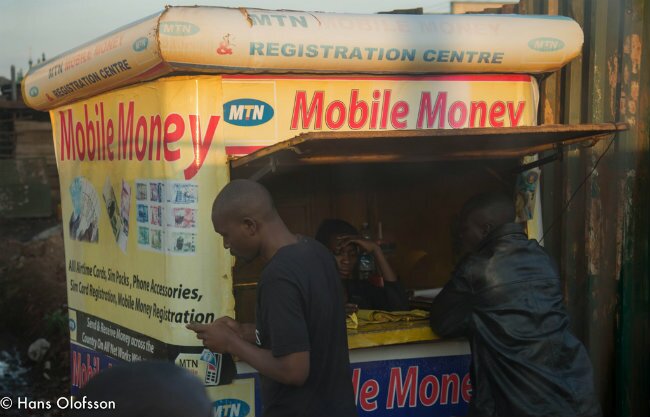
Secondly, mobile money has become an effective means for the private sector to bank the "unbanked". M-PESA enables access to interest-free loans and increases personal credit transactions; geography is no longer a barrier to lending. However, reports highlight mobile money inequities in Tanzania: the richest quintile is 15 times more likely to use M-PESA than the poorest. Efforts are being made to equalise access to mobile credit in Dar es Salaam and Tanzania, including speeding up set-up, marketing cheap phones, and setting up private initiatives. For example, Vodafone has empowered entrepreneurialism through their M-PESA Women's Empowerment Initiative. 6,000 women have been provided with flexible and quick means to credit in order to establish SMEs.
Lastly, credit access requires an approved business plan and repayment capability. Meeting repayments is difficult with high-interest loans granted by banks due to limited proof of formal credit risk, or assets. The Tanzanian government is building transparency for credit-systems. A 'Credit Reference Bureau' has been created to share customer finance information. Access to information will enable credit histories to be assessed, changing the speed, and ability, of credit.
In solving the issue of access to credit for the poor, Tanzania has focused on creating formal supply. However, in Dar es Salaam, demand patterns and informality are crucial. Research indicates use of formal (bank) credit remains limited — but is it an issue of demand or supply? Do the poor prefer informal credit, and if so, why?
Photo credit: Hans Olofsson